
CowboyBootsDB reference collection
Alligator
Cuts and varieties
Reference photos
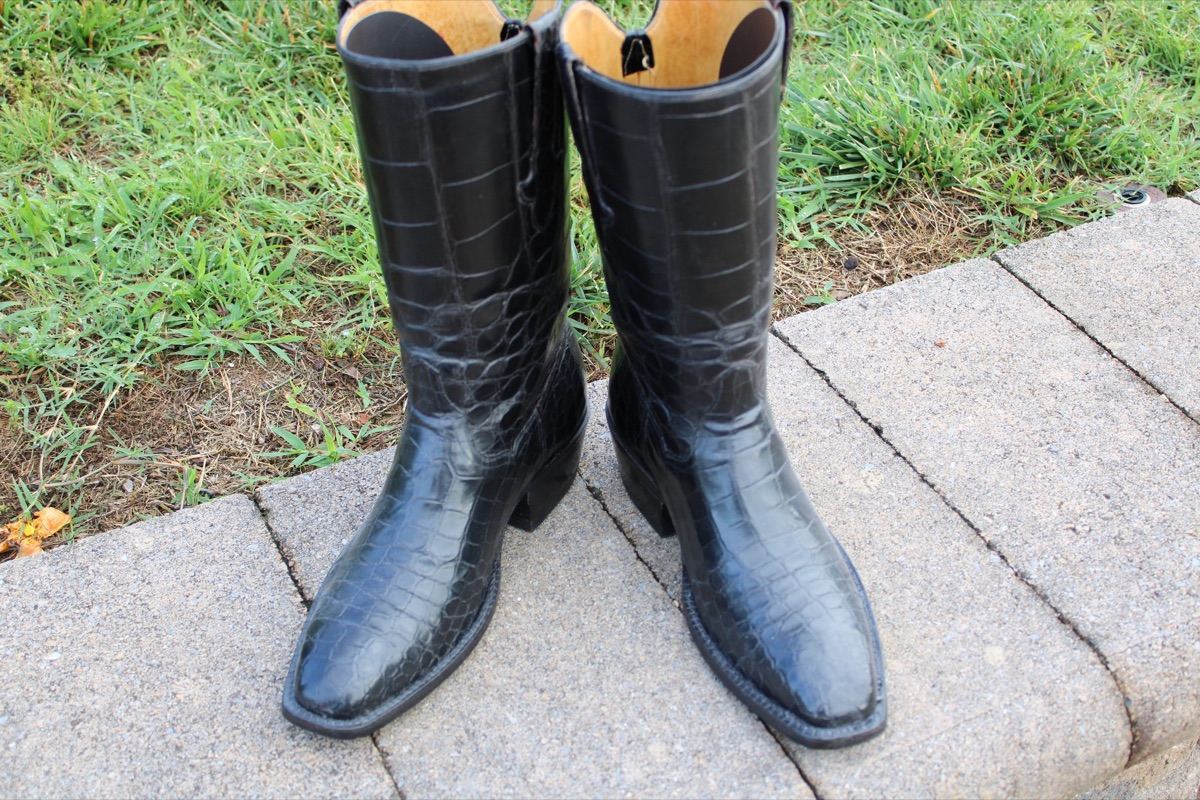
Belly
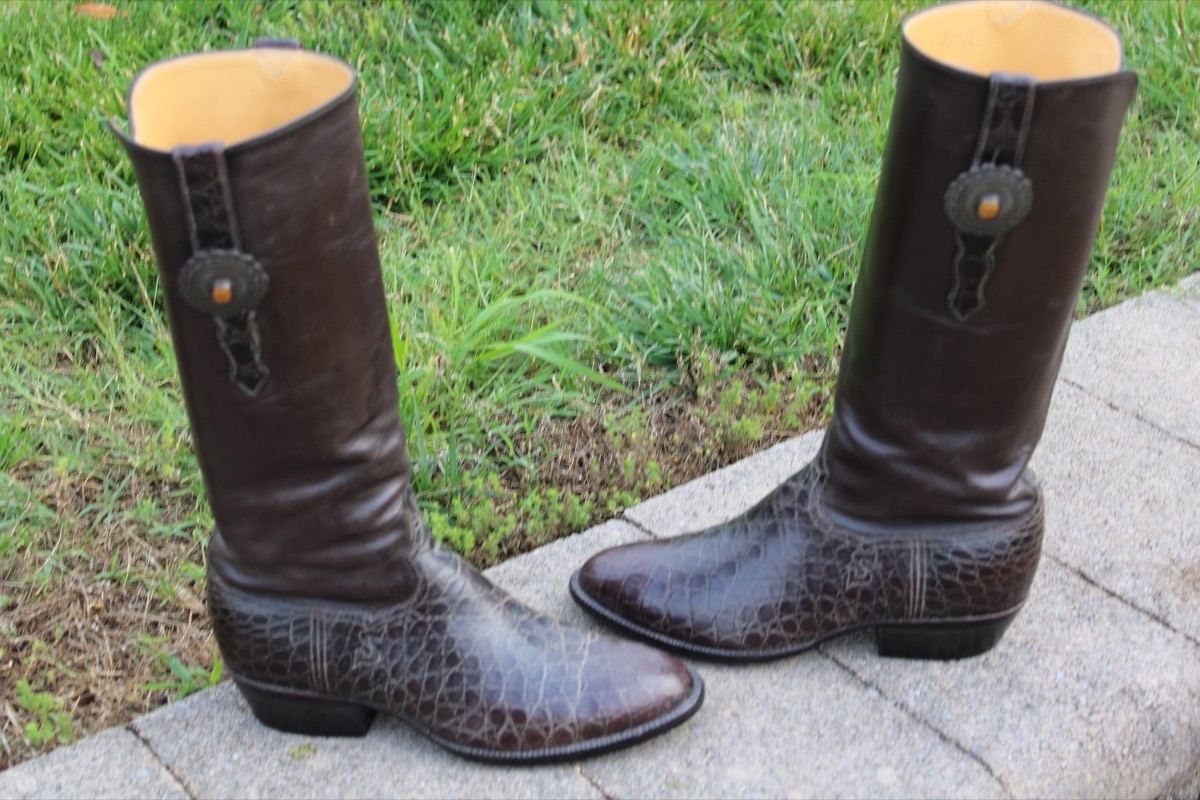
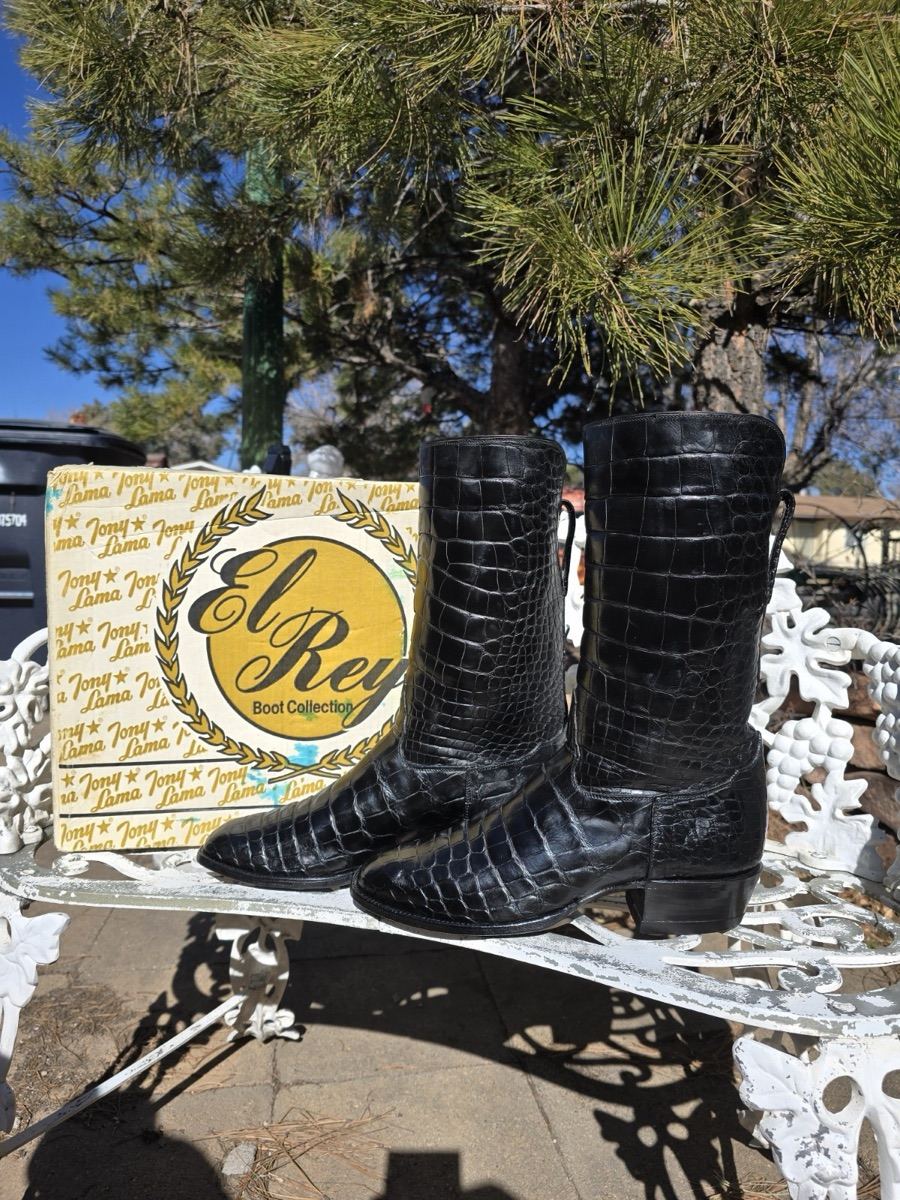
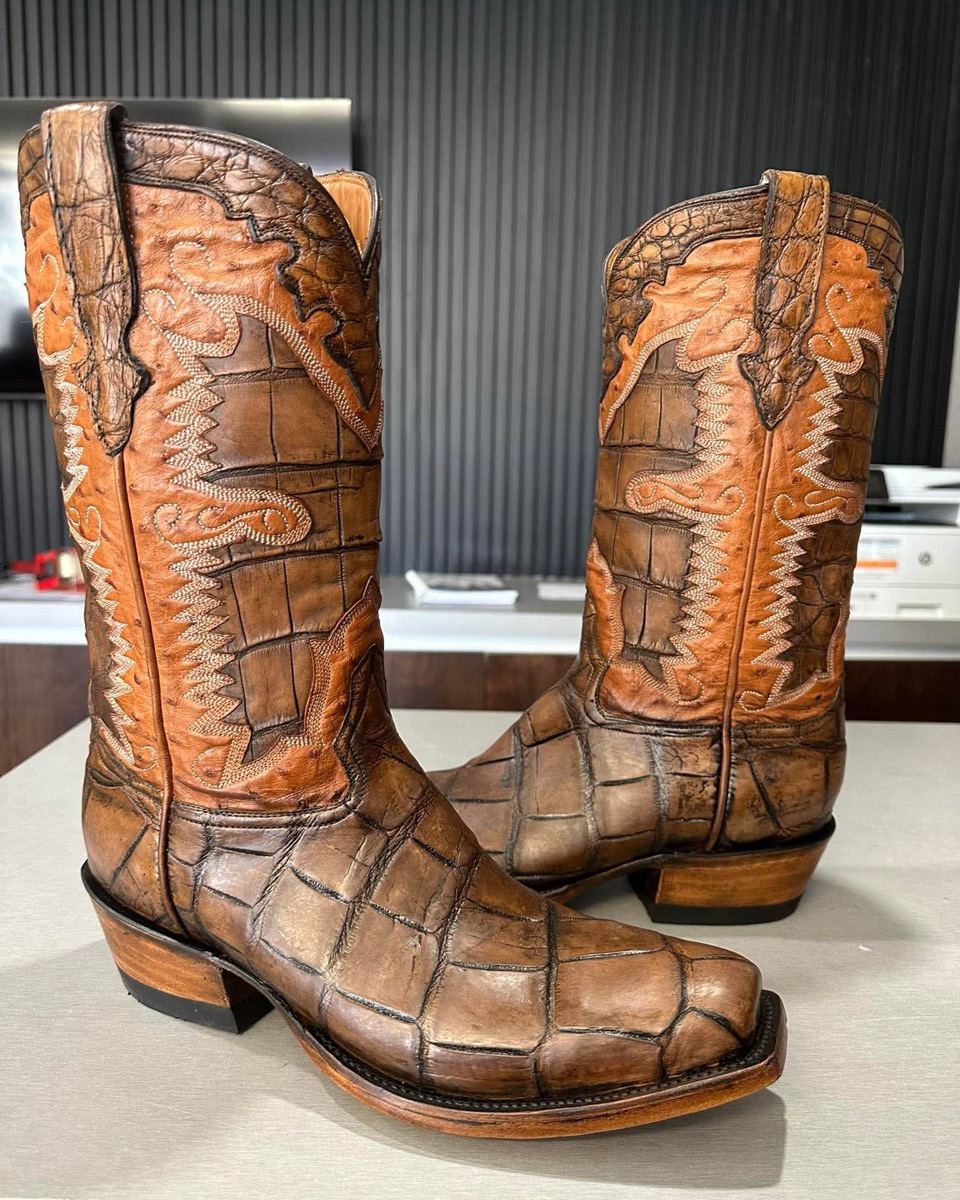
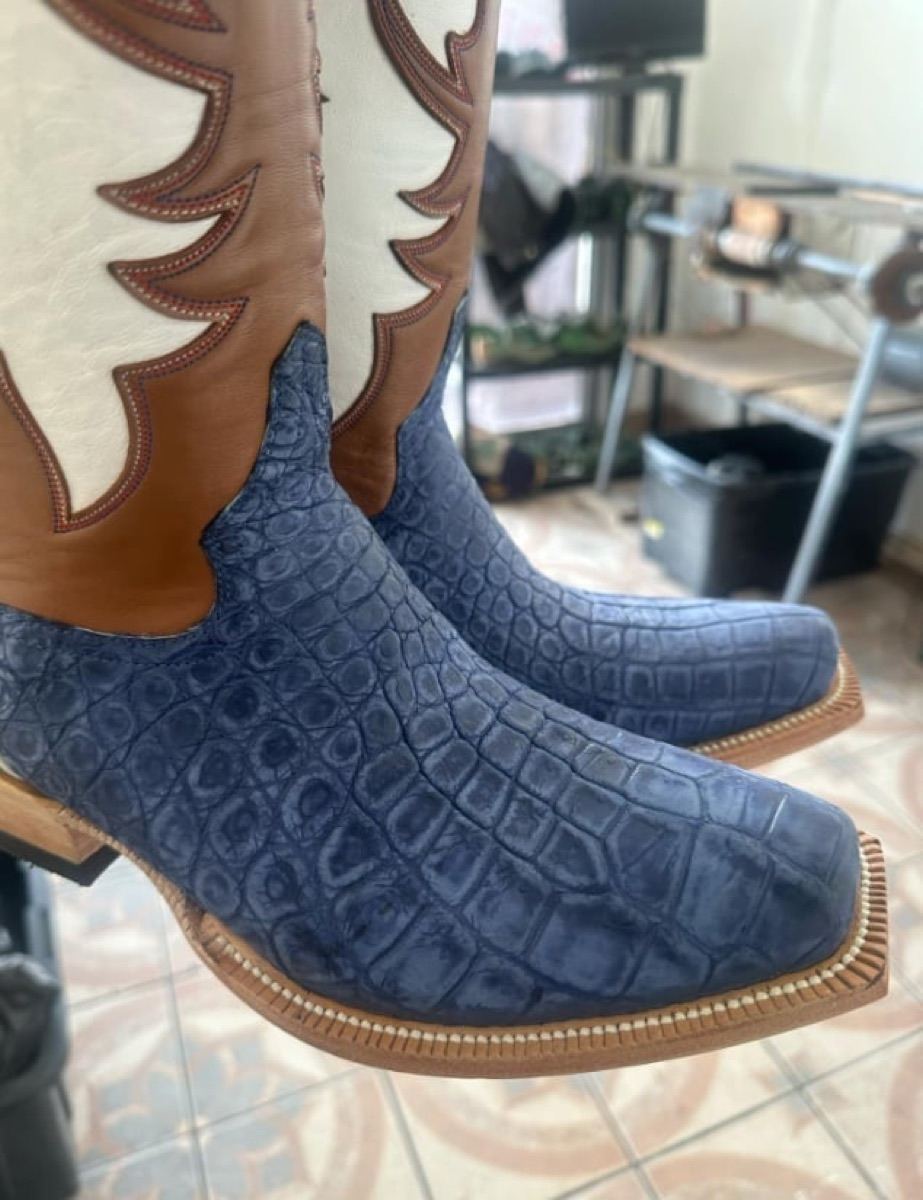
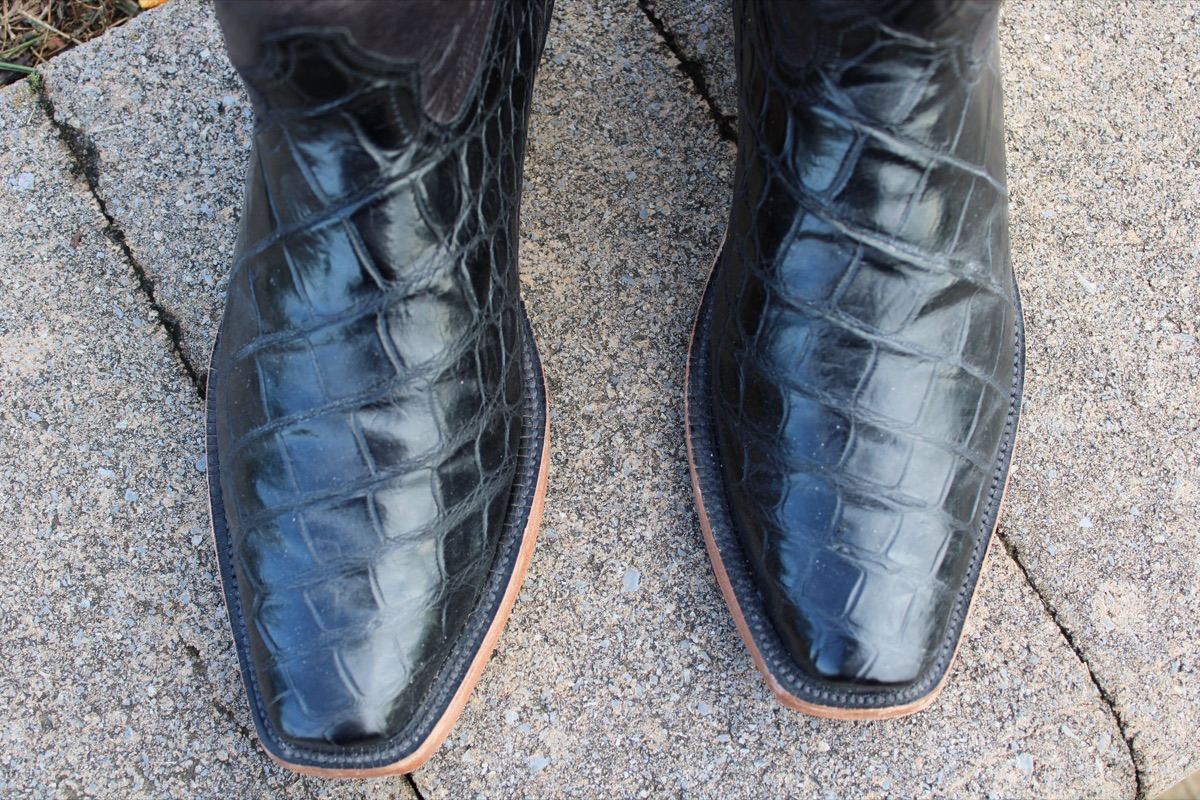
Headcut
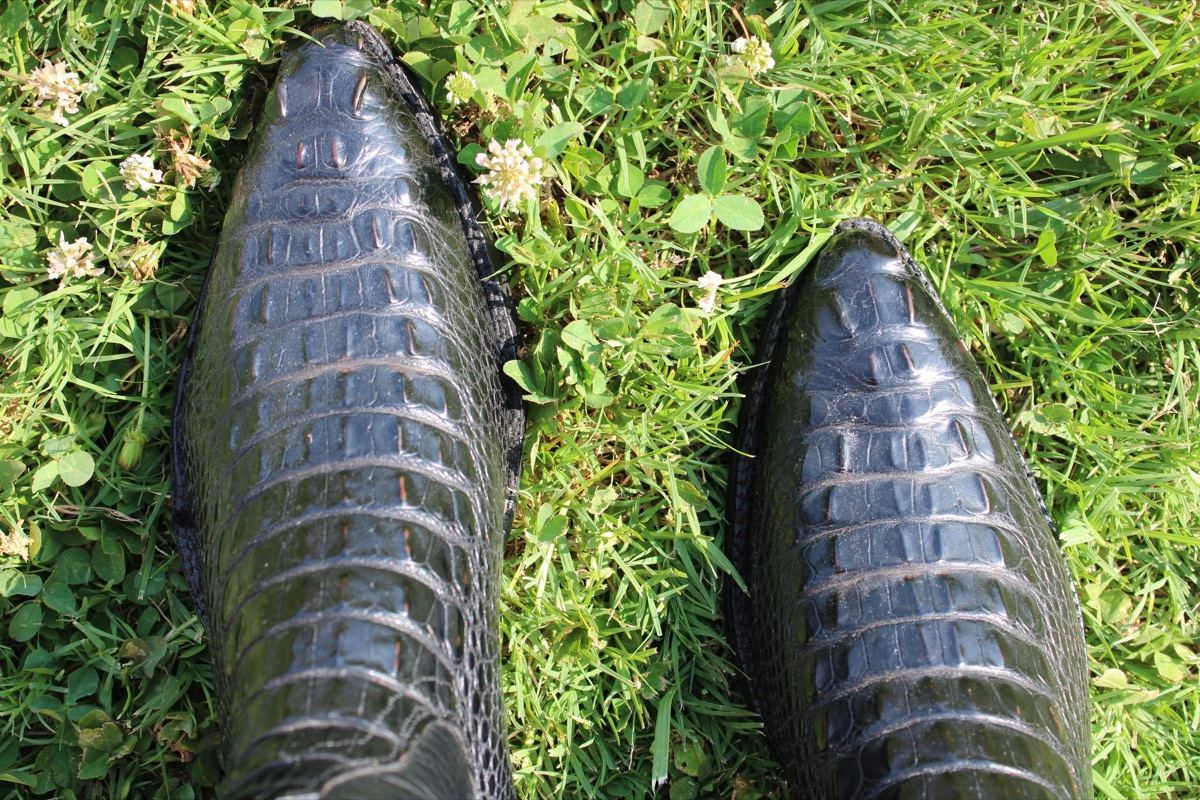
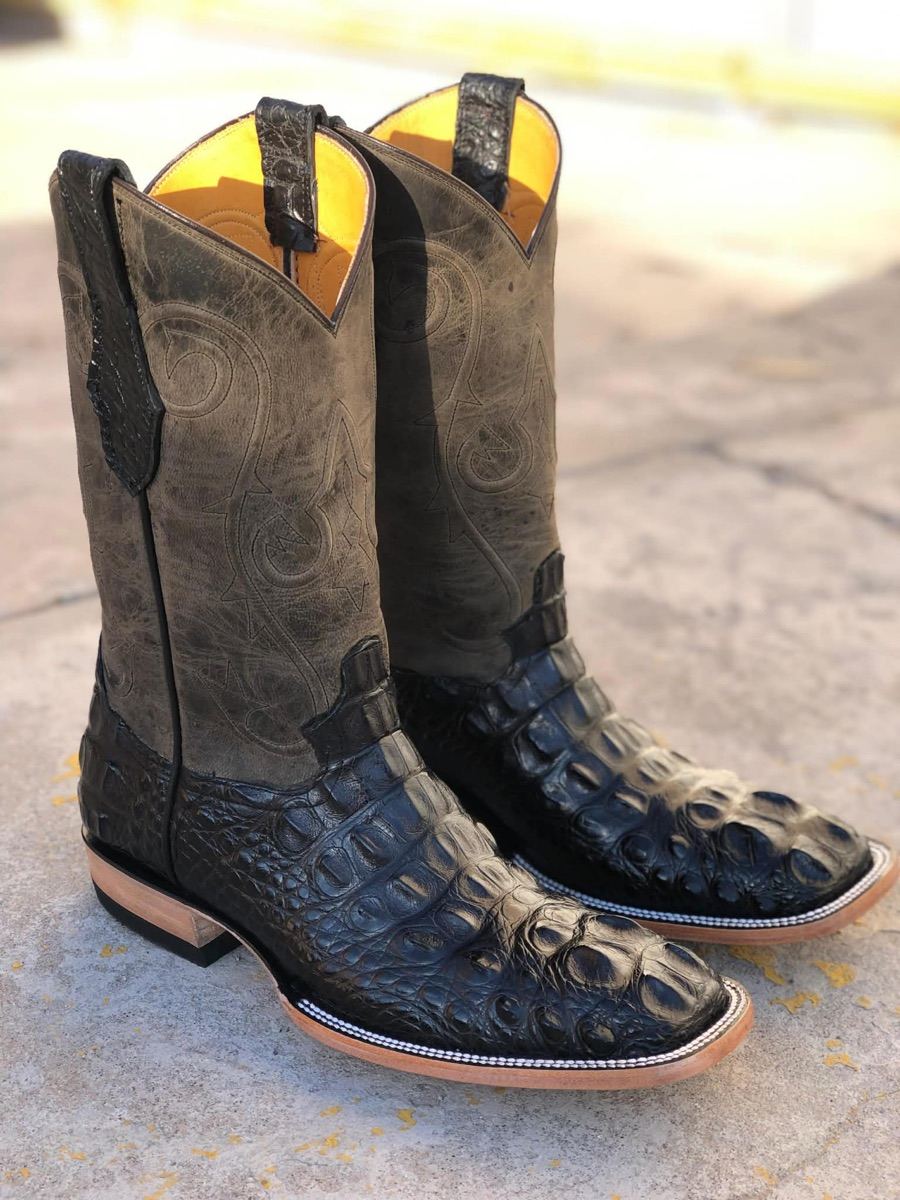
Hornback
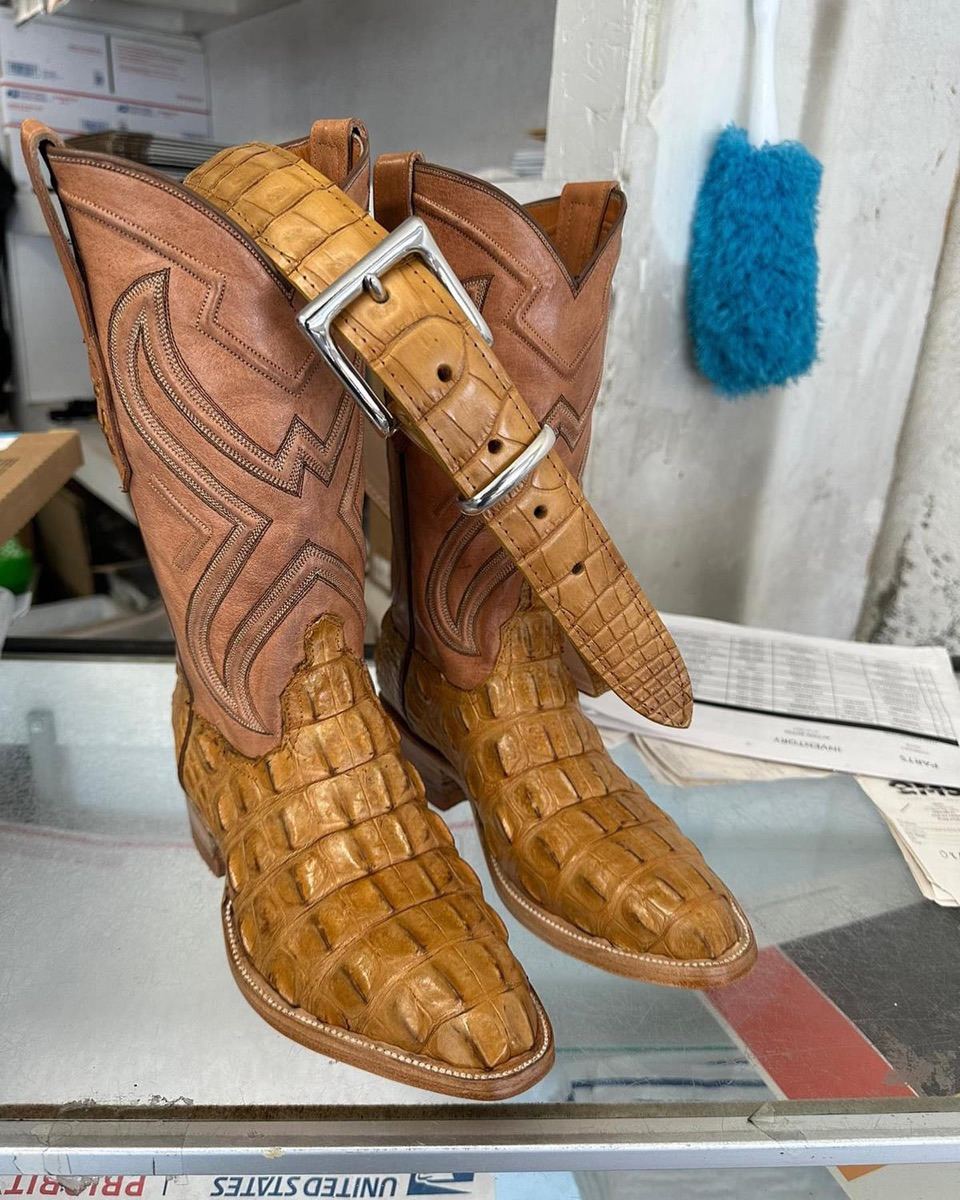
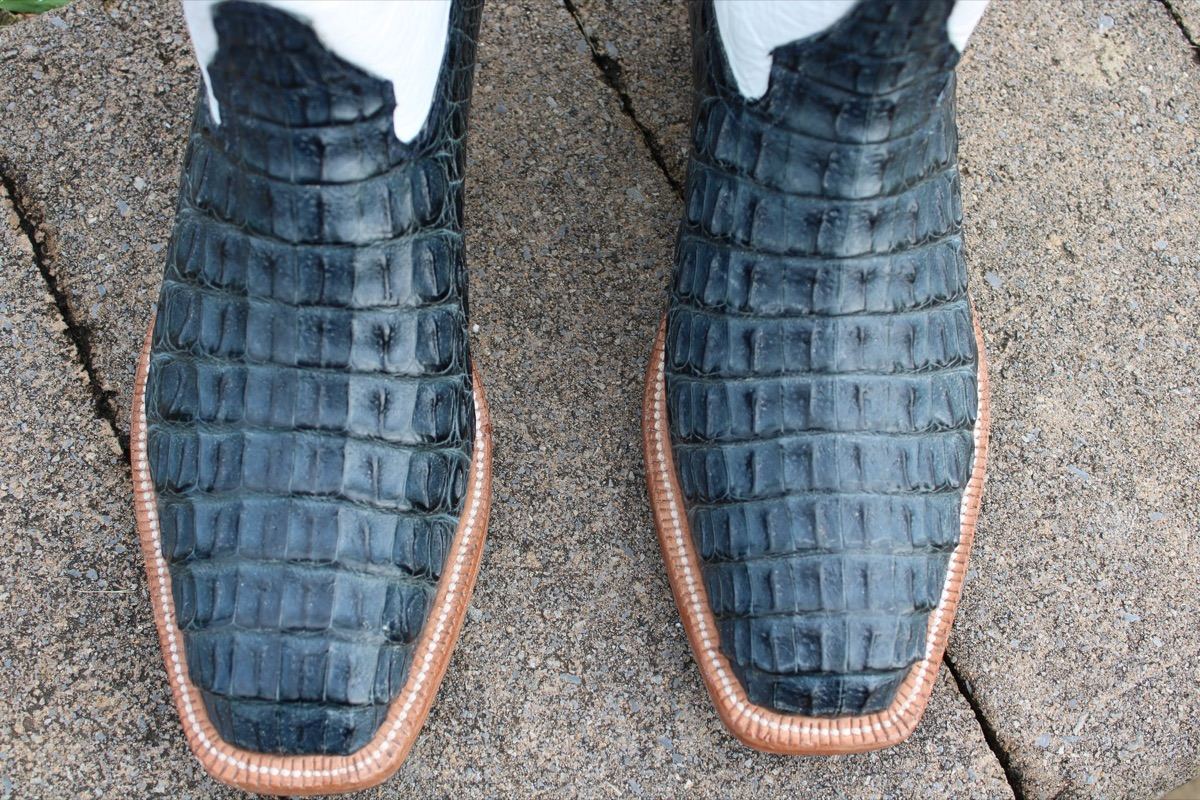
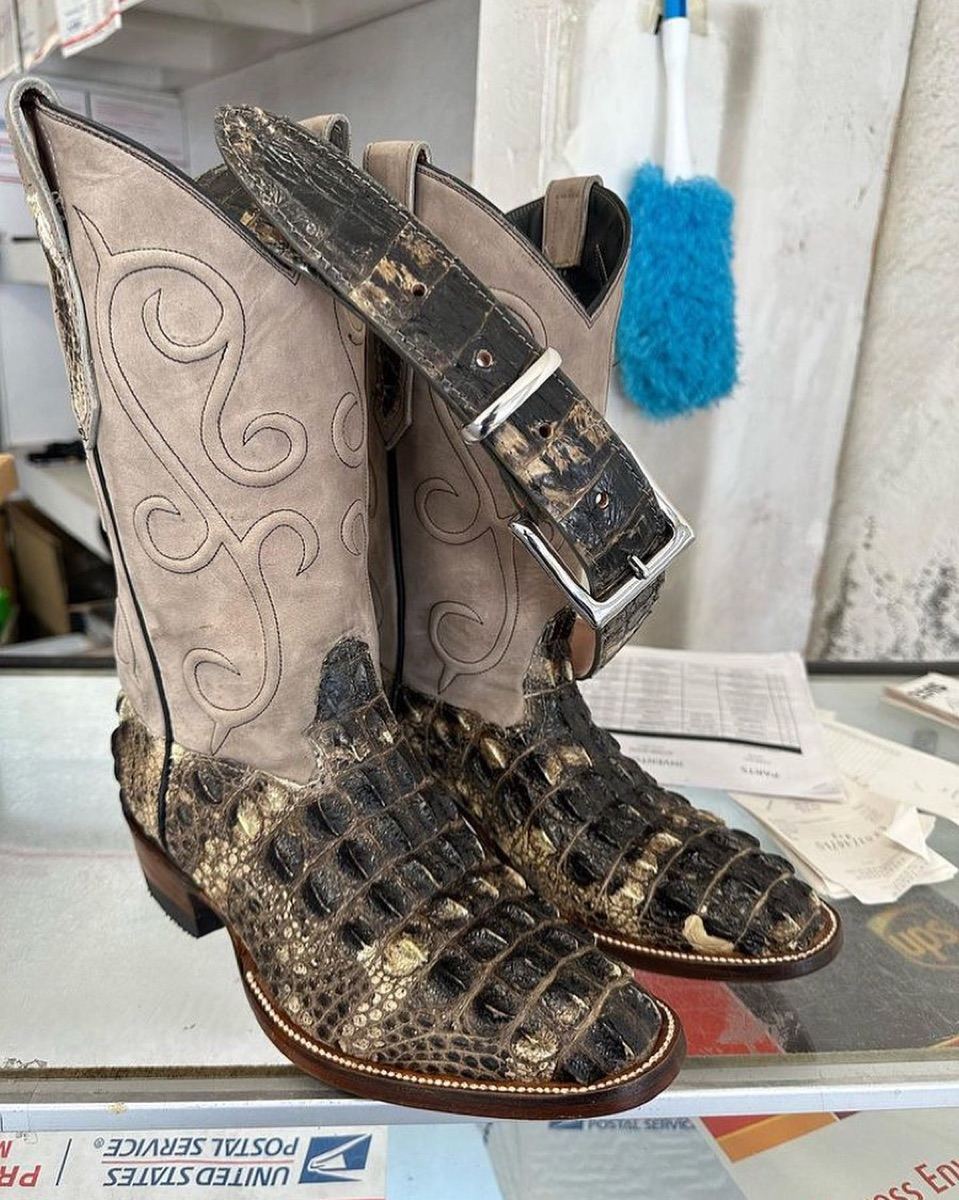
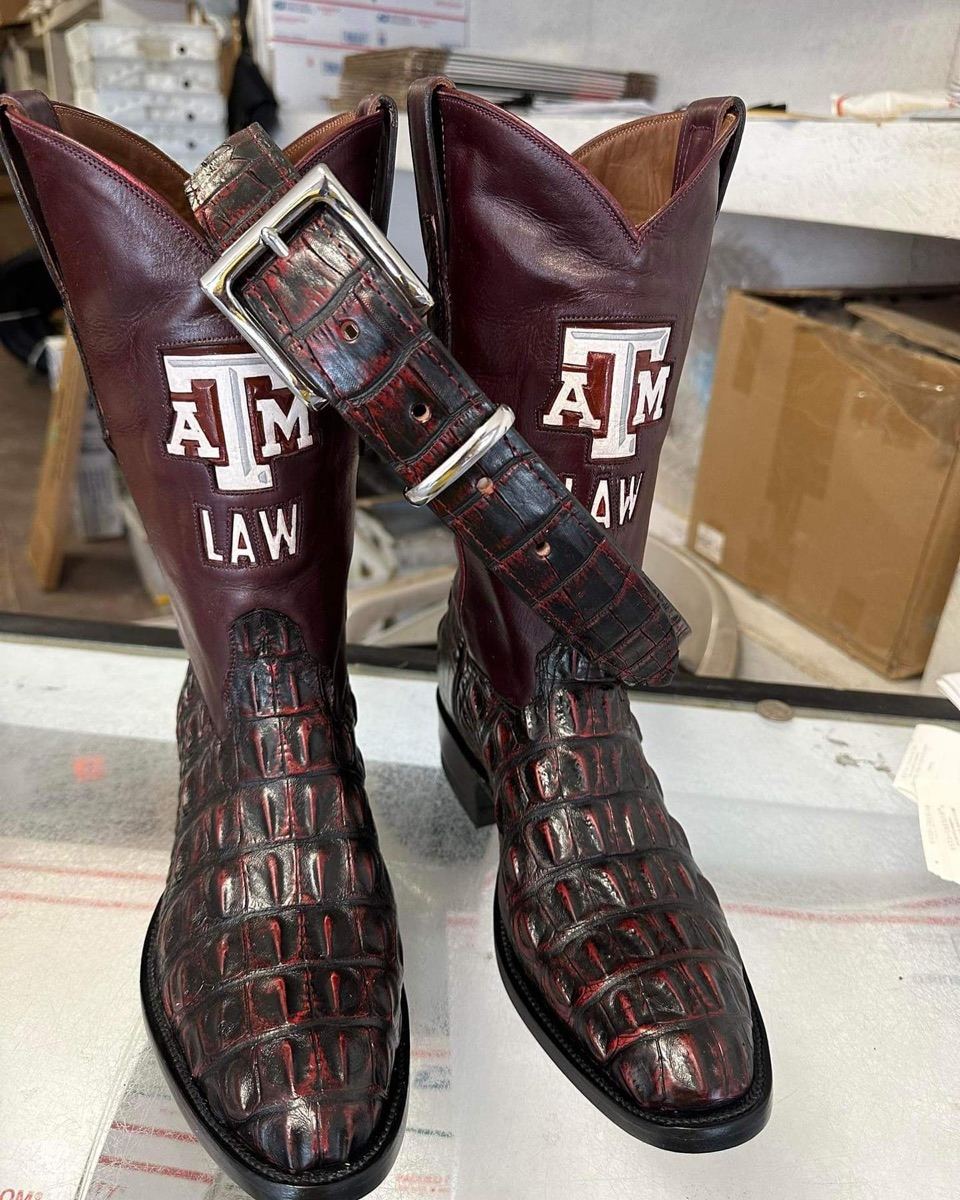
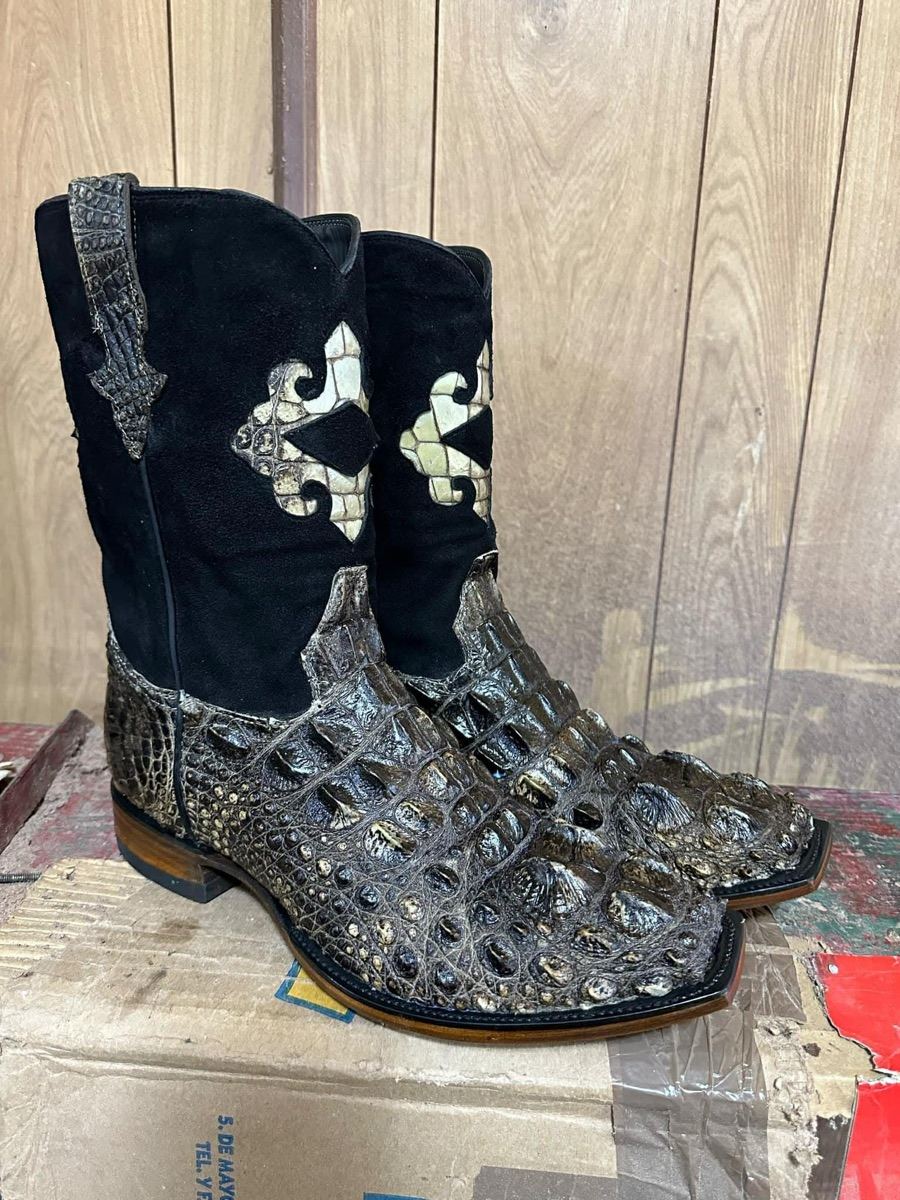
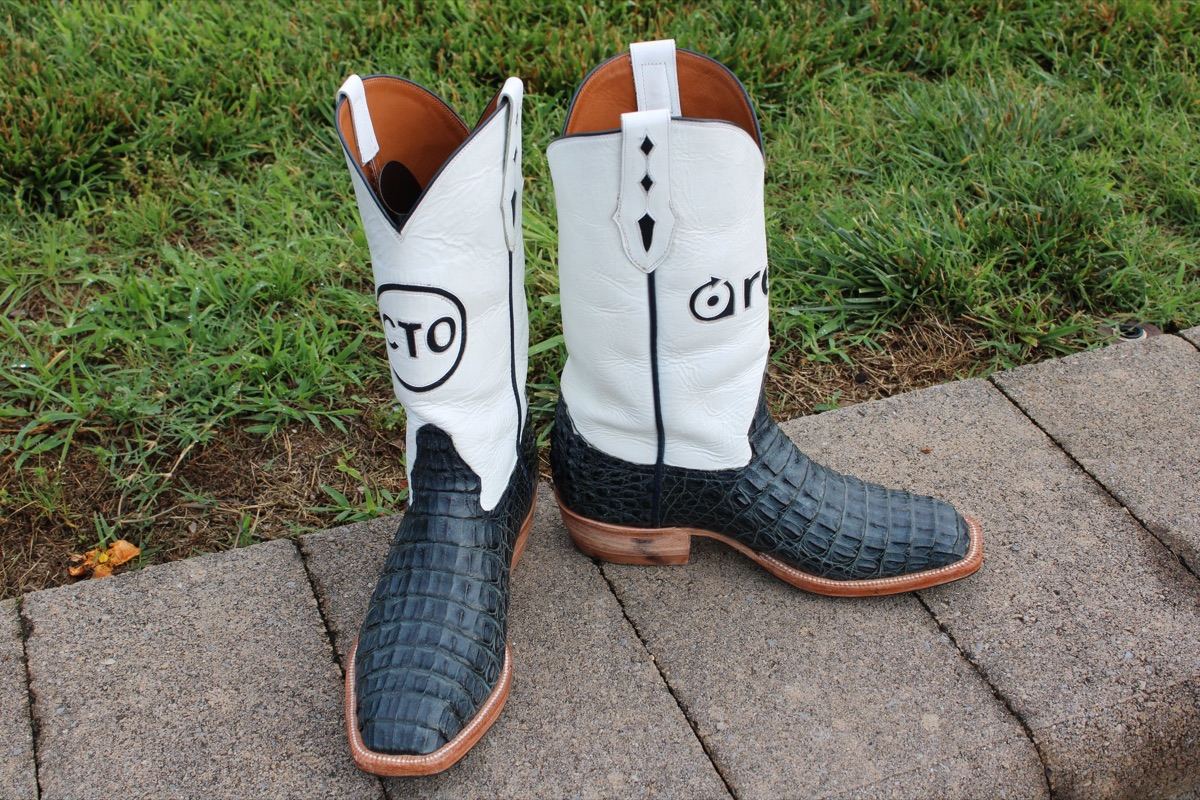
Tail
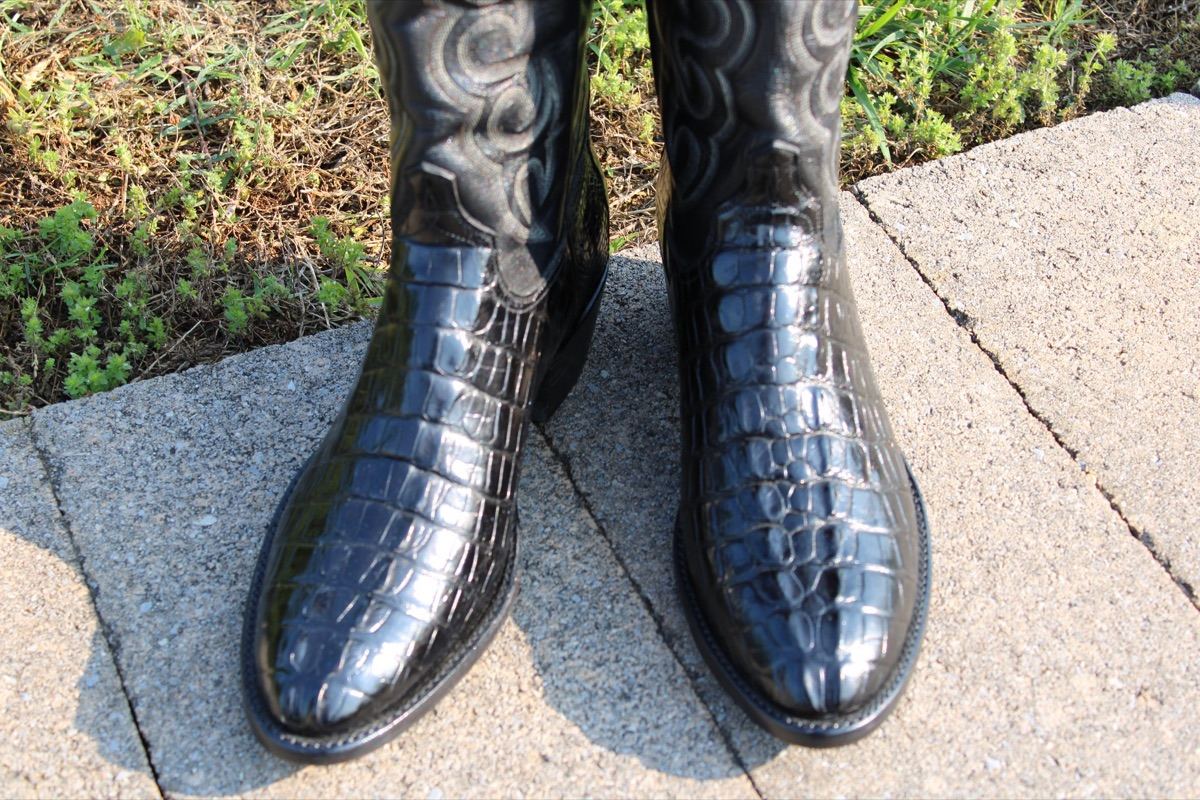
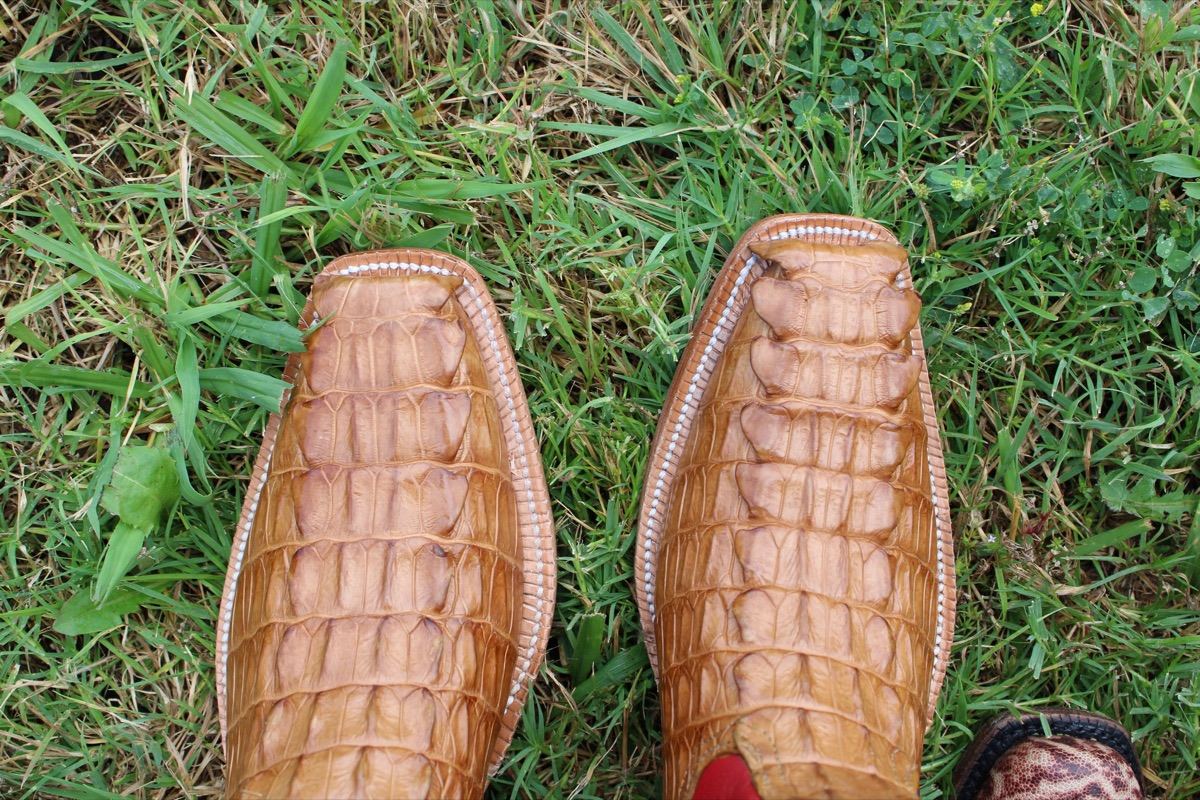
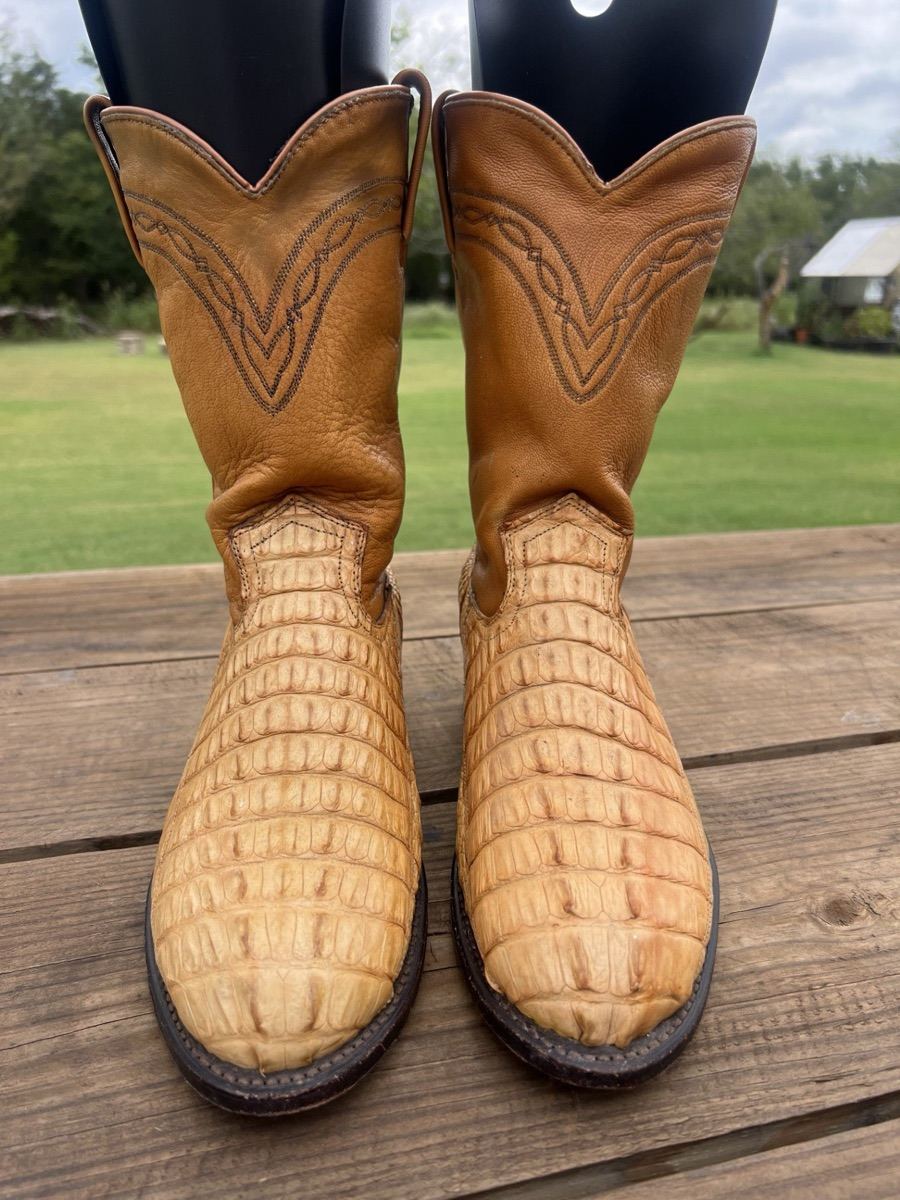
Pattern
Large, square belly scales with an umbilical scar. Hornback cuts show prominent ridged spine. American alligator has distinctive pitting pattern.
Also known as
Alligator Belly · Alligator Headcut · Gator · Hornback Alligator
Scientific name
Alligator mississippiensis
Family / genus
Alligatoridae · Alligator
Collector notes
The benchmark premium crocodilian. A serious alligator page has to separate belly, headcut, tail, and hornback because collectors do not value or judge those cuts the same way.
Quick identification checks
- Start by identifying the cut: belly, headcut, tail, and hornback should not be evaluated the same way.
- Look for broad, orderly center tiles on belly pairs and a tighter, more irregular field with ridge transitions on headcut pairs.
- Check that the scales do not show obvious dot-like ISO pores.
- Tail should read longer and leaner; hornback should show the raised dorsal line clearly.
Check in hand
- Real alligator should flex more easily than caiman and feel softer than crocodile.
- Scale edges should have natural depth, not flat stamped lines.
- Headcut should not feel like mislabeled belly. If the vamp reads too flat and regular, question the cut call.
- Tail and hornback cuts should still feel authentically crocodilian, but they should read narrower or more dimensional than a classic center-belly boot.
Common mix-ups
- Crocodile: Crocodile usually shows visible ISO pores on the scales and feels slightly firmer in hand.
- Caiman: Caiman is stiffer, more calcified, and more likely to show cracking across the scales.
- Embossed Print: Prints tend to repeat too perfectly and read flatter across the scale edges.
Buyer notes
- Ask for documentation if the pair is modern and moving across borders or through international resale channels.
- Inspect flex points carefully for finish cracking, especially on glossy dress pairs.
- The best collector pairs show matched cut placement from left boot to right boot, whether the pair is belly, headcut, tail, or hornback.
- Do not pay belly money for a headcut, tail, or hornback pair just because the seller used lazy alligator language.
Maker history
The premier luxury boot skin. Lucchese has been the dominant alligator boot maker since the early 1900s.
Era notes
A long-running luxury benchmark in western bootmaking, with especially strong prestige in premium Texas makers across the 20th century and beyond.
Care notes
Condition every 60-90 days with Saphir Reptan or a similar reptile-safe conditioner, store with support, and inspect the finish for hidden cracking where the vamp flexes.
Watch for
- Finish cracking on glossy pairs
- Misidentified caiman sold as alligator
- Dry edges hidden by heavy polish
Read the original CowboyBootsDB article
American alligator (Alligator mississippiensis) is one of the benchmark materials in high-end western boots. At its best, it combines a soft hand, deep natural scale definition, and enough variation from cut to cut that serious collectors care as much about placement as they do about the species itself. A strong alligator page cannot flatten everything into "gator." Belly, headcut, tail, and hornback are different presentations, different value conversations, and different collector buys.
Modern alligator boots are typically made from legally sourced, farm-raised American alligator, most commonly tied to Gulf Coast production and finishing. In the boot world, the appeal is not just rarity. It is the way good alligator holds shape, flexes better than harsher crocodilian skins, and develops character without losing its underlying structure. When collectors talk about a pair being "real gator money," they almost always mean the cut is correctly identified and the placement is strong.
History
American alligator boots trace to the late 1800s Texas boot-making era, when early makers in San Antonio and El Paso began working with hides sourced from Gulf Coast hunting. Alligator was already understood as a premium material before the twentieth century began, and by the early 1900s it had become the aspirational top of the western boot market for buyers who could afford it. The material's combination of striking scale pattern and genuine suppleness made it a natural fit for high-end custom work, and the best Texas makers of the era built their reputations on alligator alongside their finest leathers.
The species faced serious pressure from unregulated commercial hunting through the mid-twentieth century. By 1967 it was listed as endangered under the Endangered Species Preservation Act, and commercial hunting was banned in 1969. That ban created a genuine gap in new material that lasted through the late 1980s, and it elevated pre-ban alligator boots to a collector category of their own — pairs that predate the harvest restrictions carry a provenance that later production cannot replicate. The species recovery was one of conservation's most dramatic successes, and alligator was formally delisted in 1987.
Commercial farming on the Gulf Coast filled the supply gap that wild harvest left behind. Louisiana, Florida, Georgia, and Texas developed alligator farming operations through the 1970s and 1980s, and today roughly 400,000 to 500,000 farm-raised alligators are harvested annually in those states. The Texas oil boom of the 1970s created enormous demand at exactly the moment new material was scarce, which is part of why that era produced some of the finest alligator work in western boot history — makers like Lucchese, Tony Lama, and Rios of Mercedes pushed their alligator lines hard during this period. Farm production eventually stabilized supply, but the collector premium on well-documented pre-ban pairs has never fully faded.
Cut Guide
Belly
Belly-cut alligator is the classic luxury presentation. The broad center tiles should read flat, orderly, and balanced from left vamp to right vamp, with the strongest examples placing the cleanest square field right where the eye lands first. This is the cut most buyers picture when they think of premium alligator, and it remains the standard by which other alligator cuts are judged.
Headcut
Headcut alligator is not belly. A real headcut pair should show a busier field with smaller, more irregular tiles and visible ridge transitions from the head and shoulder area. If a pair reads flat and uniform like center belly, it probably is not headcut. Good headcut boots have strong character and can be very desirable, but they need to be judged honestly as headcut rather than sold on belly language.
Tail
Tail-cut alligator shows a narrower, longer, more segmented pattern than belly. It reads leaner on the foot and usually shows a more directional flow across the vamp. The best tail pairs still need to be centered and matched side to side, but the visual goal is different from belly. A good tail pair should look intentional and sharp, not like an off-center substitute for a broader cut.
Hornback
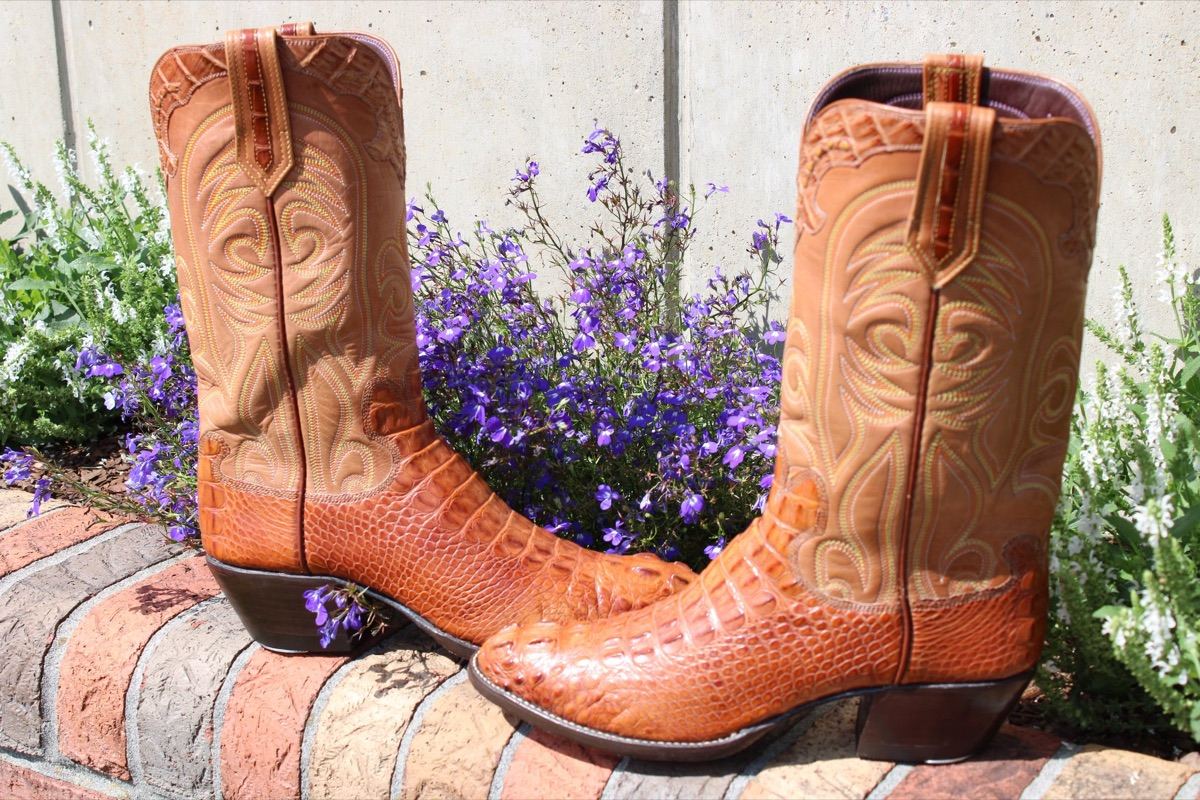
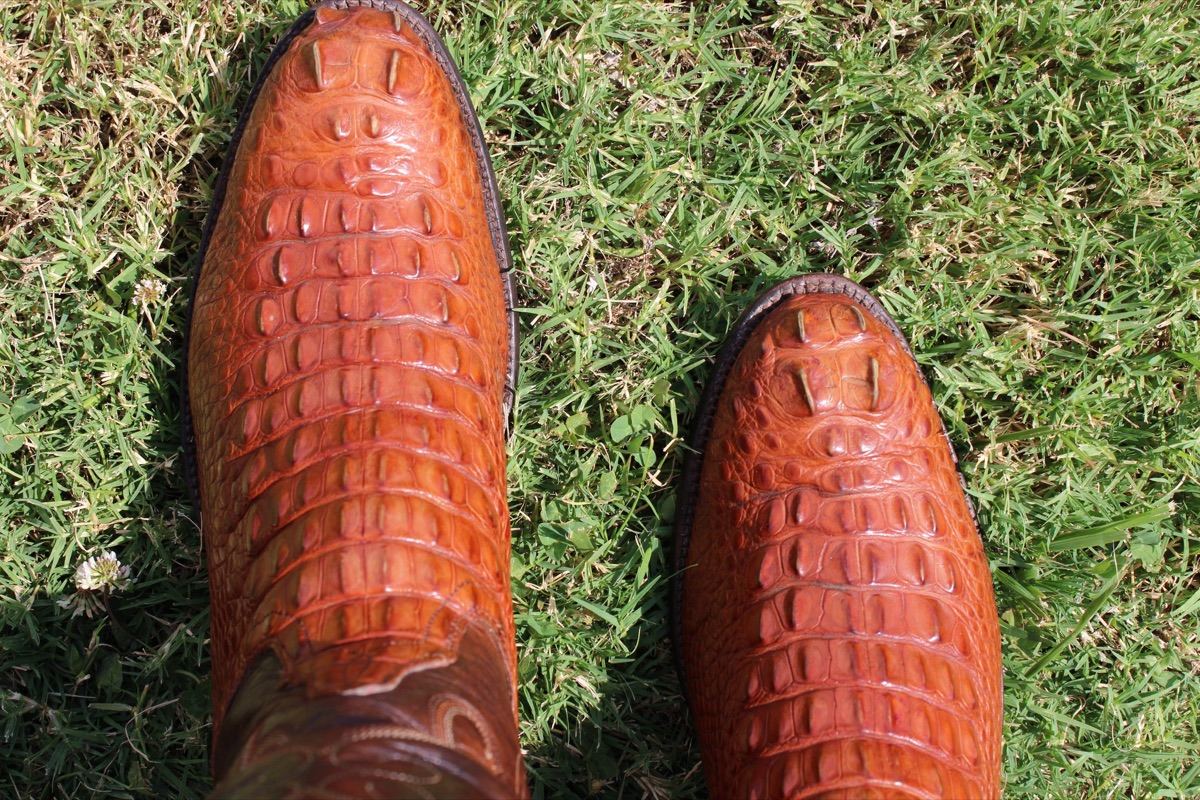
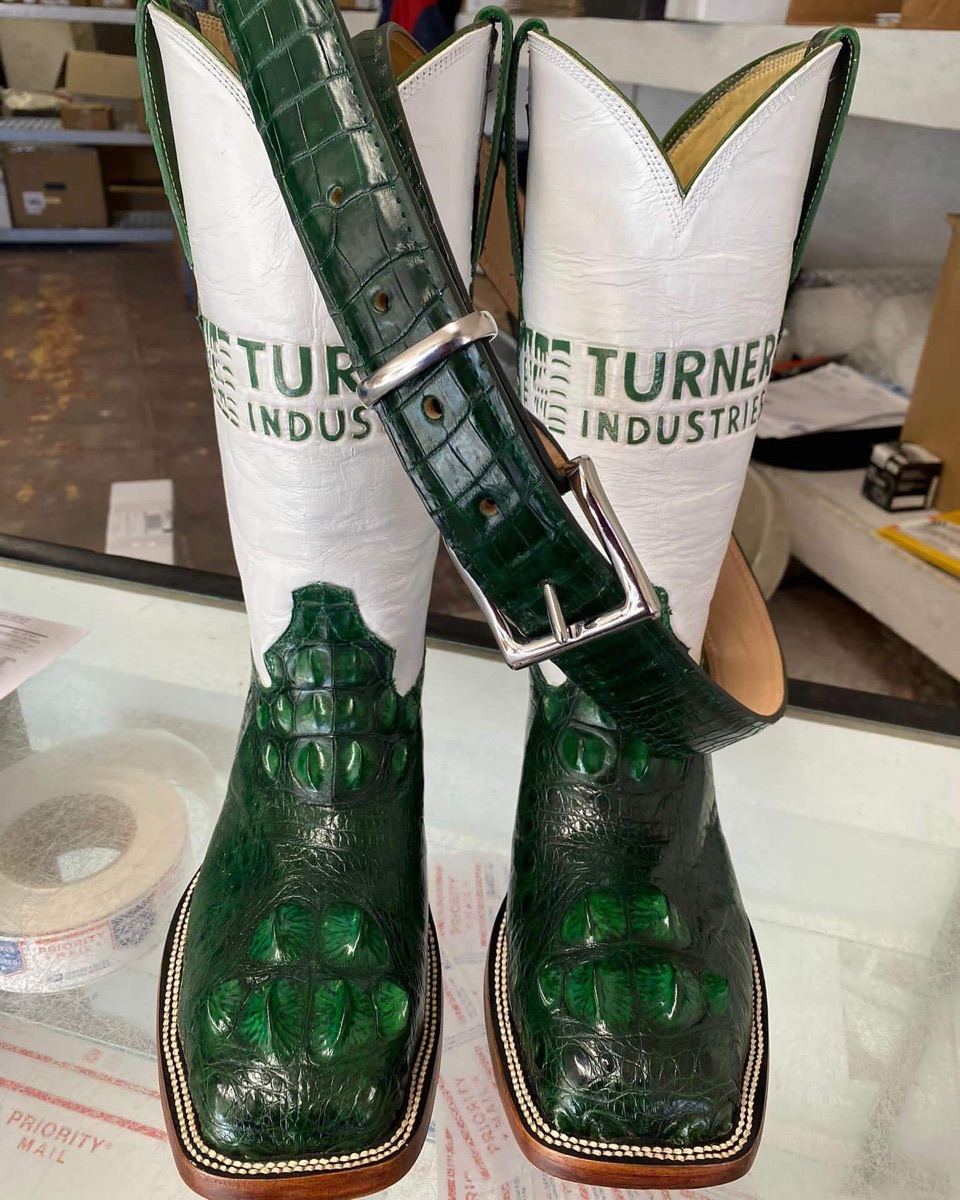
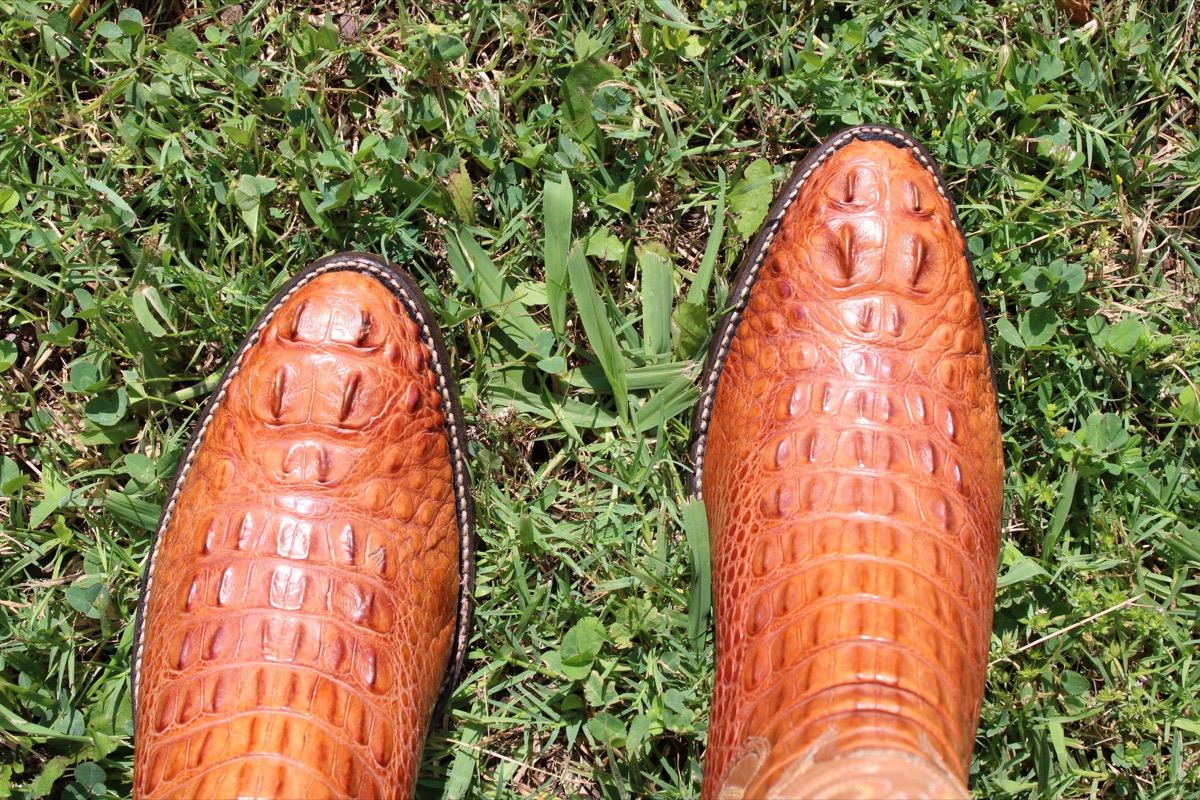
Hornback alligator uses the raised dorsal ridge and should read immediately as a three-dimensional cut. The appeal is bold texture and topography, not flat symmetry. A strong hornback pair centers the dorsal line cleanly, keeps the side fields balanced, and makes the ridge feel like the point rather than a flaw to work around.
What Collectors Look For
The strongest collector pairs show a cut that is centered and honestly presented. On belly pairs, the broadest tiles should land squarely on the vamp and taper cleanly toward the edges. On headcut pairs, the tighter field and ridge transitions should still feel balanced from left boot to right boot. On tail pairs, the segmentation should track cleanly without looking skewed. On hornback pairs, the dorsal line should be centered and confident.
Serious buyers also pay attention to hand feel and finish. Premium alligator should flex with the boot instead of fighting it. The finish should define the edges of the scales rather than bury them under heavy gloss. Dryness, finish cracking, or over-stiffness are red flags because alligator should generally feel more supple than caiman and less brittle than low-end crocodilian alternatives.
How to Identify
Start by identifying the cut before you compare one alligator pair to another. Belly is broad and orderly. Headcut tightens up and shows more ridge activity. Tail runs longer and narrower. Hornback carries the raised dorsal line.
Then separate alligator from the other crocodilians. A key feature that distinguishes alligator from crocodile is the absence of visible ISO pores on the scales. Alligator scales read cleaner and smoother at the surface, while crocodile usually shows a pore on each scale. Alligator also tends to feel softer and more pliable than caiman, which often looks more calcified and harsher in flex areas. On some belly pairs, the umbilical scar may be visible near the center and can support an authenticity check.
Alligator
- No ISO pores on scales
- Slightly wider belly scales
- Softer and more pliable
- Umbilical scar may be present
Crocodile
- Visible ISO pore on each scale
- Slightly narrower belly scales
- Firmer hand feel
- No umbilical scar
Real vs. Print
Genuine alligator has real depth and natural interruption in the scale field. Scale edges show slight lift, fold, or contour instead of a perfectly flat stamped line. The pattern should not repeat like wallpaper. Prints usually look too uniform, too regular, and too shallow once you get close. Many fake "gator" boots also feel stiffer in the wrong way, because the texture is pressed into cowhide rather than grown into the hide itself.
On a finished boot, the biggest tell is often rhythm. Real alligator has organic variation from tile to tile, even when the pair is beautifully matched. A print often looks suspiciously even, especially through the flex point and around the vamp edge.
Care Tips
Alligator leather requires careful maintenance to preserve its luster and suppleness. Condition it every 60-90 days with Saphir Reptan or a similar reptile-safe conditioner. Apply sparingly with a soft cloth, working with the scale direction rather than forcing product underneath the edges. Never use products containing alcohol or harsh solvents, which can strip oils and accelerate cracking. Let boots rest between wears, use cedar shoe trees, and avoid soaking the leather. Overconditioning is not a virtue on reptile skins; light, consistent care is better than heavy product buildup.
Maker usage notes
- Lucchese (1940–present): Lucchese is one of the clearest benchmark makers for premium western alligator, especially on classic belly-cut dress boots.
- Rios of Mercedes (1970–present): Rios of Mercedes examples help show alligator in a handmade ranch-luxury context rather than just dress-western styling.
- Black Jack (1996–present): Black Jack provides strong modern reference pairs where material callouts and build tier are usually explicit.
Original references
- CBDB archive reference pairs: CBDB examples help distinguish supple alligator belly from the stiffer, more calcified look of caiman.
- CITES appendices overview: Collectors should expect a stronger documentation story around crocodilian materials than around common domestic leathers.