

CowboyBootsDB reference collection
Antelope
Reference photos
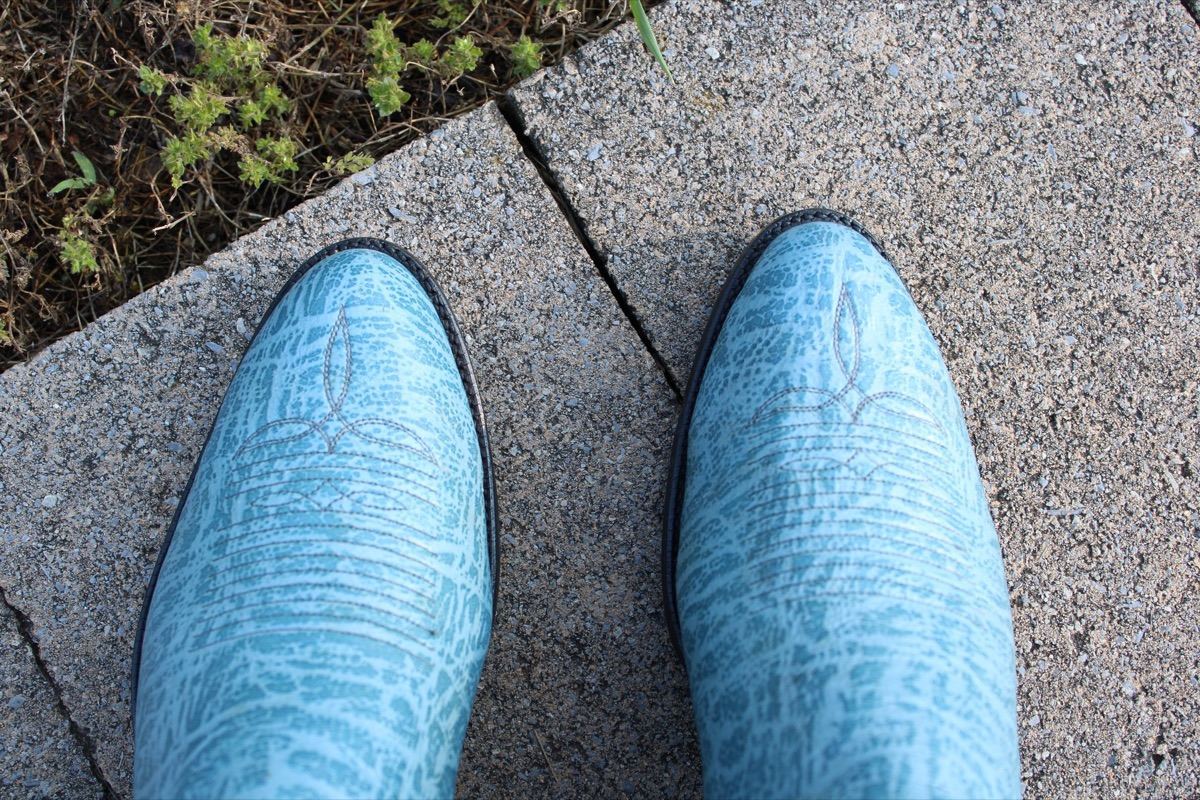
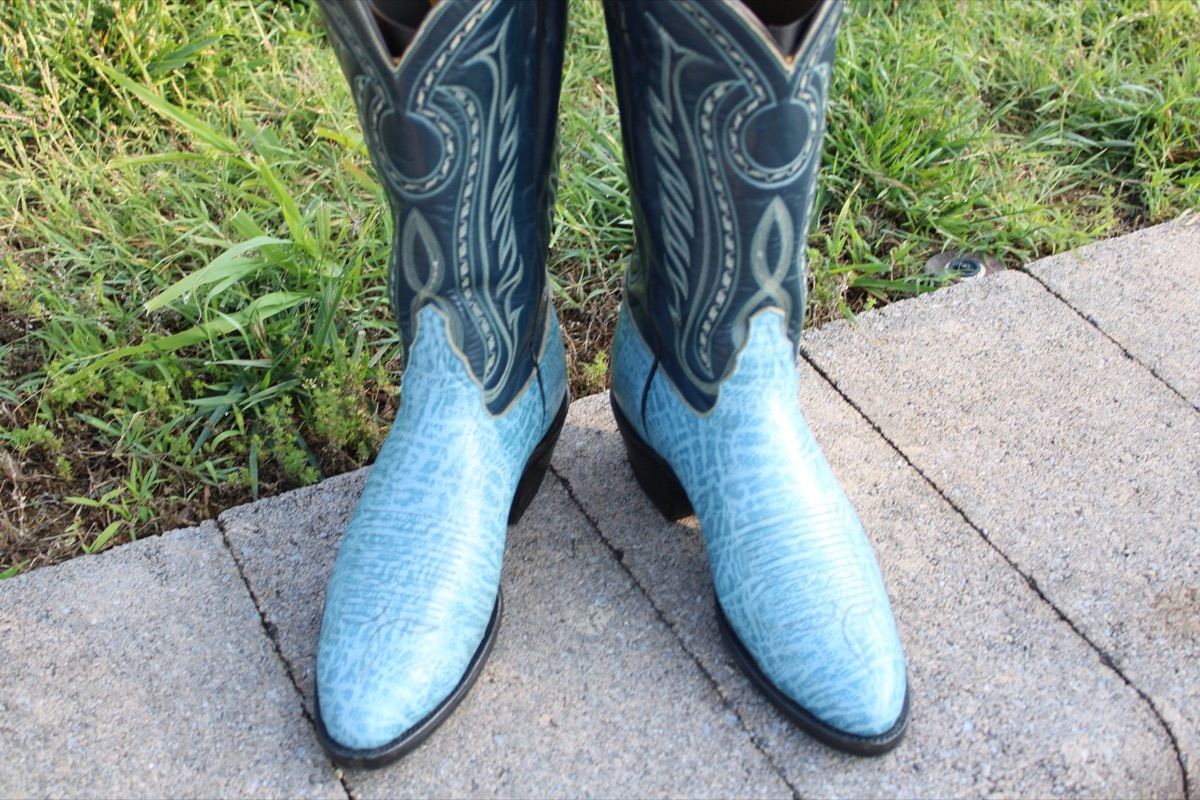
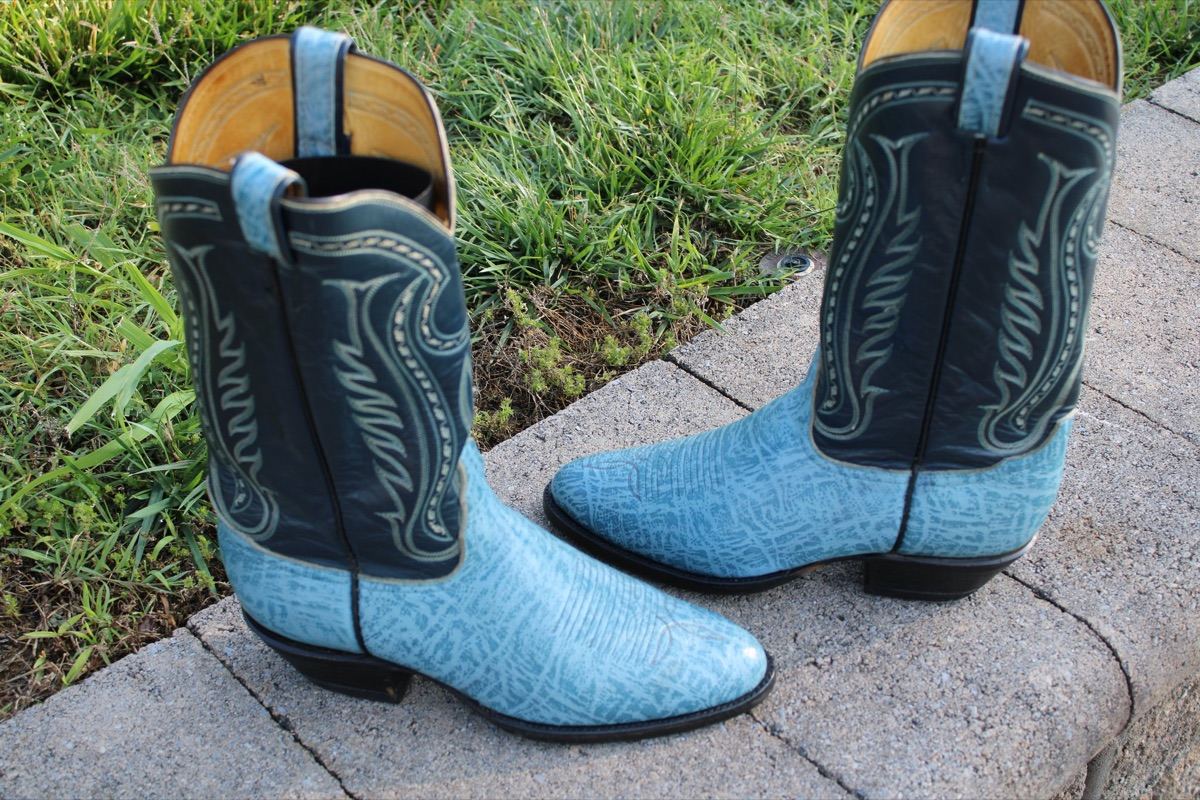
Pattern
A lightweight exotic mammal hide that usually reads finer and cleaner than rugged pebbled hides, with a smooth-to-lightly grained vamp and a more elegant hand than most heavy exotics.
Also known as
Antelope
Family / genus
Bovidae
Collector notes
Antelope should read as a finer, more elegant exotic mammal hide rather than a rugged heavy-grain leather. The challenge is separating real antelope from ordinary soft mammal hides sold with premium language.
Quick identification checks
- Look for a refined vamp texture and a lighter, more supple overall read than heavier exotics.
- Antelope should not look deeply wrinkled like elephant or heavily pebbled like hippo.
- Good pairs still need straight-on vamp photos because the material is subtle.
Check in hand
- Antelope should feel soft and flexible rather than dense and armor-like.
- The hide should look honest and natural, not corrected into generic glossy leather.
- Watch for over-finishing that hides what makes the skin distinctive in the first place.
Common mix-ups
- Goat: Goat can read similarly refined, but antelope is usually marketed and judged as a more uncommon exotic mammal hide.
- Cowhide: Soft bovine can mimic the look in weak photos, especially when sellers lean on vague premium wording.
- Carpincho: Carpincho usually carries a rounder pebbled grain, while antelope should read cleaner and finer.
Buyer notes
- Ask for close vamp photos before accepting the species call.
- This is a subtle identification category, so honest labeling matters a lot.
- Avoid paying exotic premiums for pairs that only look like generic soft leather in the photos.
Maker history
Seen in specialty western boots and collector-market pairs more often than in the broadest production catalogs.
Era notes
Mostly relevant in boutique, custom, and collector western boots rather than in the biggest maker programs.
Care notes
Use a light neutral conditioner and avoid over-polishing, which can make a naturally refined hide look generic and corrected.
Watch for
- Soft bovine or goat sold as antelope
- Weak photos that make the hide look more ordinary than it is
- Over-finished surface hiding the natural character
Read the original CowboyBootsDB article
Antelope is one of the more understated exotics in the western boot world, and that subtlety is both its appeal and its challenge. On a well-made pair, antelope reads soft, refined, and slightly velvety, with a fine grain that feels special without announcing itself through dramatic scales or plated structure. It sits in a different register than alligator or lizard — closer to the fine mammal end of the spectrum, where the quality lives in the hand and the skin's natural character rather than in visual boldness.
That understated quality also makes identification harder than it looks. Antelope does not come with obvious signature features the way scaled exotics do. Collectors need to learn the grain character and the particular softness of a genuine pair, because weak listing photos can make antelope look nearly identical to good cowhide, goat, or carpincho. Vamp-forward photography is not optional here — it is the only honest way to present the material.
History
The commercial antelope leather used in western boots comes primarily from two southern African species: springbok (Antidorcas marsupialis) and impala (Aepyceros melampus). Both animals are native to the open grasslands and savannas of Botswana, Namibia, Zimbabwe, and South Africa. Springbok leather has been processed commercially in South Africa since the late 19th century, when the hide and leather industry built export infrastructure around these species alongside the larger cattle-hide trade. The resulting tanneries developed a working knowledge of how to handle the lighter, finer skins in ways that preserved the grain character collectors now recognize.
Neither springbok nor impala is listed under CITES as a threatened species. Both are managed through regulated hunting programs across southern Africa, with hides processed as a byproduct of game management operations rather than dedicated antelope harvests. That supply structure keeps antelope leather traceable and legally uncomplicated — a meaningful distinction in the exotic leather world where provenance questions are routine.
Antelope leather entered the American western boot market through specialty and custom channels rather than through mass production. Makers looking for a fine mammal exotic at a lower price point than crocodilian skins — but with more character than standard cowhide — found antelope suited that gap. It tends to appear on custom and high-end boutique pairs rather than catalog production lines, which means the buyers who seek it out are usually already familiar with the material and know what they are asking for.
What Collectors Look For
Strong antelope pairs show a refined, fine-grain vamp with natural softness and a matte-to-low-satin finish that lets the hide breathe rather than coating it over. The grain should feel organic and slightly open, not corrected or buffed smooth like processed bovine. The best examples have a clean, even field across the vamp without visible crowding or stretch marks pulling the grain in one direction.
Collectors also pay attention to hand feel, which is where antelope separates itself most clearly from its lookalikes. Real antelope should feel notably soft and supple, with a slight give that signals natural oils and a quality tanning job. A stiff pair with a corrected surface is much more likely to be bovine dressed up as something else. If the seller cannot give you a clear close-up of the vamp under good light, be skeptical.
How to Identify
The most useful diagnostic for antelope is the combination of fine grain and pronounced softness in the same pair. Neither feature alone is definitive, but together they narrow the field quickly. Look for a natural grain that reads consistently across the vamp without repetition — prints and corrected bovine tend to show a stamped evenness that real antelope lacks. Antelope also tends to have a slightly open, almost suede-adjacent character at the surface even when finished, which separates it from tighter-grained mammal leathers.
Comparison with carpincho is the trickiest call. Both are soft, relatively fine-grained mammal leathers. Carpincho usually shows a slightly more pronounced pebble, while antelope reads smoother and more consistent across the field. Elephant and hippopotamus are heavier and more forceful in texture and should not be difficult to separate once you have seen a real antelope pair up close.
Antelope
- Smooth, fine grain with minimal pebble
- Slightly open, suede-adjacent surface feel
- Consistently even field across the vamp
- Notably soft and supple in hand
Carpincho
- Moderate pebbled grain, more pronounced texture
- Slightly firmer surface than antelope
- Pores often cluster in groups of three or four
- Grain variation more visible at close range
Real vs. Print
Genuine antelope has a natural surface variation that prints cannot replicate convincingly. The grain depth, the soft feel, and the slight open character of the hide all fail to translate when a pattern is stamped into cowhide. Prints that try to mimic mammal exotics usually look either too uniform, too stiff, or too heavily finished — and antelope prints are especially easy to spot because the real material is so notably soft in hand.
On a finished boot, the most reliable check is tactile. Real antelope has a warmth and give to the leather that stamped bovine rarely matches. If the boot feels boardy or the surface looks corrected and flat under raking light, the exotic label deserves scrutiny. A real antelope pair should pass a close-look photo test and a hand-feel test at the same time.
Care Tips
Antelope is a soft, oil-rich mammal leather that responds well to light, consistent care. Condition every 90-120 days with a gentle leather conditioner suitable for fine-grained skins, avoiding heavy waxes or harsh polishes that can stiffen the surface or coat over the natural character of the hide. Keep antelope boots away from excess moisture and direct heat. Store with shoe trees to hold the vamp shape, and clean dirt or dust with a soft brush before it works into the open grain. Light care done regularly beats heavy treatment done occasionally.