
Lizard — Hornback
Cut notes
The dramatic ridge-driven lizard presentation with a raised dorsal line and more aggressive relief through the center of the vamp.
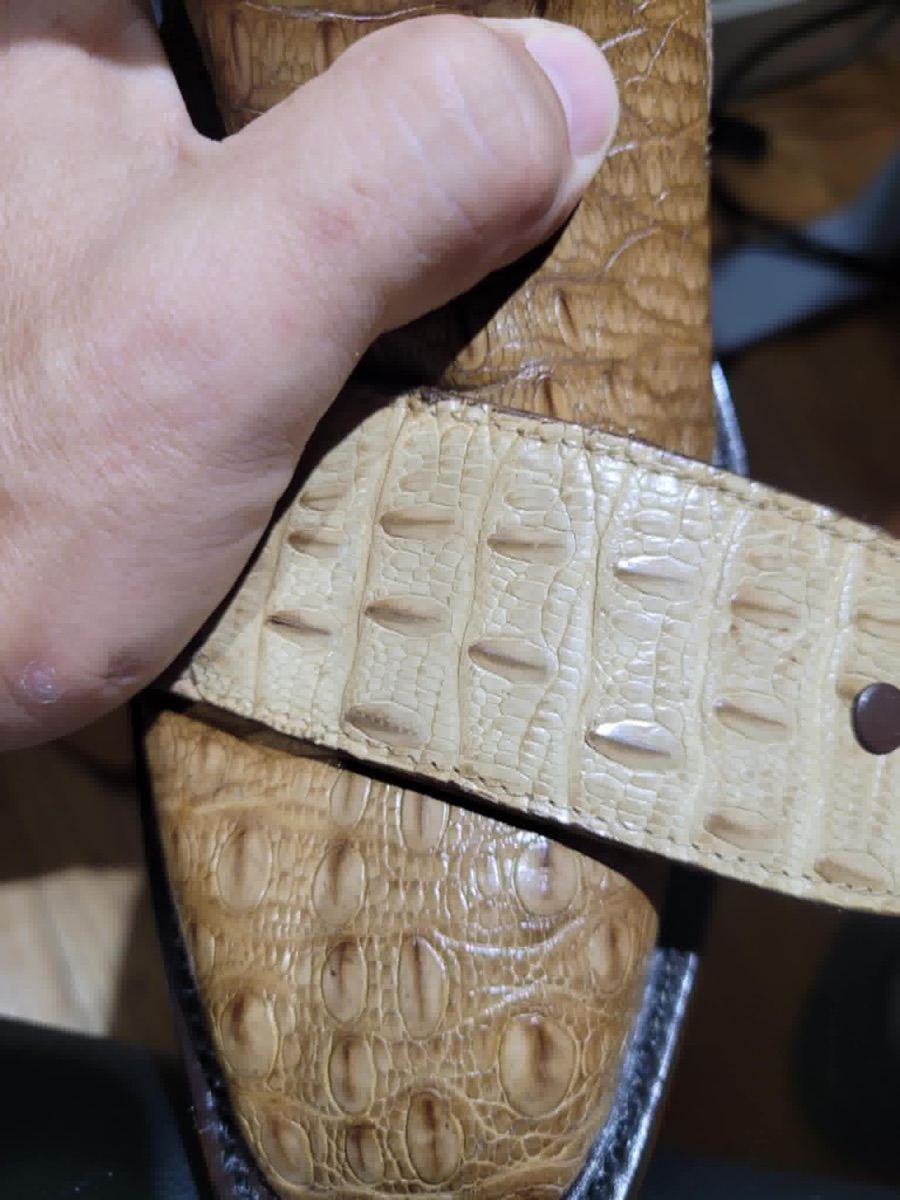
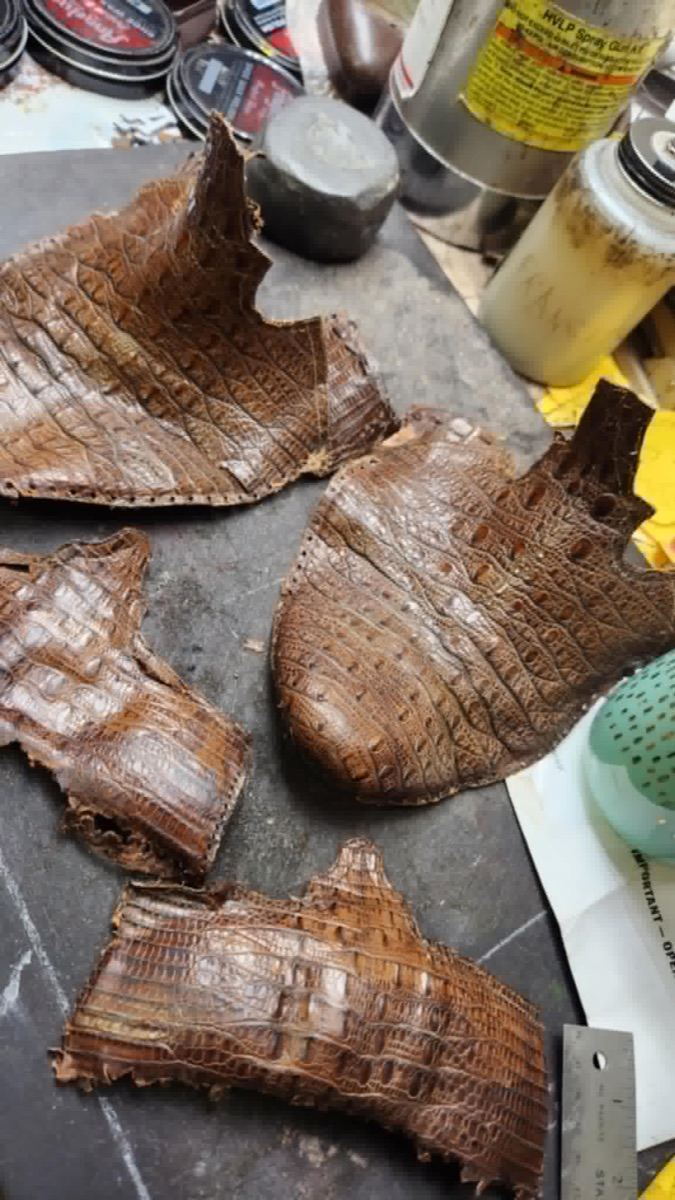
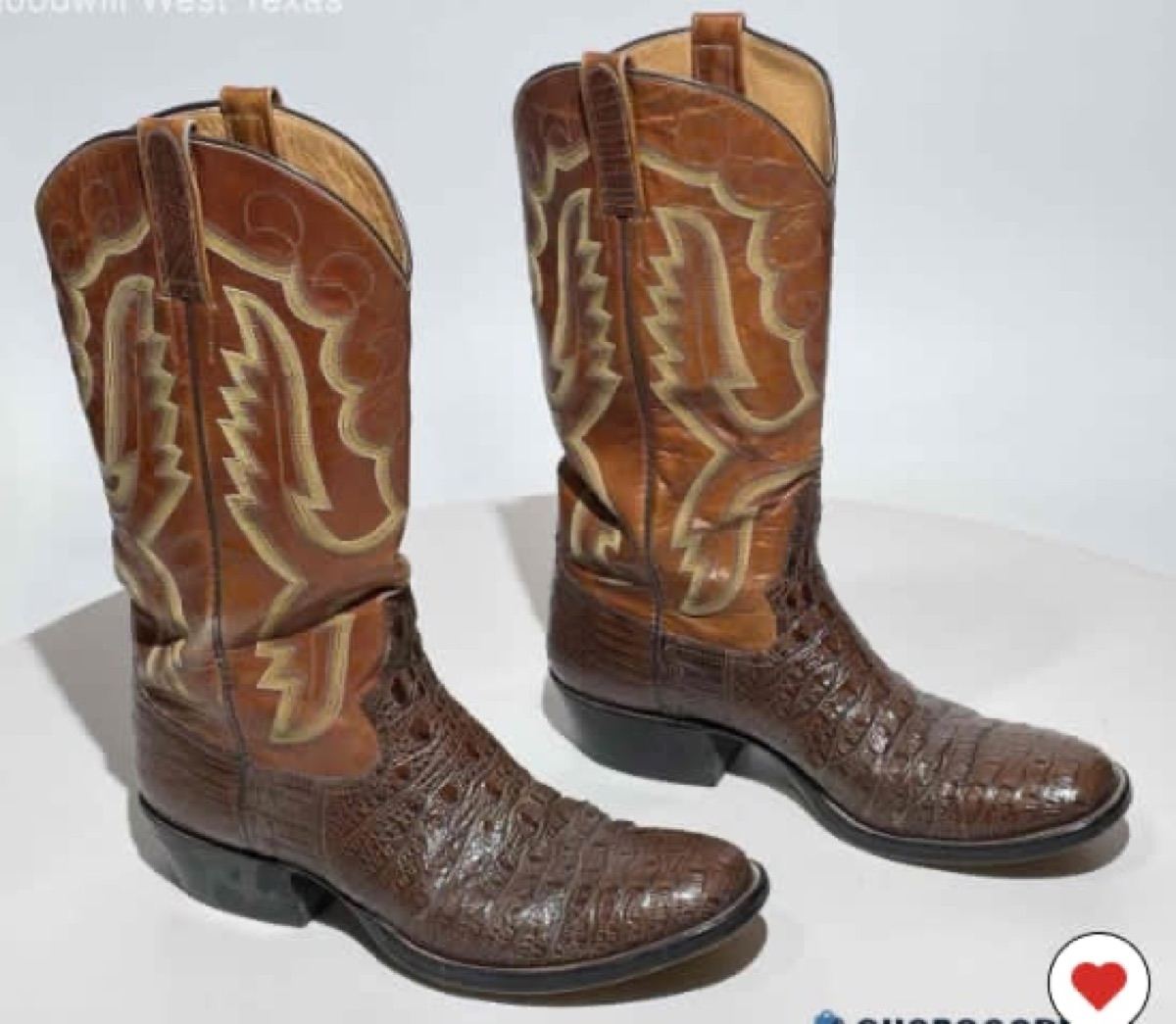
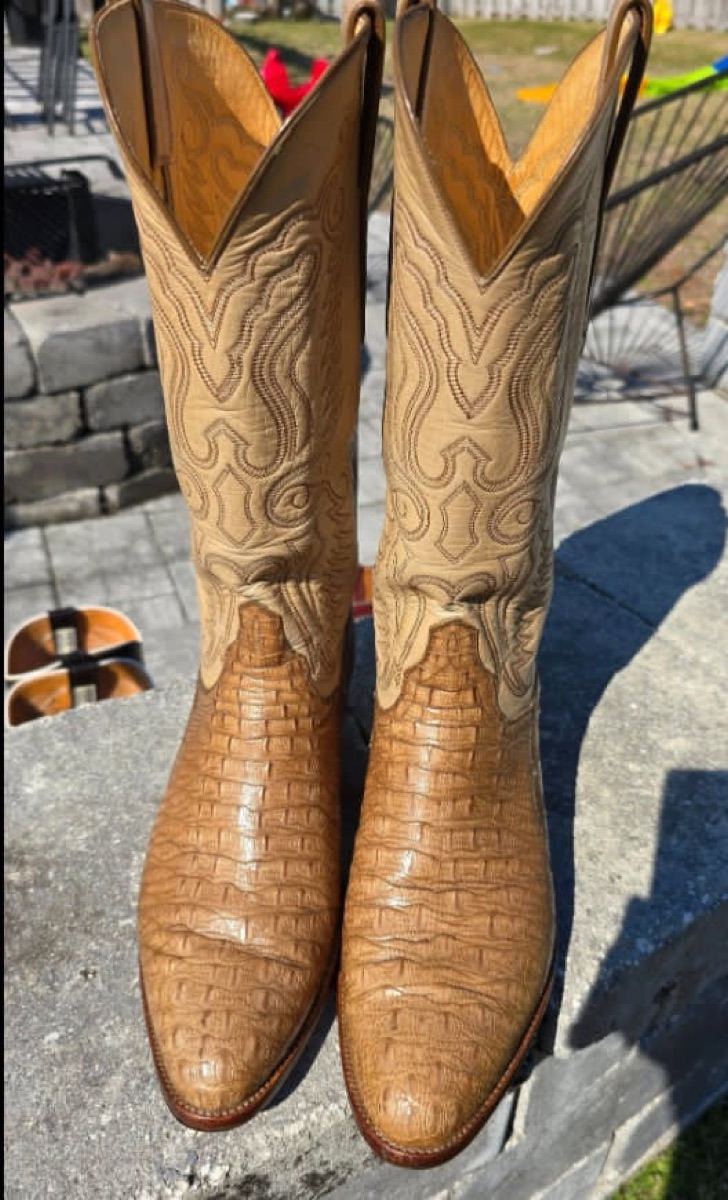
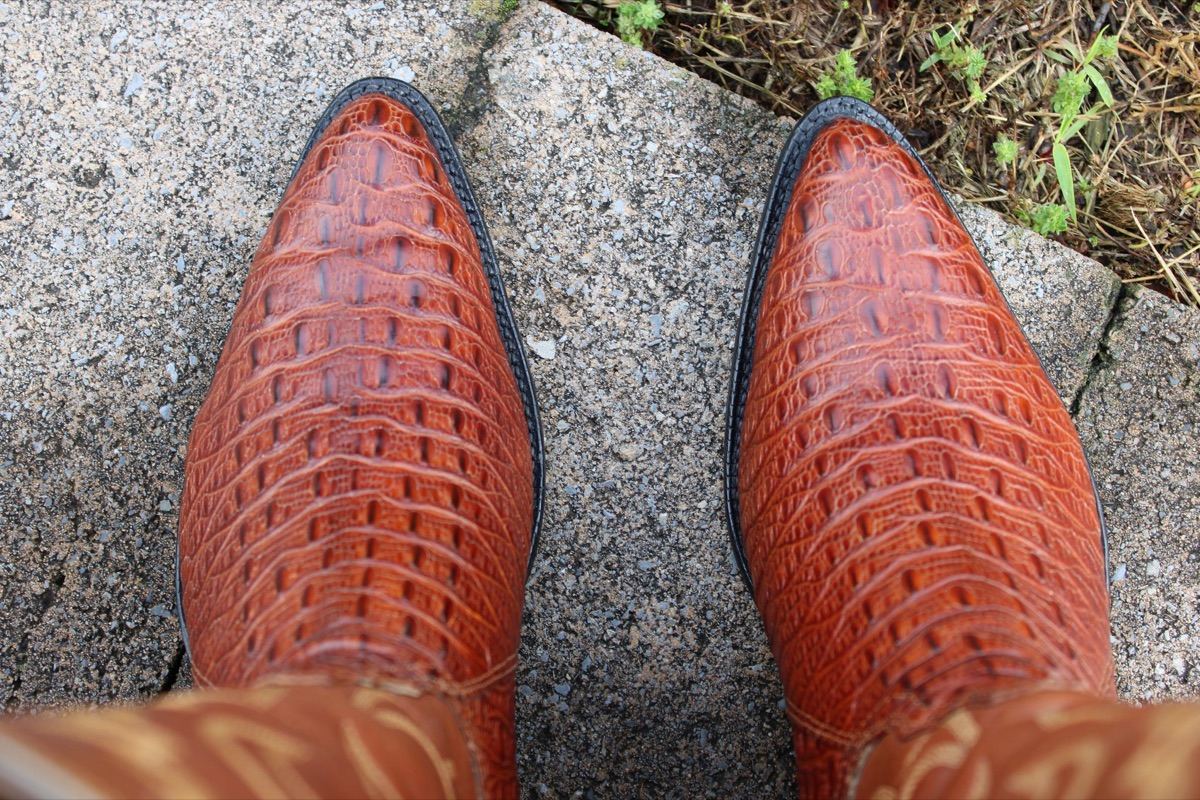
Hornback lizard leather comes from the dorsal (back) side of various monitor and tegu species, showcasing the raised, bony ridge that runs along the spine. This cut of lizard skin is far less common than the belly-cut teju because only a small section of each hide produces the dramatic hornback effect. The result is one of the most visually striking exotic leathers used in western boot making, with a rugged, three-dimensional texture that stands out immediately.
Hornback lizard boots command a premium over standard teju lizard due to the limited usable area per hide and the skill required to center the ridge on the vamp. The leather is thicker and stiffer than belly-cut lizard, which means these boots often require a longer break-in period but reward the wearer with exceptional durability.
History
Hornback lizard leather has been produced as a specialty premium cut since the early days of the exotic lizard trade in the mid-twentieth century. While belly-cut teju became the volume product that defined the lizard boot category, hornback remained a boutique cut because of how little usable dorsal material each hide yields — a single hide might only produce one strong hornback vamp panel, which means the placement challenge and material cost filter out most production-line contexts from the start.
The original commercial hornback market drew primarily from monitor lizard species — Varanus salvator and related Southeast Asian and African species — which produce larger, more pronounced hornback ridges than tegu. These monitor hides carried real visual impact, and the cut attracted custom and boutique makers who wanted to offer something genuinely different from the commodity teju belly that dominated the retail market. As CITES regulations tightened monitor lizard trade through the 1970s and 1980s, the supply of monitor hornback became more restricted and documentation requirements more demanding.
Argentine tegu hornback gradually became the more commonly available commercial product in the US western boot market as monitor sourcing tightened. The tegu ridge is less dramatic than monitor, but it remains unmistakably three-dimensional and the placement challenge is identical. Today hornback lizard commands a meaningful premium over teju belly at virtually every level of the market, and it remains associated with custom and boutique makers rather than mass production. The combination of limited usable material per hide, placement difficulty, and the category's boutique identity has kept hornback lizard a specialty cut rather than a catalog staple.
What Collectors Look For
The entire value proposition of hornback lizard is in the placement and centering of the dorsal ridge, and that is exactly where to start your evaluation. On a well-made pair, the ridge should run straight and centered down the vamp from toe box to the top of the foot, with the raised scales flanked symmetrically on both sides. If the ridge drifts left or right, or if the two boots do not match in ridge position relative to each other, the maker cut corners on layout. Because the usable hornback section of each lizard hide is narrow, properly centering a matched pair takes real skill and material, and that effort should be visible in the finished boot.
Beyond placement, evaluate the three-dimensional quality of the ridge itself. The raised scales should feel genuinely hard and bony under your fingers, not soft or compressible. The transition from the central ridge scales down to the flat side scales should be gradual and organic, not abrupt. The side field scales should be clean and consistent, since they anchor the visual composition and make the central ridge read as intentional rather than accidental. Hornback lizard is not for everyone, but when it is executed well, it is one of the most architecturally interesting cuts in western boot making.
How to Identify
The defining feature of hornback lizard is the pronounced raised ridge running down the center of the vamp. This ridge consists of enlarged, bony scales that taper in size as they move outward toward the sides, where they transition into smaller, flatter scales. The texture is unmistakably three-dimensional. Authentic hornback will show natural asymmetry in the ridge, with slight variation in the height and spacing of the raised scales.
Hornback Lizard
- Pronounced raised dorsal ridge along vamp center
- Bony, rigid feel under finger pressure
- Scales taper gradually from ridge to side field
- Thicker, stiffer leather with longer break-in
Teju Lizard
- Flat, uniform tile pattern across the whole vamp
- Smooth, supple feel throughout
- Consistent scale size from edge to edge
- Thin, lightweight leather comfortable from day one
Real vs. Print
Genuine hornback lizard has a hard, bony feel to the raised ridge scales. If you press on a ridge scale, it will feel rigid and unyielding. Embossed imitations use foam or padding beneath stamped cowhide to simulate the raised effect, and they will compress noticeably under finger pressure. The transition zone between the central ridge and the side scales on genuine hornback is gradual and organic, while prints tend to have an abrupt, uniform step-down.
Care Tips
Hornback lizard's raised scales are prone to catching on things and can chip if mistreated. Apply a reptile-safe conditioner with a soft brush, working the product into the crevices around the ridge. Avoid submerging these boots in water, as the thick bony scales can absorb moisture and warp as they dry. Allow them to air dry naturally if they get wet, and condition once fully dry.