

Ostrich — Full Quill
Cut notes
The classic crown presentation with raised follicle bumps. Collectors judge this cut on crown placement, quill liveliness, and left-right symmetry.
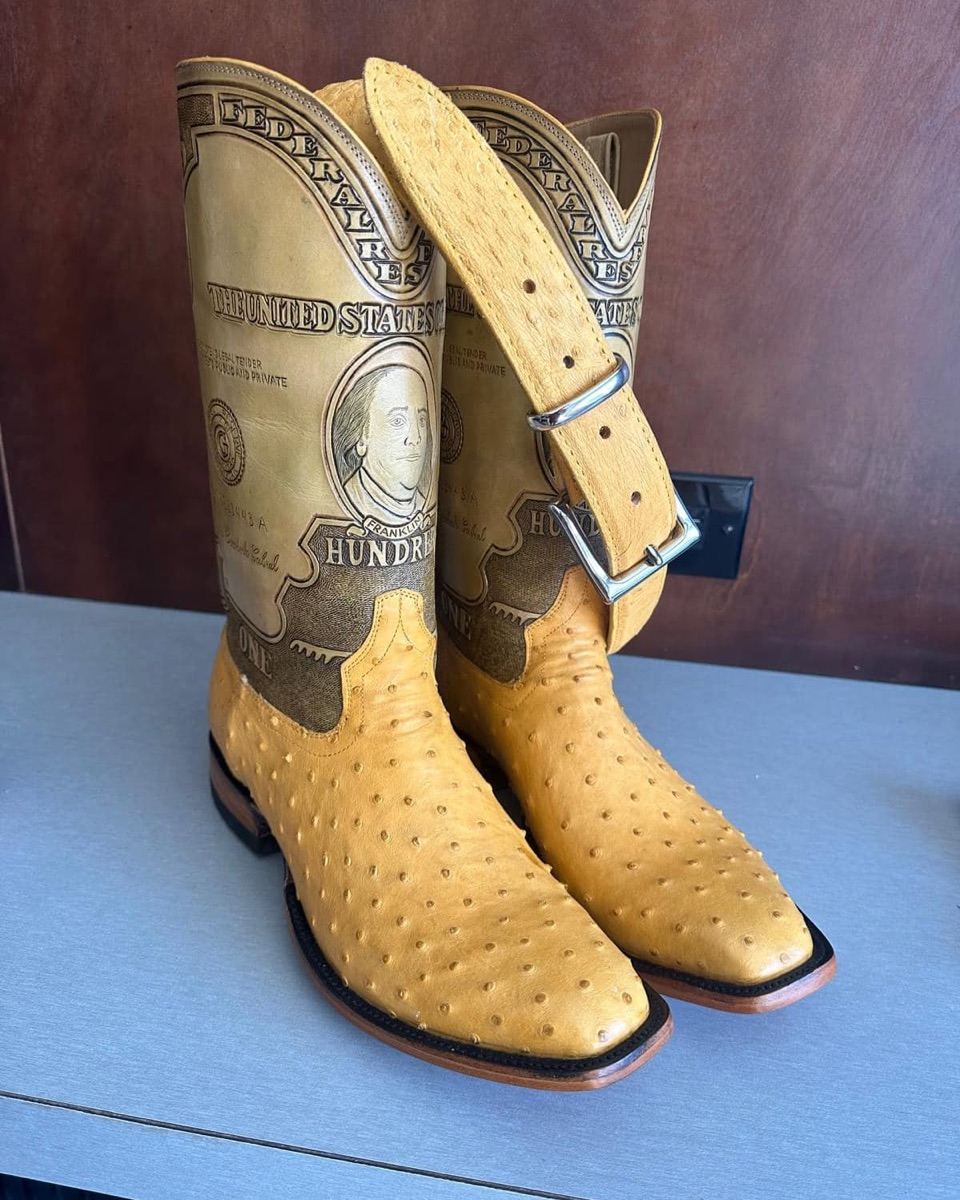
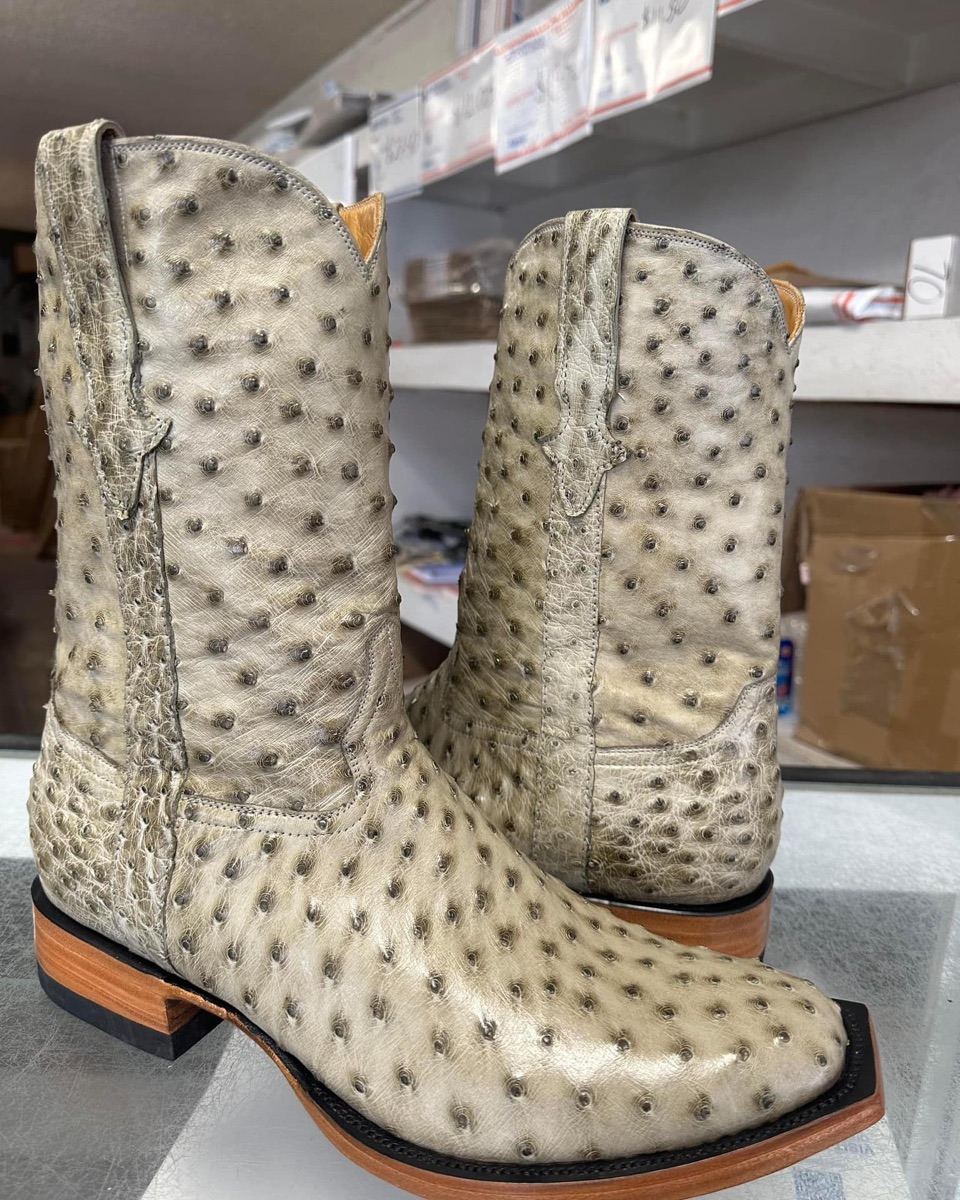
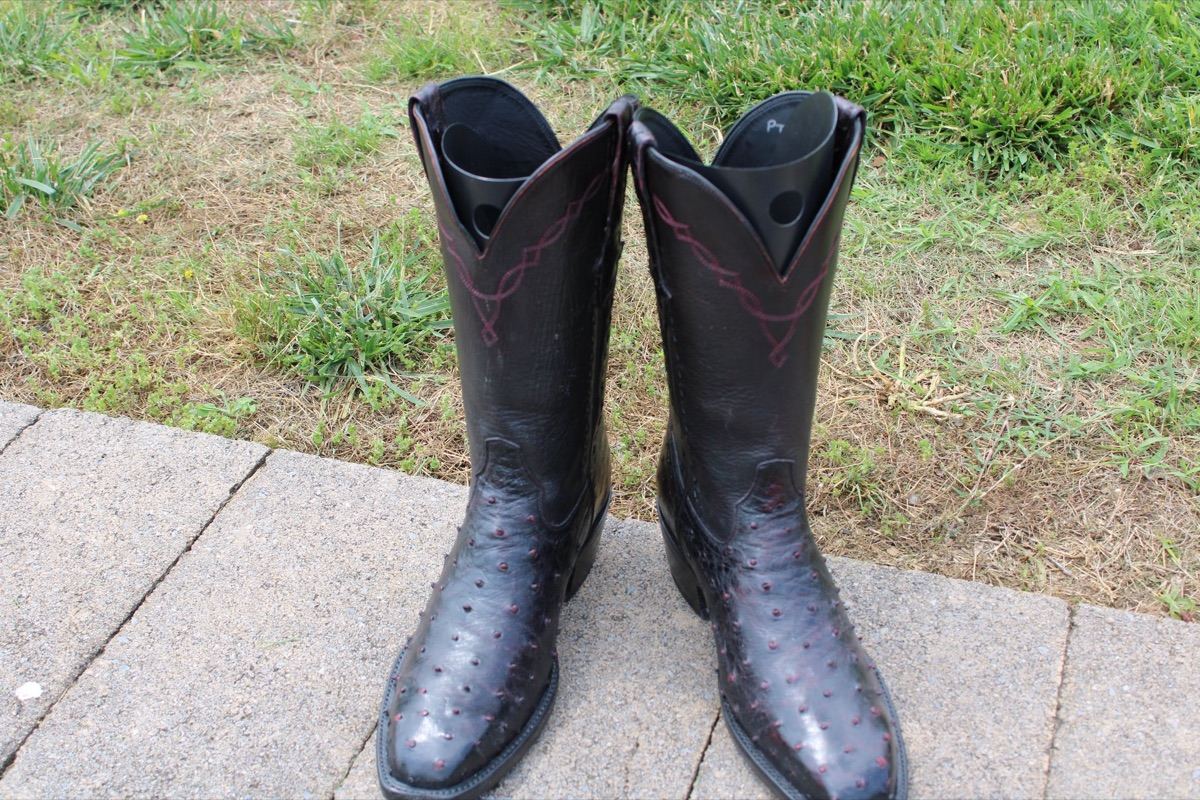
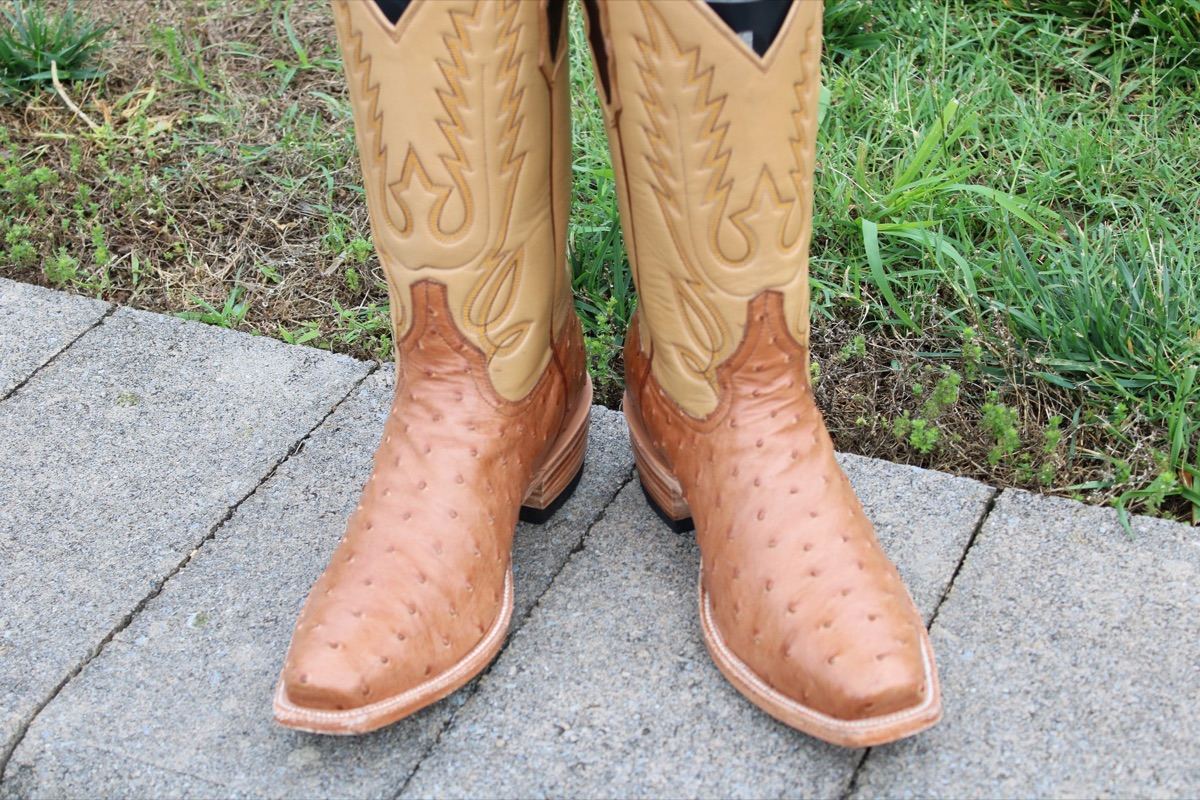
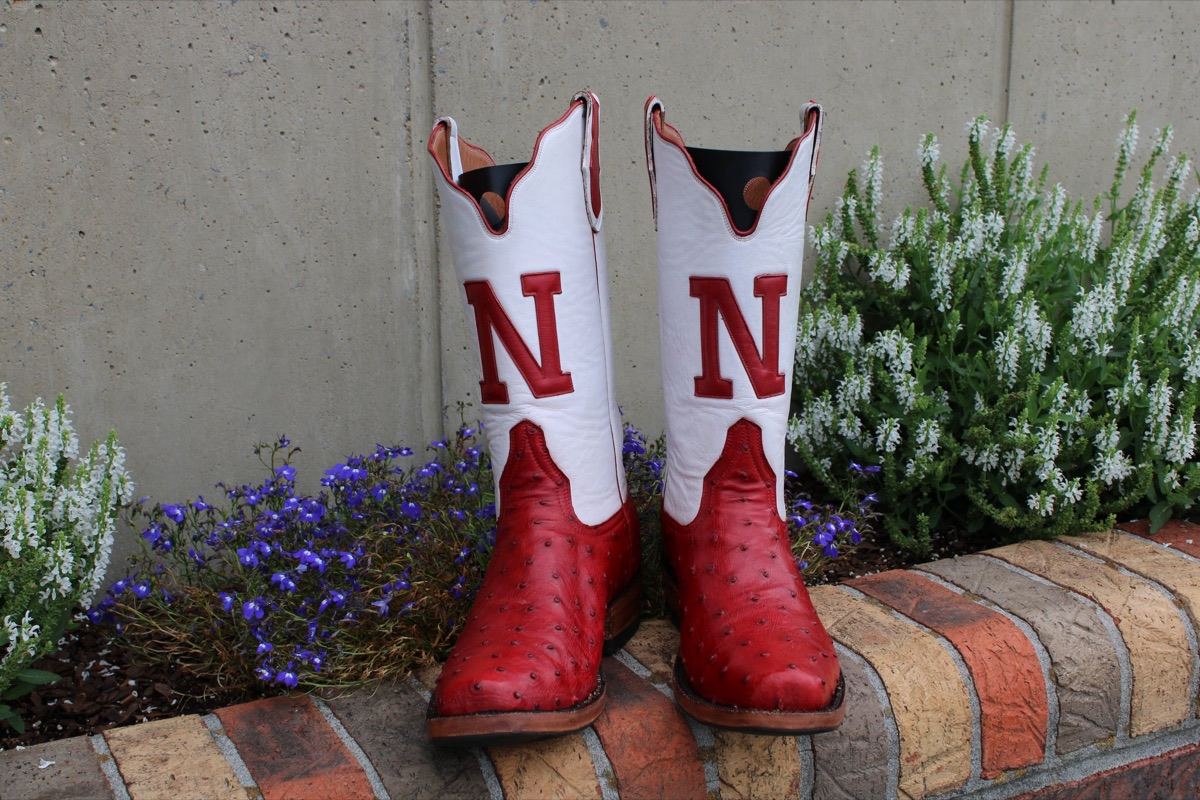
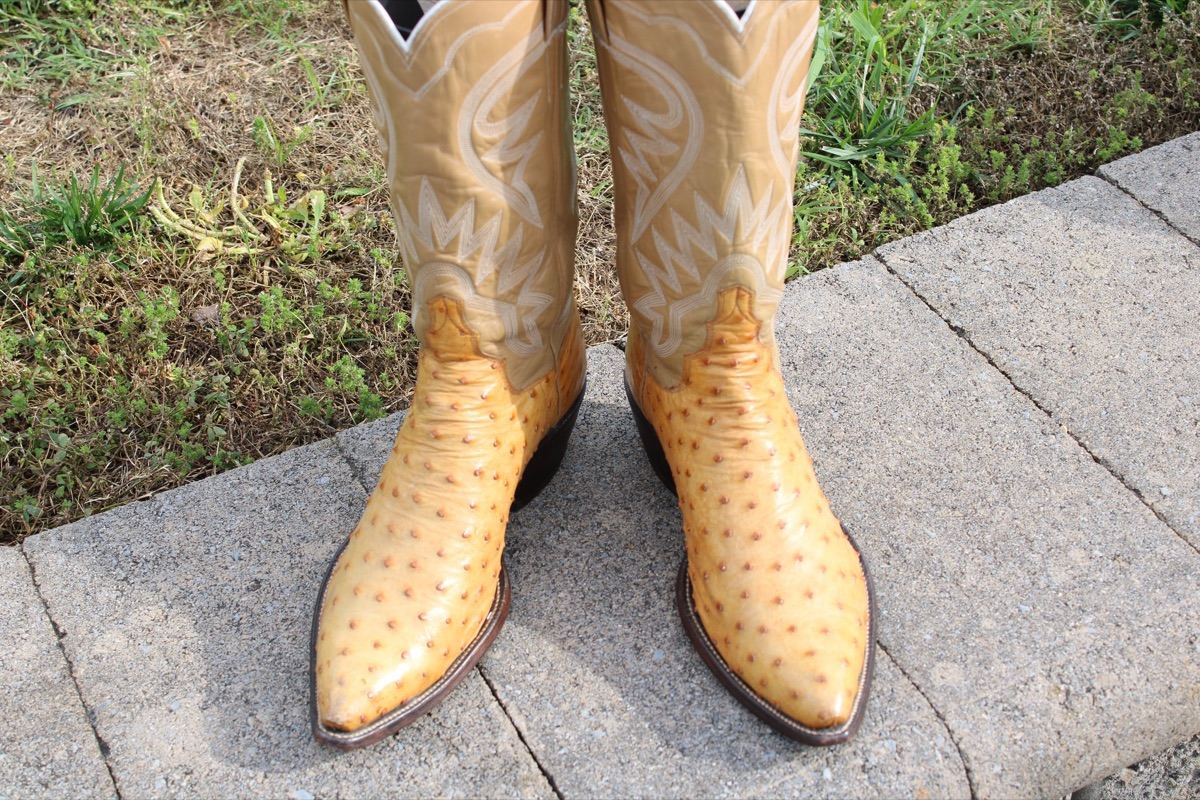
Full quill ostrich is one of the most recognizable and sought-after exotic leathers in western boot making. The leather features the distinctive raised bumps left by the quill follicles where the bird's feathers were rooted. Only the center back portion of the ostrich hide contains these follicle patterns, which limits the usable area per bird and drives the premium price. A well-matched pair of full quill ostrich boots is a hallmark of quality craftsmanship and has been a status symbol in western wear since the 1970s.
The quill pattern is naturally arranged in a crown or fan shape, with larger bumps at the center tapering to smaller ones at the edges. Each bump has a subtle dimple at its center where the feather shaft once sat. The leather itself is remarkably strong for its thickness and contains natural oils that keep it supple for decades with proper care. Full quill ostrich remains one of the most comfortable exotics to wear, conforming to the foot over time.
History
Ostrich leather production was established in the Klein Karoo region of South Africa, centered on the town of Oudtshoorn, in the 1860s. The industry's early engine was not leather but feathers — Victorian millinery and fashion consumed ostrich plumes in enormous quantities, and the Klein Karoo infrastructure was built to supply that market. When the feather trade collapsed after World War I, the tanneries and farming operations that had supported the plume business pivoted to leather as the durable commercial product. The infrastructure built for feathers became the foundation of a leather industry that has lasted more than a century.
South Africa's Western Cape ostrich belt remains the dominant global source of full quill leather today, and it has supplied virtually all full quill ostrich that has ever reached the American western boot market. Full quill became available to American makers in significant volumes through the 1960s and gained mainstream traction through the 1970s. By the 1980s Texas oil-boom era, a full quill pair from Tony Lama, Lucchese, or Dan Post was a standard marker of serious boot investment — the material that told a room you were not buying the entry-level shelf.
Full quill ostrich is regulated under CITES Appendix II. The farmed-bird supply chain is well-documented and traceable, which makes full quill one of the legally cleaner and more transparently sourced exotic leathers in the western boot market. For buyers who care about sourcing, that traceability is a genuine advantage over wild-harvested alternatives.
What Collectors Look For
Collectors pay for placement here more than almost anything else. A premium pair shows a convincing crown of quills centered on the vamp, with a pattern that feels lively and natural rather than scattered. The crown should read as a field rather than a cluster, with clear hierarchy from the largest bumps at the center to smaller bumps at the periphery. Matching from left boot to right boot is also a major quality signal — a well-matched pair requires selecting compatible sections from the hide, and good makers invest the time.
Good full quill should look dramatic but still feel soft and easy to wear, not stiff or overfinished. The best examples have a natural, almost three-dimensional quality to the crown that photographs well from a distance and holds up under close inspection. Avoid pairs where the bumps look flattened or the finish has been applied so heavily that the quill field reads as texture rather than structure. Over-finishing is one of the most common quality compromises on mid-tier full quill boots.
How to Identify
Look for the raised, rounded bumps distributed across the vamp in a natural pattern. Each bump should have a small indentation or pore at its center where the feather shaft once sat. The bumps will vary in size, with the largest clustered in the center of the crown area and smaller ones radiating outward. The surrounding leather between bumps is smooth and supple. Run your hand across the surface and you will feel each bump distinctly. The overall texture is unmistakable and unlike any other exotic.
The most common confusion point is embossed cowhide print. Genuine full quill bumps are three-dimensional and firm but not hard, with natural variation in size and spacing. Press a bump and it has slight give but springs back. Embossed imitations have uniformly spaced, identically sized bumps that feel flat or hollow. The center pore on a genuine bump is a natural indentation; printed versions often have a stamped dot that lacks depth.
Full Quill Ostrich
- Bumps vary in size — largest at crown center
- Natural pore or indentation at each bump's center
- Three-dimensional, firm but yielding to pressure
- Surrounding leather is soft and pliable
Embossed Print
- Bumps are identically sized and evenly spaced
- Stamped dot lacks real depth at center
- Bumps feel flat or hollow under pressure
- Underlying cowhide is stiffer than genuine ostrich
Real vs. Print
Genuine full quill ostrich bumps are three-dimensional and firm but not hard. They have natural variation in size and spacing. Press a bump and it will have slight give but spring back. Embossed imitations have uniformly spaced, identically sized bumps that feel flat or hollow. The center pore on each genuine bump is a natural indentation, while printed versions often have a stamped dot that lacks depth. Genuine ostrich is also noticeably softer and more pliable than any embossed cowhide imitation.
Care Tips
Full quill ostrich benefits from its natural oil content but still requires periodic conditioning. Use a quality exotic leather conditioner every 3-4 months, working it gently around the quill bumps with your fingers. Avoid using stiff brushes that could damage the raised follicles. Keep boots away from excessive heat, which can cause the bumps to flatten over time. Store with shoe trees to prevent toe curl and maintain the vamp shape.