

Ostrich — Smooth
Cut notes
Body-cut ostrich without the raised quill bumps. Softer, more understated, and best judged on hand feel, finish, and richness of the grain.
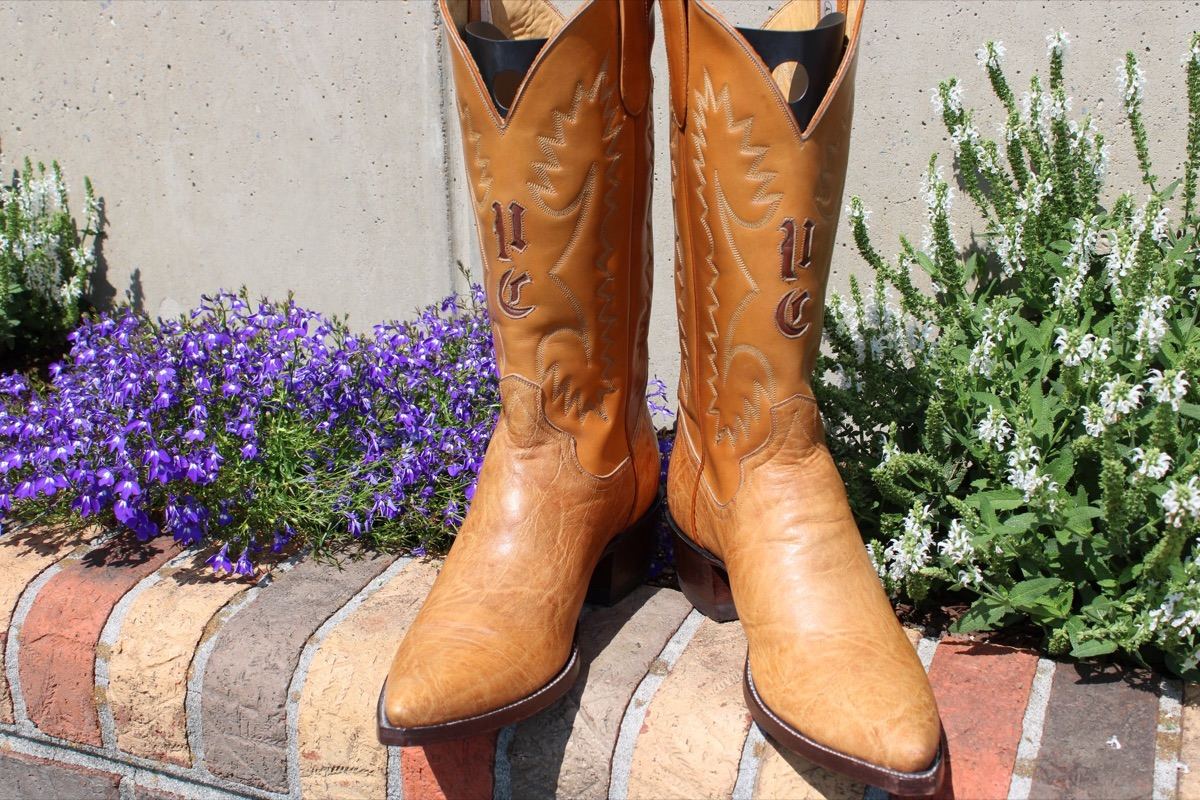
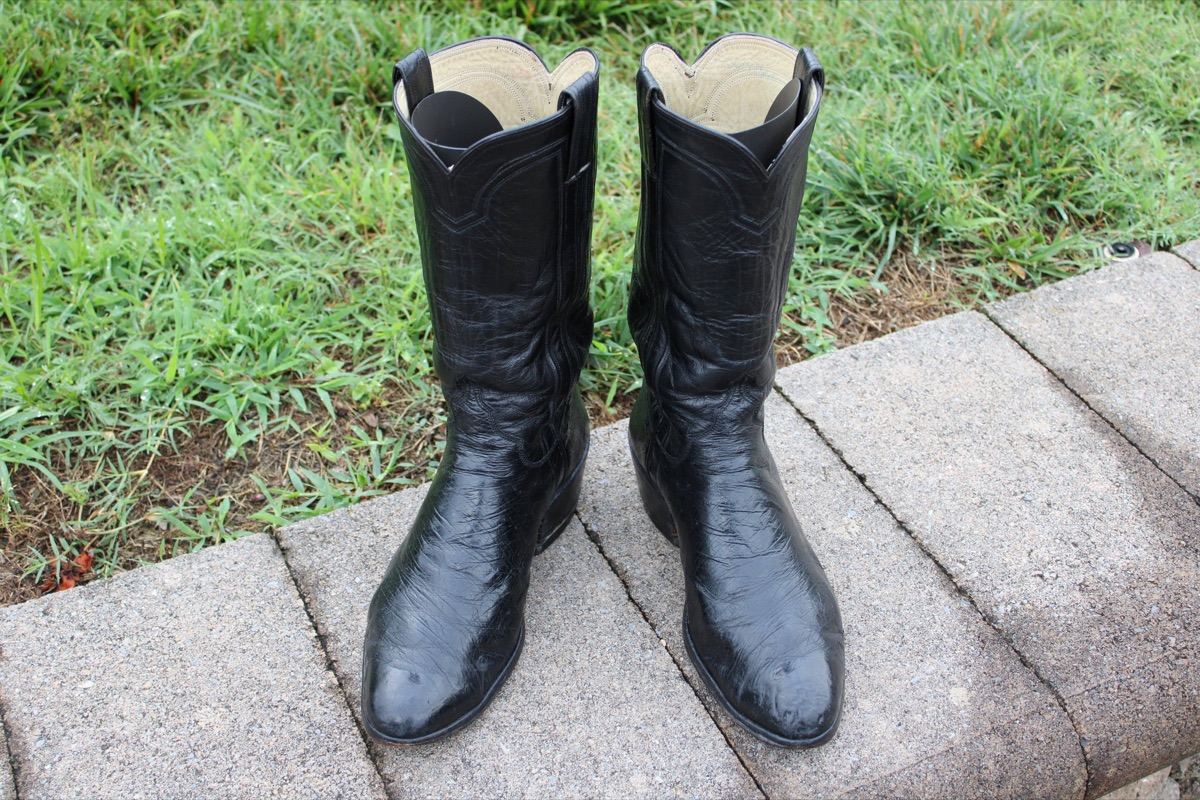
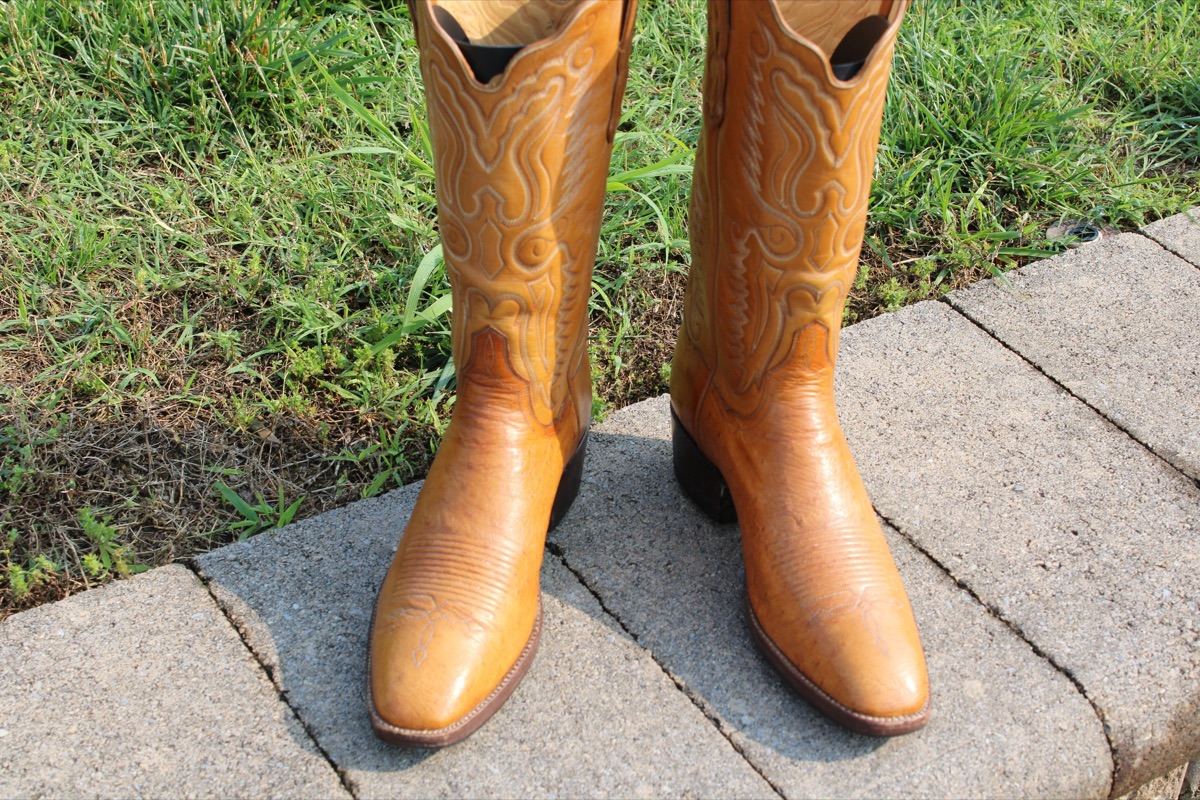
Smooth ostrich leather comes from areas of the ostrich hide that fall outside the quill follicle zone, primarily the flanks and sides of the bird. While it lacks the iconic bumps that most people associate with ostrich boots, smooth ostrich is a remarkably durable and supple leather that offers an understated elegance. It is significantly more affordable than full quill ostrich, making it an accessible entry point into exotic boot ownership.
The leather has a fine, consistent grain with a soft hand feel. Ostrich skin in general is one of the strongest commercial leathers by thickness, and smooth ostrich retains this strength. It is naturally rich in oils, which gives it excellent resistance to drying and cracking over time. Many collectors appreciate smooth ostrich for its versatility, as it pairs well with both casual and dressy outfits without drawing excessive attention.
History
Smooth ostrich comes from the non-quill zones of the same South African farmed ostriches that produce full quill leather. The quill crown covers only the center back of the bird, leaving the flanks and body as smooth-hide areas. Those sections were always part of the same hide but occupied a secondary position in early commercial tanning — the quill field was the prize, and the smooth areas were processed alongside it as the market developed.
As the full quill market matured through the 1970s and 1980s, tanneries developed more systematic commercial uses for the non-quill sections. Smooth ostrich entered the boot market as a more affordable cut from the same high-quality birds, carrying the same natural oil content and strength-to-weight characteristics that made full quill desirable. Some of the finest Texas boot makers recognized its utility early, using smooth ostrich for shaft panels rather than vamps — a placement that took advantage of its durability and comfortable weight even when it was not the featured exotic on the foot.
Today smooth ostrich occupies the bottom tier of the ostrich pricing hierarchy while retaining the core material advantages — traceability, natural oils, durability — that make ostrich leather worth buying regardless of cut. The CITES Appendix II documentation that covers the full quill supply chain covers smooth ostrich equally; the same farms, the same tanneries, the same paperwork.
What Collectors Look For
Smooth ostrich attracts a specific type of buyer: someone who wants the durability and natural oil content of ostrich leather without the visual statement of the full-quill crown. The grain field on the vamp should look even and consistent from one side to the other, with none of the loose or open-fibered texture that shows up on hides from older birds or lower-quality tannage. A good smooth ostrich boot has a natural, quiet sheen that reads as genuinely premium rather than lacquered. Run your hand across the vamp and it should feel supple and slightly oily, never stiff or papery.
For collectors who know the bird well, the sourcing area within the hide also matters. Leg panels from ostrich tend to have a slightly different grain character than side panels, and on better boots the maker will use matched sections to keep the vamp consistent. Because smooth ostrich is priced well below full-quill, the maker's investment in material and layout tells you a lot about the overall level of the boot. Tight stitching, clean finish on the edges, and consistent dye depth across the vamp are the signals that someone treated the material with respect instead of just filling a price point.
How to Identify
Smooth ostrich has a fine, even grain without the raised quill bumps found on full quill cuts. The surface texture is soft and slightly pebbled, with a natural luster. It is noticeably suppler than most other exotics. One subtle tell is that smooth ostrich often has a slightly waxy or oily feel, a natural characteristic of ostrich skin. The leather stretches more readily than cowhide, which you can sometimes detect by pressing into the vamp.
The most common identification error is treating smooth ostrich as generic cowhide or a dressed-up calf leather. The hand feel is different — smoother, oilier, more pliable — and a close-up photograph should show a consistent fine-grain character rather than the more fibrous open texture of cowhide. If the leather looks too uniform or too flat under angled light, it may be an embossed imitation rather than genuine smooth ostrich.
Smooth Ostrich
- No quill bumps visible
- Fine, even grain with natural oily hand
- More affordable than full quill
- Understated appearance that wears with any outfit
Full Quill Ostrich
- Prominent raised follicle bumps across vamp
- Bumps concentrated in crown or fan pattern
- Premium pricing reflects limited yield per bird
- Immediately recognizable visual statement
Real vs. Print
Genuine smooth ostrich is exceptionally soft and pliable compared to cowhide. An embossed imitation will feel stiffer and lack the natural oil content. Real smooth ostrich also has slight variation in grain density across the vamp, while printed versions are perfectly uniform. If you can see the interior side of the leather, genuine ostrich has a distinctive fibrous backing that differs from cowhide.
Care Tips
Smooth ostrich is one of the easiest exotics to maintain. Its natural oil content means it requires less frequent conditioning than reptile skins. A quality leather conditioner applied every 4-6 months will keep it supple. Buff with a soft cloth to restore sheen. Because the leather is naturally flexible, it is less prone to cracking but can stretch over time, so use boot trees when storing.