

Western Boot World reference
Calfskin
Reference photos
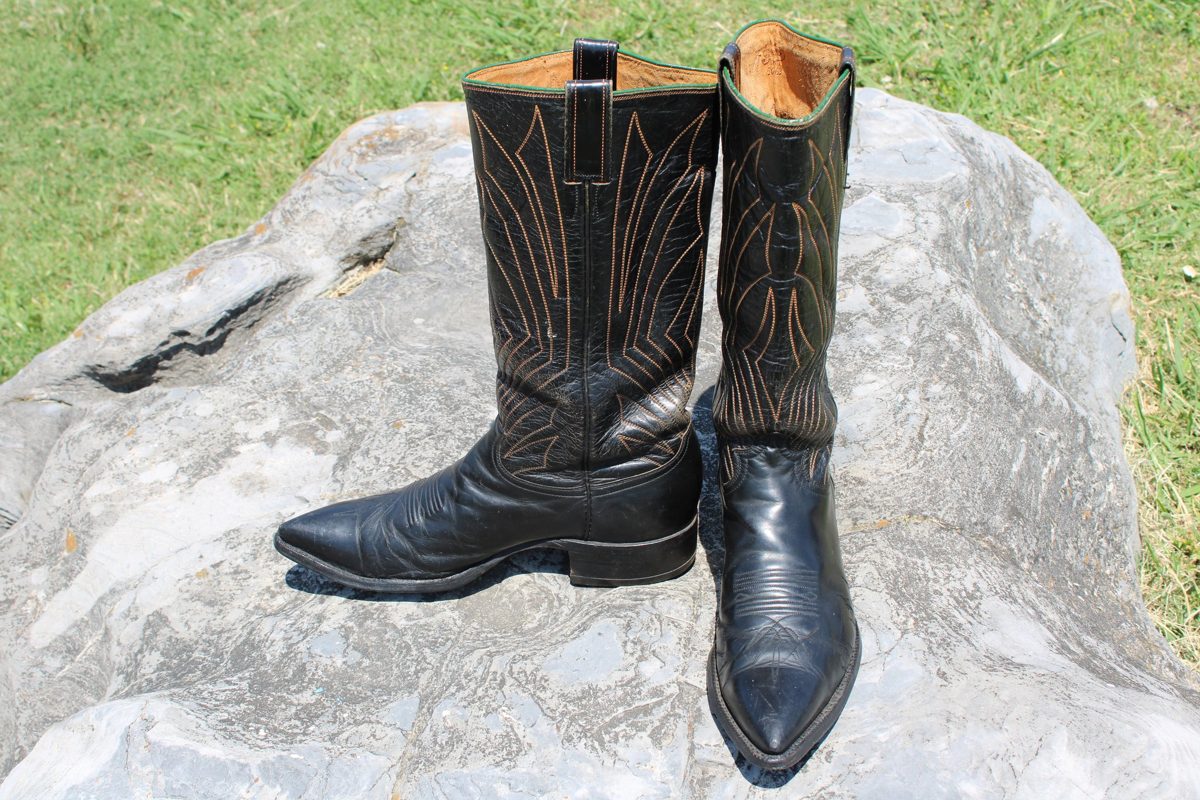
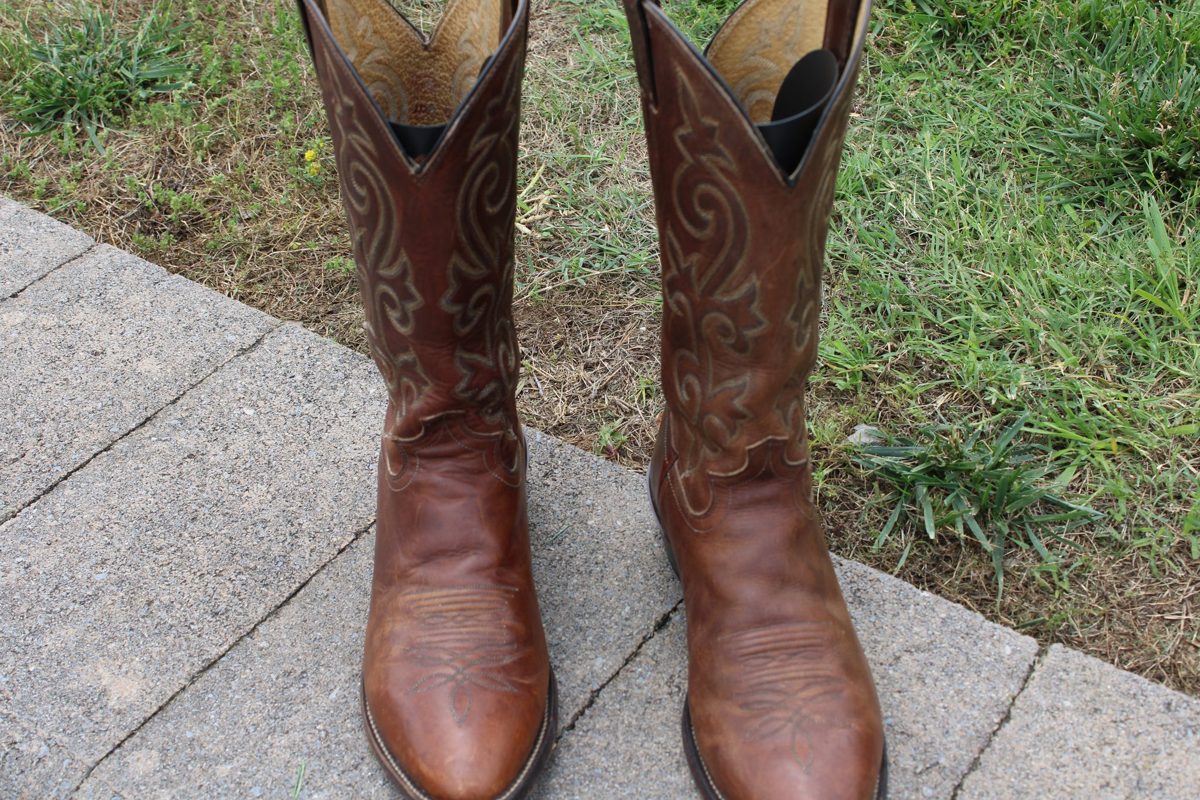
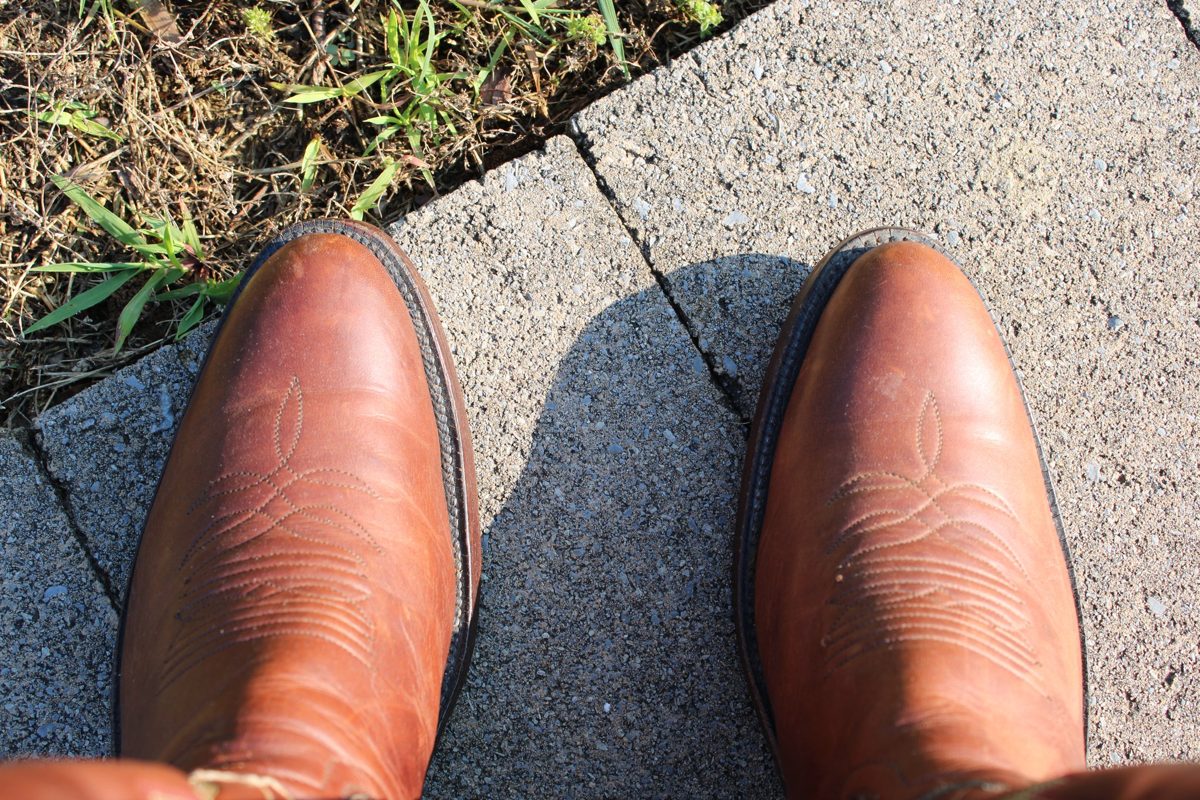
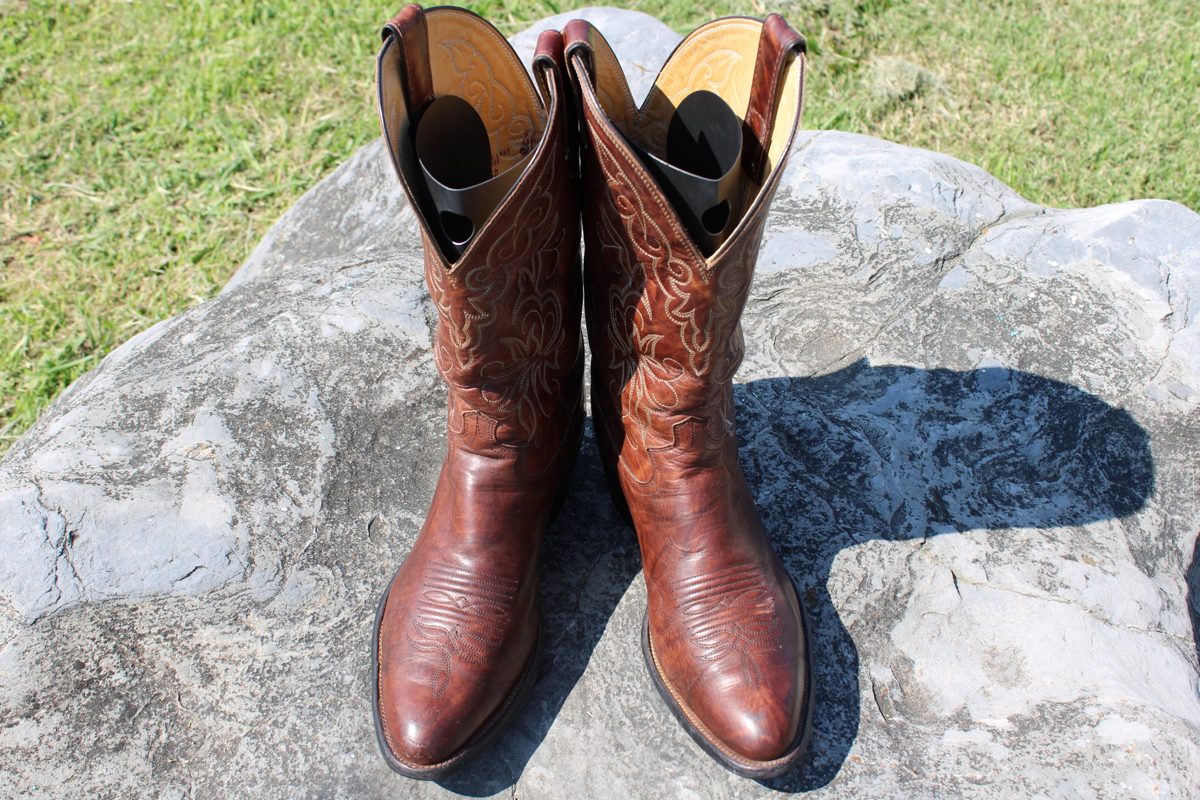
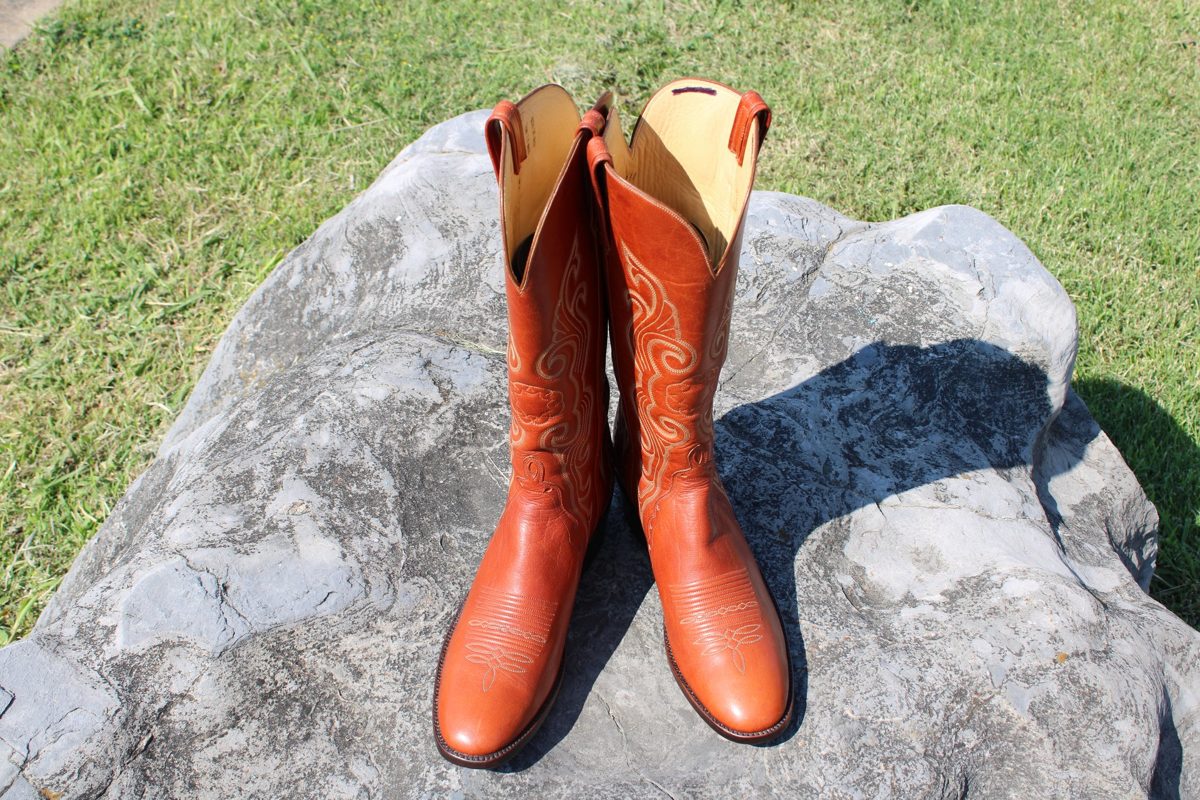
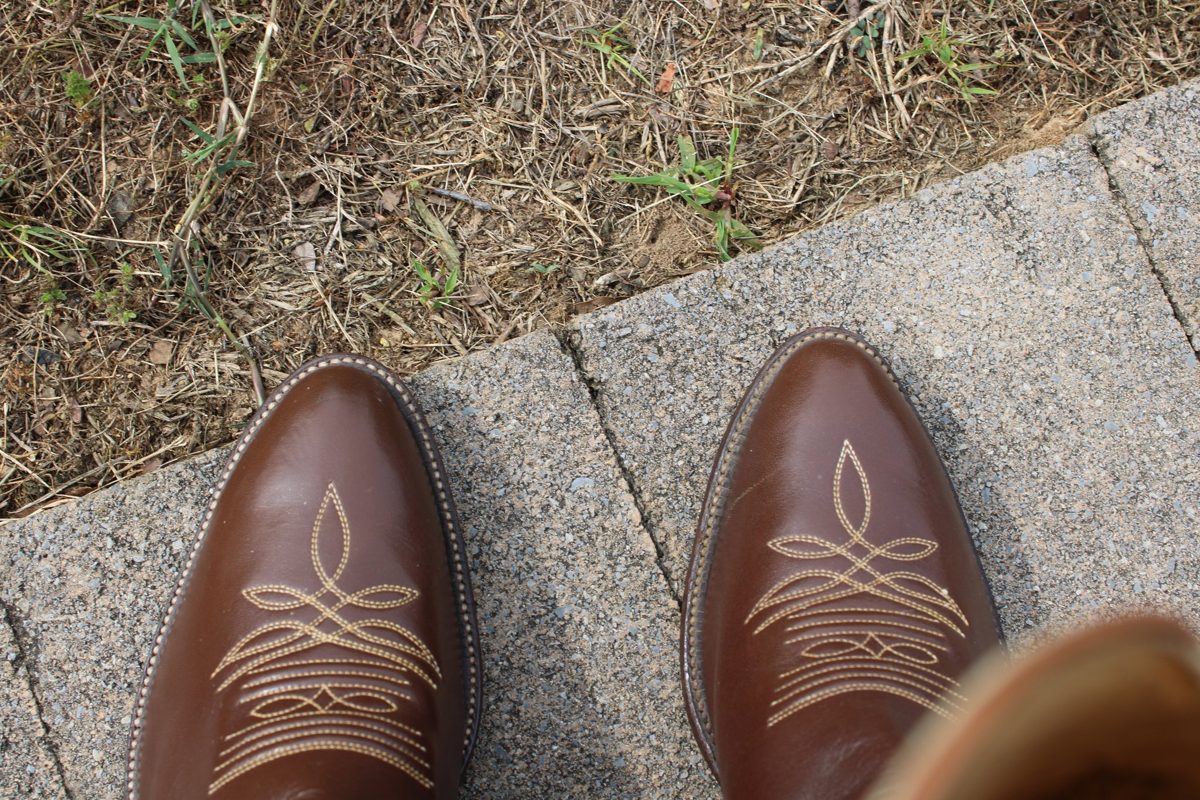
Pattern
Leather from young cattle. Finer and tighter-grained than adult cowhide, with small, even pores and a smooth surface that takes a high shine. The standard upper for dress boots and the usual shaft leather behind exotic vamps.
Also known as
calf · French calf · kip
Family / genus
Bovidae · Bos
Collector notes
Calfskin is not rare, so condition, maker, era and grade drive value. A clean pair of vintage handmade calf boots from a known shop can be worth more than a tired exotic pair. Read the grain closely: genuine full-grain calf shows a fine, slightly irregular pore pattern; heavily corrected leather looks flat and plastic.
Quick identification checks
- Pores are small, tight and evenly scattered, finer than adult cowhide and smoother than goat.
- The surface takes a deep, even shine without looking coated.
- Creases across the vamp are fine and rounded rather than sharp, broken lines.
- On exotic vamp boots, the shaft is usually calf. Judge it separately from the vamp.
Check in hand
- Calf feels smooth, supple and lighter than heavy cowhide or bullhide.
- Flex the vamp gently: full-grain calf wrinkles in fine lines and springs back.
- A plastic feel, peeling top coat, or a perfectly regular stamped grain points to corrected or bonded leather.
Common mix-ups
- Cowhide: Adult cowhide has a broader, more open grain and feels heavier. Many sellers use the words interchangeably.
- Goat: Goat shows a more visible, pebbled grain and is often used on work boots and vamps.
- Kangaroo: Kangaroo is lighter and silkier still, with almost no visible pores.
- Patent leather: High-gloss polished calf still shows pores. Patent has a sealed, mirror-like coating with no visible grain.
Buyer notes
- "Calfskin" is often a seller's word for any smooth cowhide. Grade and maker matter more than the label.
- Ask for close photos of the vamp crease and toe. Cracks there are hard to fix.
- Vintage dead-stock calf can be stiff and dry. Condition slowly before wearing.
Care notes
Wipe clean with a damp cloth, let dry away from heat, condition lightly with a leather cream every few months, and polish as wanted. Use boot trees between wears so creases stay shallow.
Watch for
- Deep cracks across the vamp crease from years without conditioning
- Finish worn through at the toe and heel counter
- Dried-out, stiff leather on dead-stock pairs stored in hot attics or garages
Calfskin in Western boots
Calfskin comes from young cattle. Compared with adult cowhide it is thinner, lighter and finer in the grain, which is why it became the standard leather for dress boots, shafts and linings. Most exotic boots pair an exotic vamp with a calfskin shaft, so nearly every boot in a collection has some calf in it.
The quality question is grade, not species. Full-grain calf keeps the original surface of the hide, with its fine pores and small natural marks. Corrected-grain leather has been sanded and stamped with an artificial grain, and it looks too even. It also creases and ages worse. Under raking light, full-grain calf shows real surface texture that shifts across the hide; corrected grain looks flat and uniform.
What to look for on vintage pairs
On older handmade and factory boots, look at the vamp crease, the toe and the heel counter. Well-kept calf darkens and develops a soft patina. Neglected calf dries out and cracks across the crease, and those cracks cannot be fully repaired. Dead-stock pairs that sat in heat for decades can look perfect and still be brittle, so condition them slowly before wearing.