

Western Boot World reference
Patent Leather
Reference photos
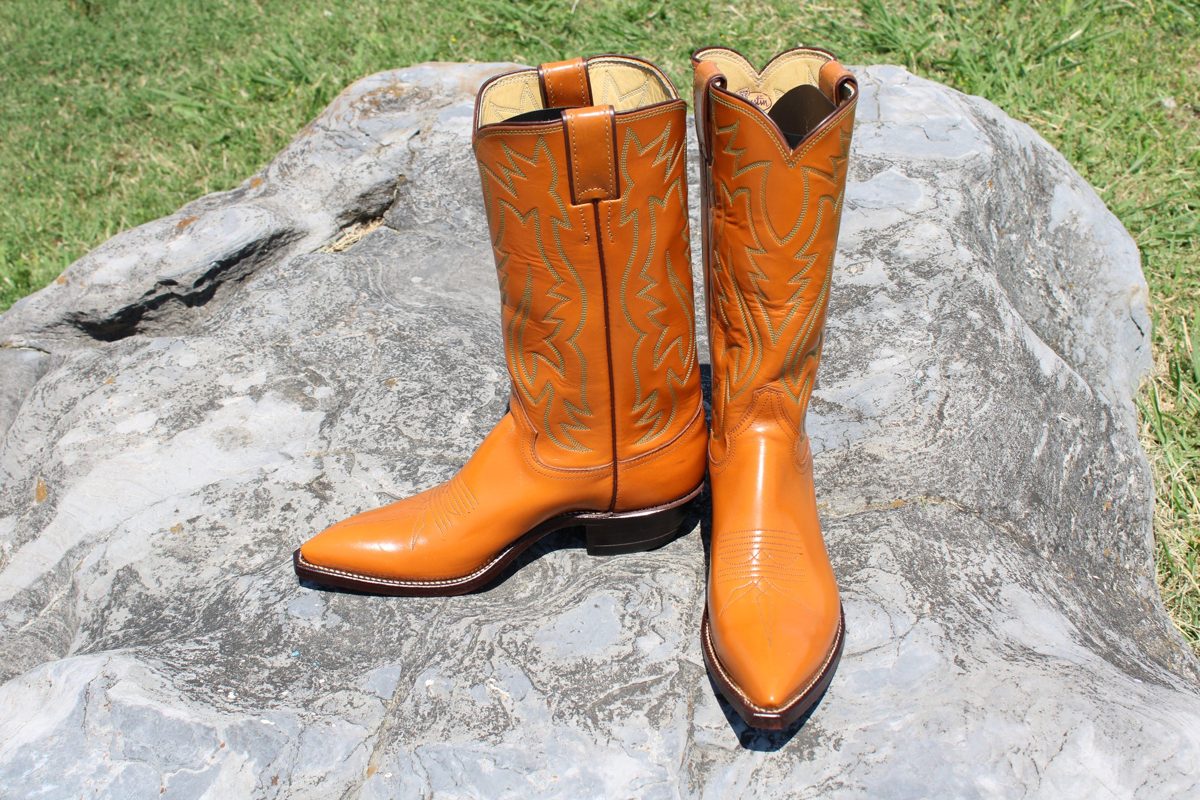
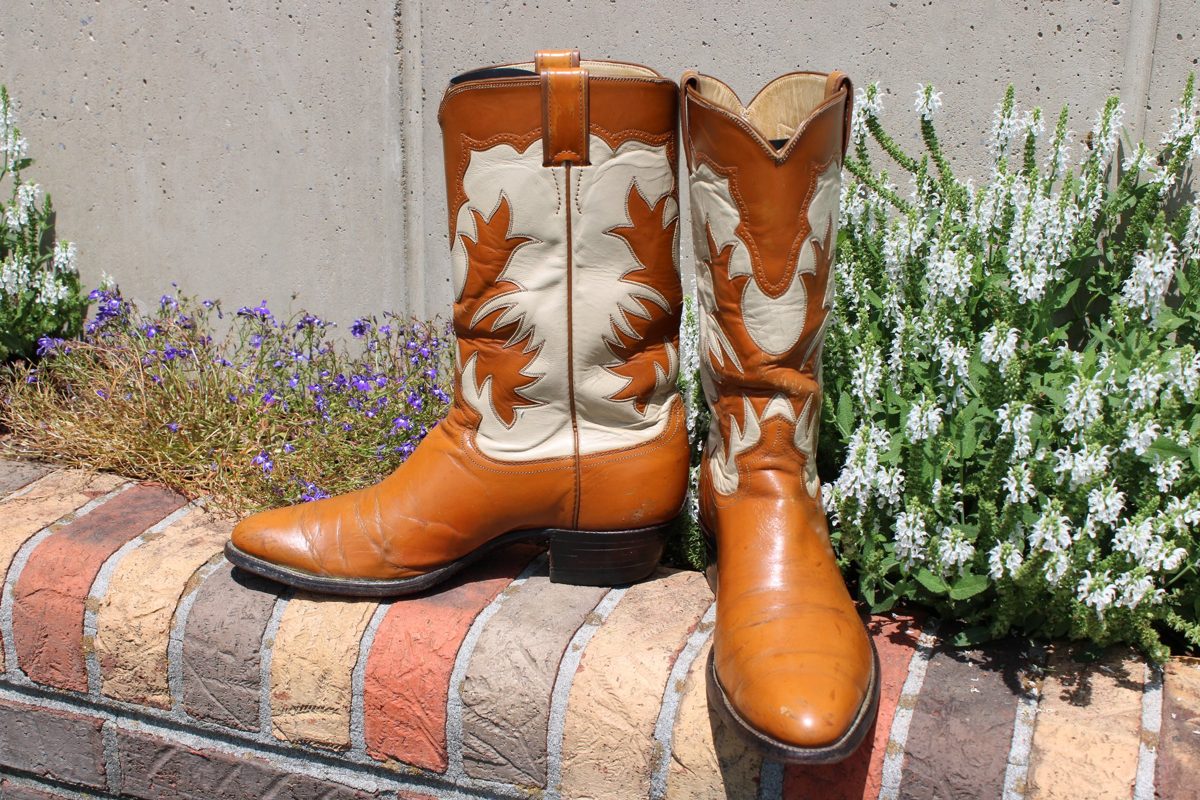
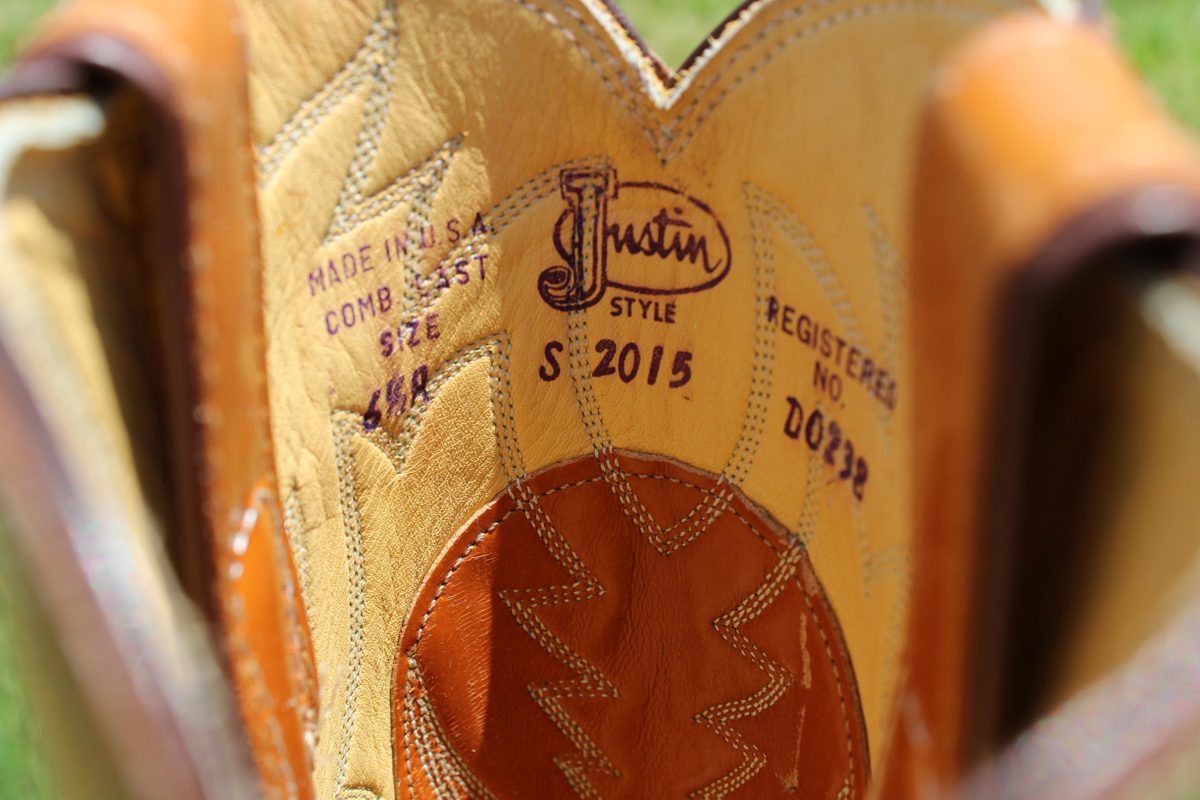
Pattern
Leather, usually calf or cowhide, sealed under a hard, glossy coating. Older patent used lacquer and linseed-oil finishes; modern patent uses plastic coatings. The surface looks mirror-smooth, with no visible pores.
Also known as
patent · patent calf · mirror finish
Collector notes
Patent is a finish, not a species. Value comes from the maker, era, color and condition of the coating. Vintage colored patent and dead-stock pairs with crack-free vamps are the ones collectors look for. Once the coating cracks it cannot be put back the way it was.
Quick identification checks
- Mirror-like gloss with no pores or grain visible on the vamp.
- Reflections stay sharp across the toe and vamp.
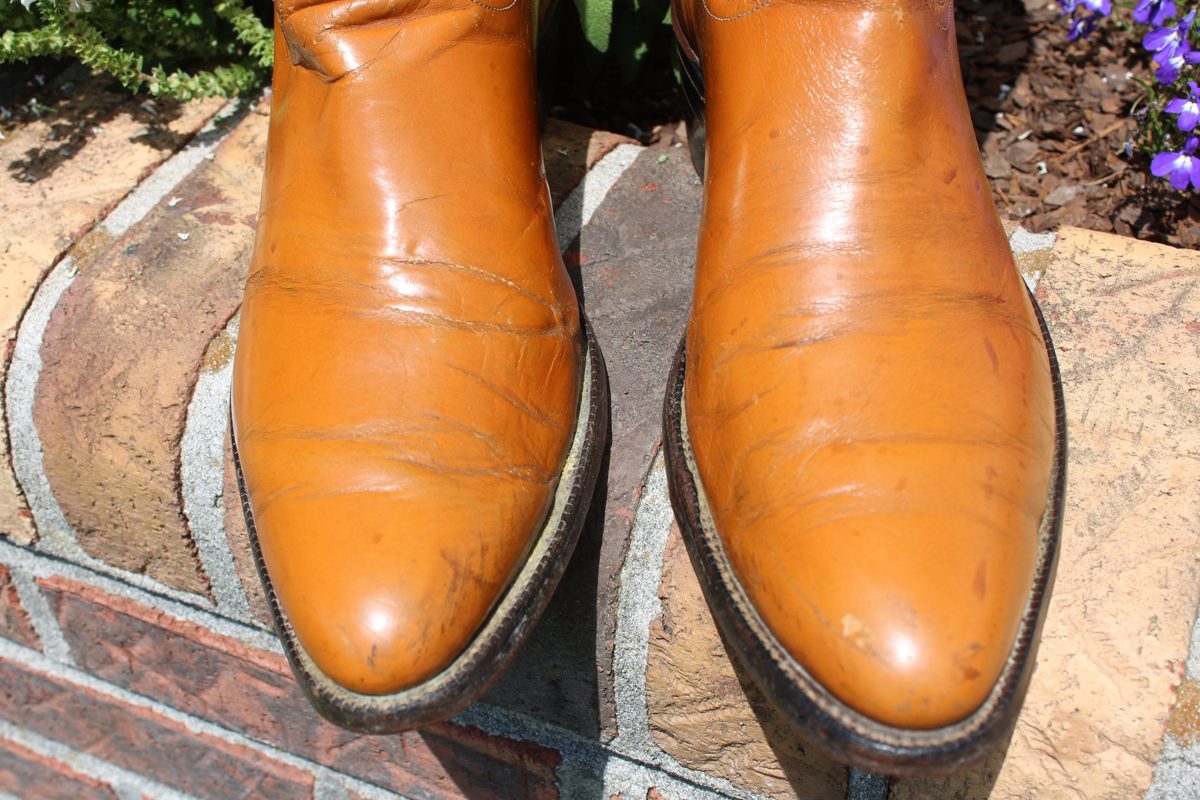
- Look at the crease line first. Fine crazing there is the most common wear.
Check in hand
- The coating feels hard and slick, not waxy.
- Look at a cut edge or inside the top line: real patent has leather under the coating. Synthetic patent shows a fabric backing.
- Press lightly near the crease. Brittle coatings show fine cracks.
Common mix-ups
- Polished calfskin: A high shine on calf still shows pores and a slight grain under raking light.
- Synthetic patent: Vinyl or polyurethane imitations look the same on the vamp. Check the edges and lining for a fabric backing.
Buyer notes
- Ask for close photos of both vamp creases in raking light.
- Light-colored patent can yellow with age. Compare it against the stitching and shaft color.
- Do not ship patent boots wrapped in plastic or touching other boots.
Care notes
Wipe with a soft, damp cloth and buff dry. Do not use oil-based conditioners or regular polish on the coated surface. Store each boot in a cloth bag so the finish does not stick to or pick up dye from other leather. Keep out of heat and sunlight; light-colored patent can yellow.
Watch for
- Cracking or crazing where the vamp flexes
- Yellowing on white and light patent
- A sticky or tacky finish after storage in heat
- Dye transfer where patent touched other leather or plastic
How patent leather is made
Patent leather is ordinary leather, usually calf or cowhide, finished with a hard, glossy coating. Nineteenth-century patent used layers of lacquer with linseed oil; modern patent uses plastic coatings. Either way, the coating seals the grain, so patent has none of the visible pores of polished calf.
In Western boots, patent shows up on dress and show boots, on women's boots, and as a contrast leather on toes, wingtips and inlays. Colored patent from the mid-century is a collector niche of its own.
Condition is everything
Because the shine is a coating, wear shows differently than on other leathers. Fine crazing appears at the vamp crease first. Light colors can yellow. In heat, some coatings turn tacky and pick up dye or stick to whatever they touch. Store patent boots separately in cloth bags, and do not use oil-based conditioners or regular wax polish on the coated surface.