

Western Boot World reference
Hand-Tooled
Reference photos
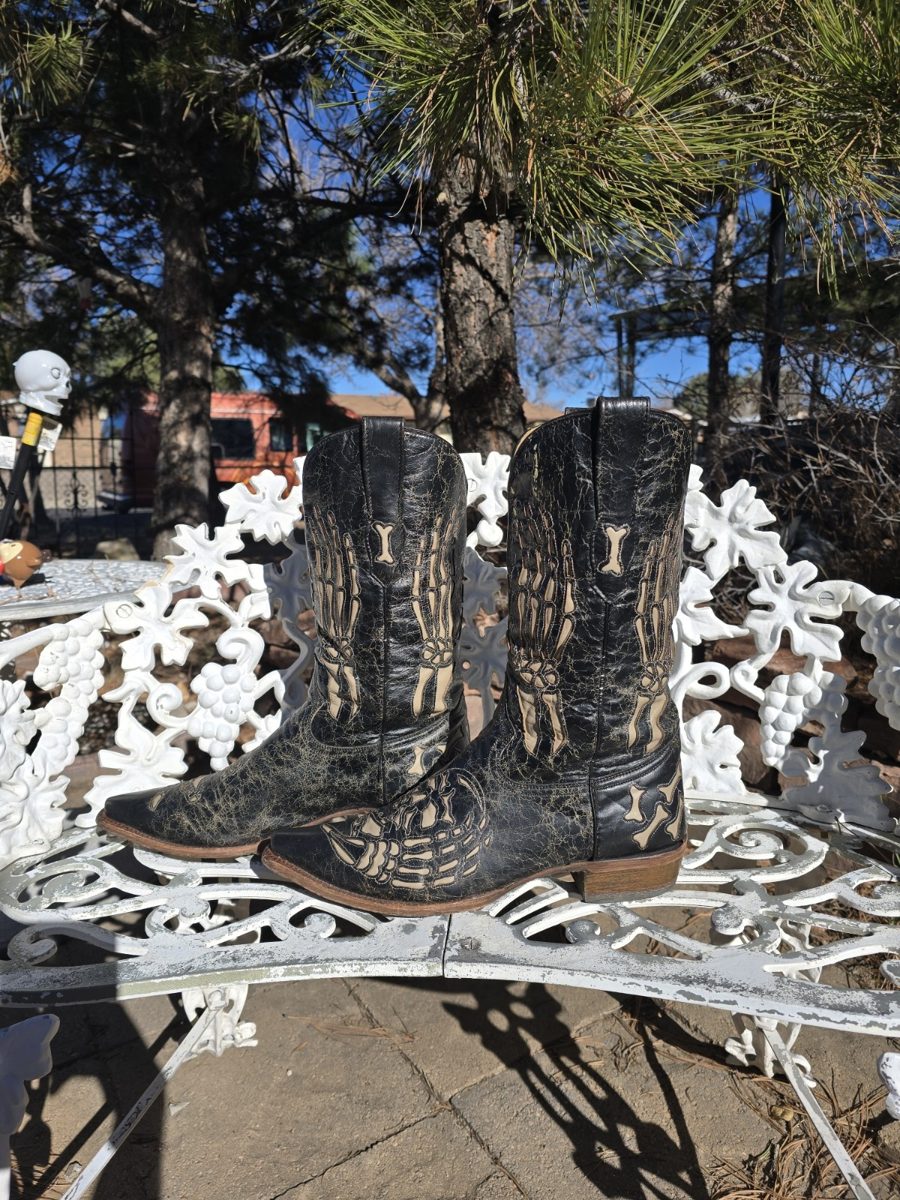
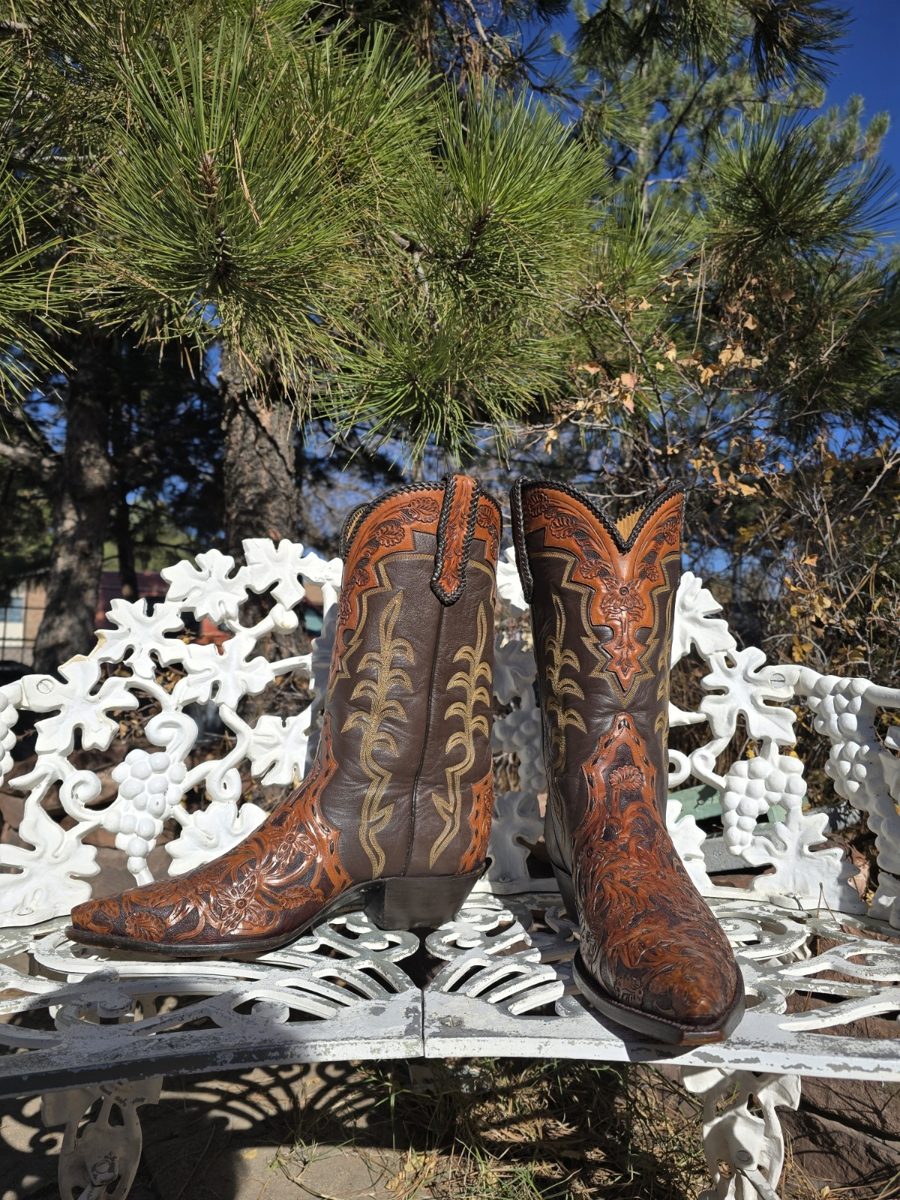
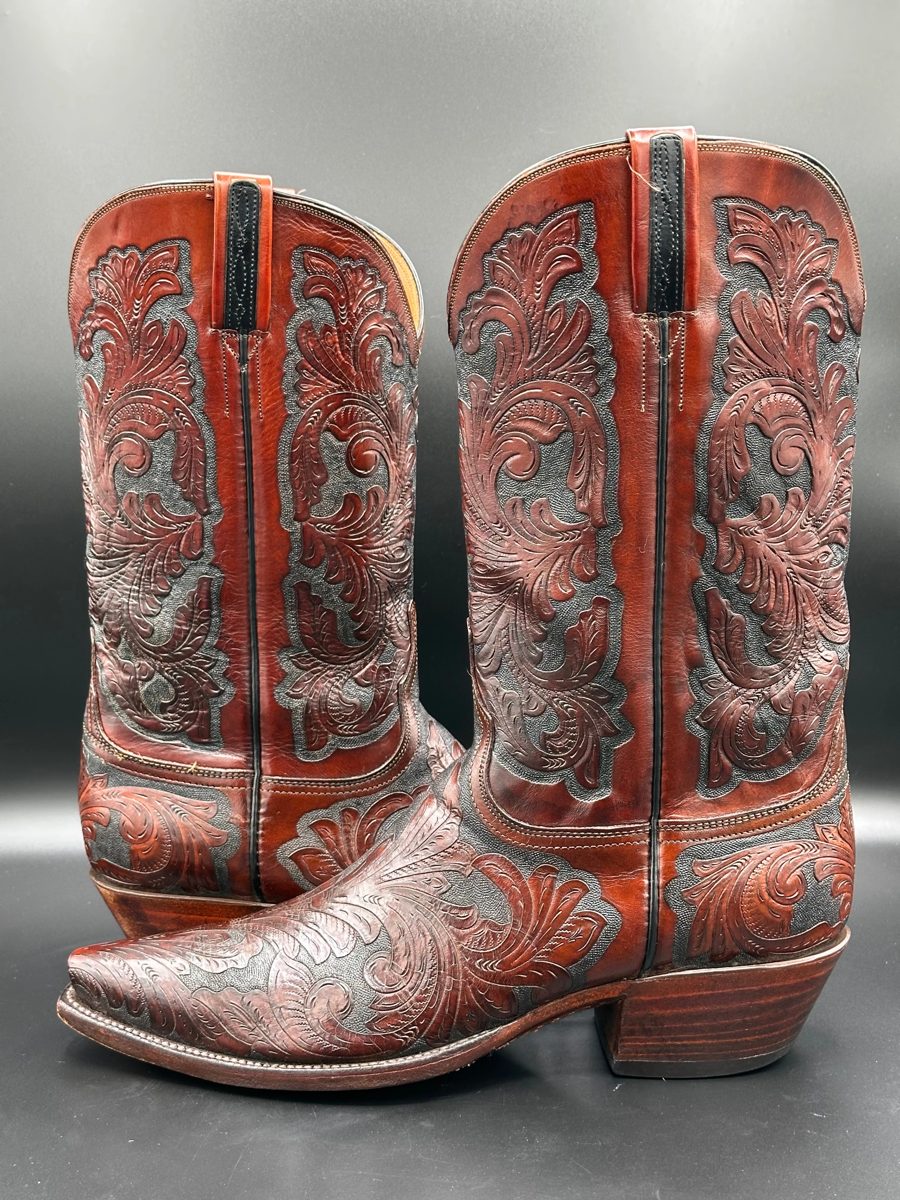
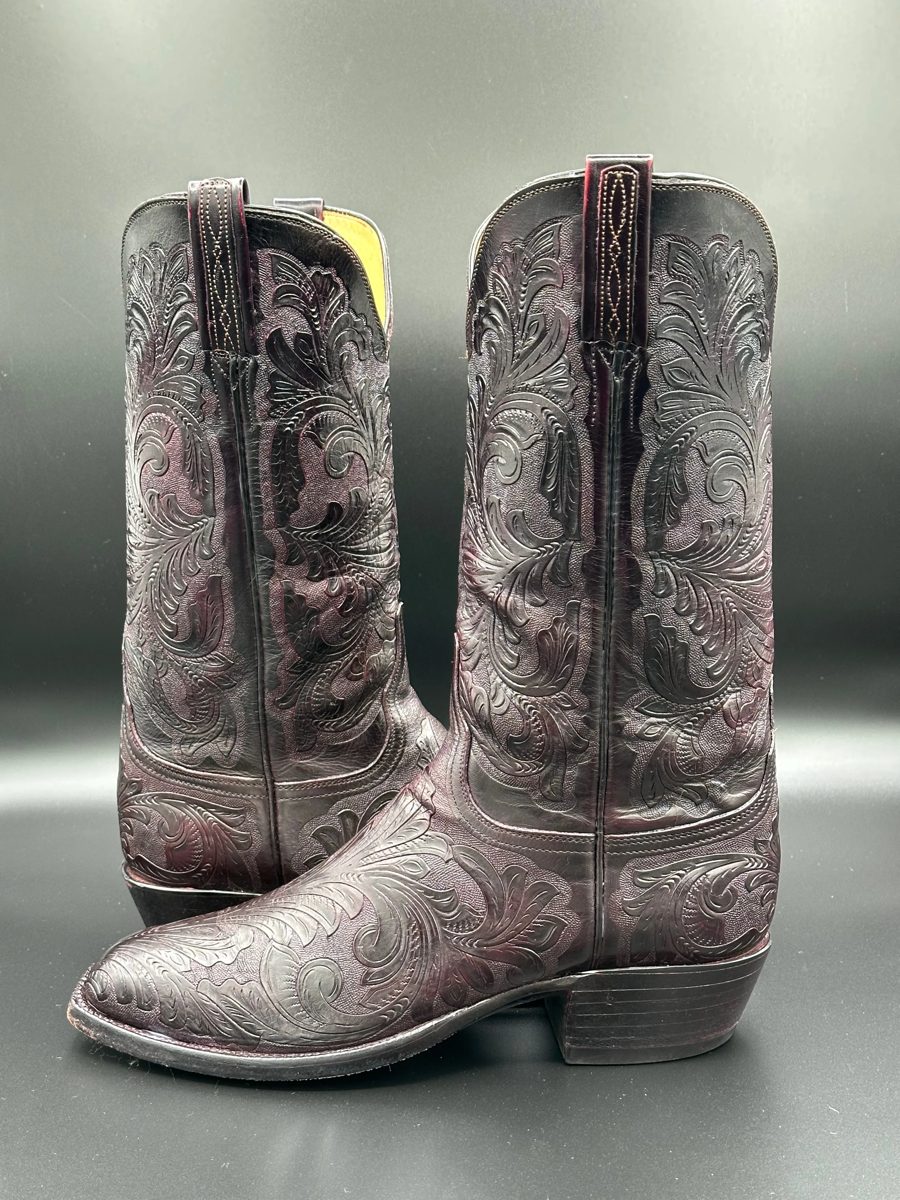
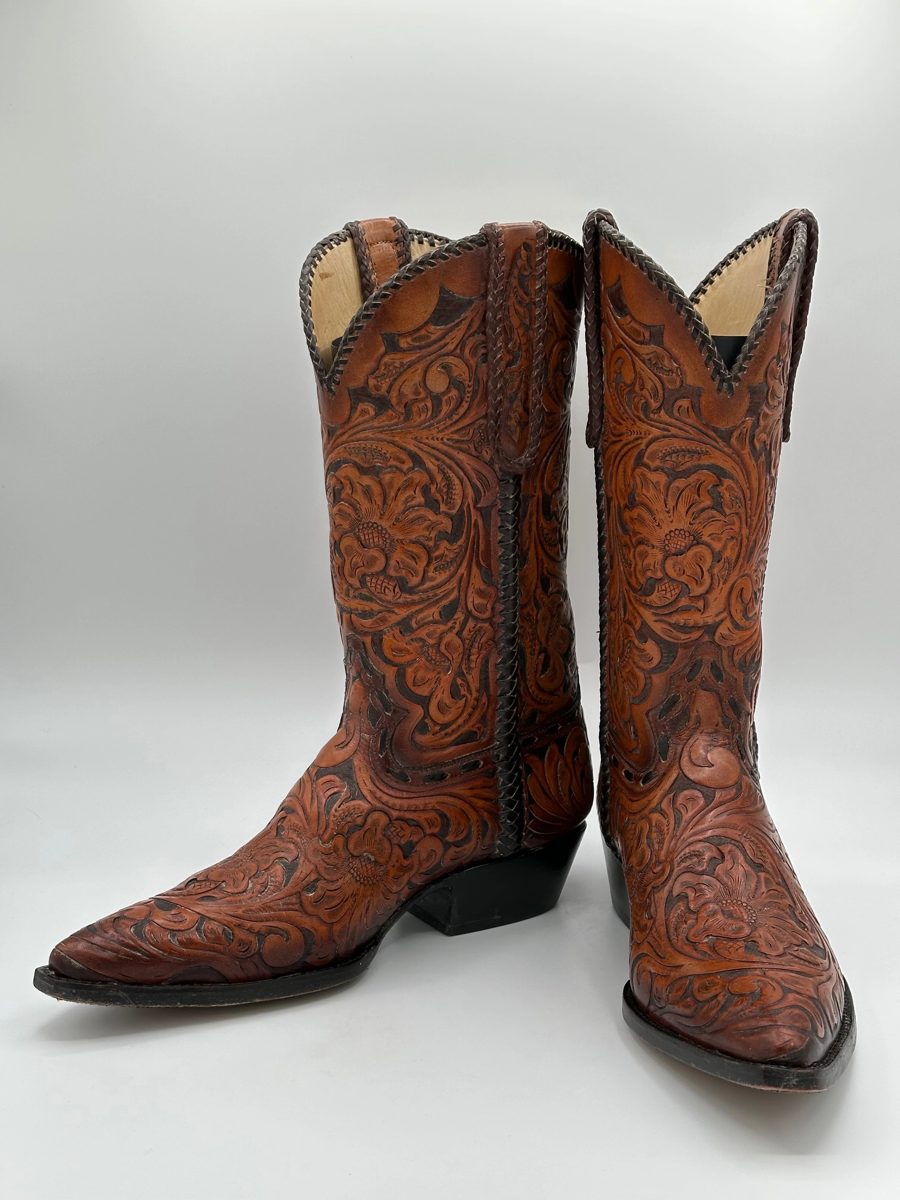
Pattern
Leather carved and stamped by hand, usually in floral or scroll patterns. The bootmaker cuts the outline with a swivel knife, then shapes it with bevelers, backgrounders and other stamps. Tooling needs vegetable-tanned leather, which holds the impressions, and the finished work is often dyed, antiqued or painted.
Also known as
tooled · carved leather · floral tooled · Sheridan-style
Collector notes
Hand-tooled boots are judged on the quality of the carving: clean, confident swivel-knife cuts, crisp backgrounding, and balanced design across both boots. Full-tooled boots are much rarer than tooled shafts or inlays. The underlying leather matters less than the handwork.
Quick identification checks
- Look for real knife cuts: crisp, incised lines that vary slightly in depth.
- Left and right boots should match in design but differ in small details.
- Background texture is stamped and slightly irregular, not a perfect machine pattern.
Check in hand
- Run a finger along the design. Hand cuts have sharp edges; embossing feels soft and rounded.
- Look for overlapping or crossing stamp marks, which hand tooling leaves and molds do not.
- Check whether the pattern repeats exactly on both boots. A perfect repeat points to embossing.
Common mix-ups
- Machine-embossed leather: Pressed with a heated plate. Patterns are shallow, rounded and repeat exactly.
- Prints: Embossed patterns that imitate exotic skins, not carving.
- Inlay and overlay: Designs made by cutting and stitching pieces of leather, not by carving one piece.
Buyer notes
- Ask whether the tooling is hand-cut or embossed, and photograph it in raking light to check.
- Name the leather and the maker. A tooled shaft on an otherwise plain boot is described differently from a full-tooled pair.
- Heavy conditioner can darken tooled boots permanently.
Maker history
Used as a curation bucket for carved or tooled boots so decorative leatherwork does not pollute species galleries.
Care notes
Dust with a soft brush to keep dirt out of the cuts. Condition sparingly with a light cream; heavy oils darken vegetable-tanned leather and can blur the carving. Keep tooled boots dry and out of direct sun.
Watch for
- Darkening and blurred detail from heavy oiling
- Dirt packed into the cuts and background
- Cracking along deep cuts on dried-out leather
- Worn-away tooling at the vamp crease and pull straps
How hand tooling is done
Hand tooling, also called carving, starts with vegetable-tanned leather, which is firm enough to hold an impression. The maker transfers a design, usually floral or scroll work, then cuts the outlines with a swivel knife. Bevelers, pear shaders, backgrounders and other stamps push the leather down around the design so the flowers and leaves stand up in relief. The finished piece is often dyed, antiqued so the cuts darken, or painted.
On boots, tooling most often appears on the shaft, sometimes on the vamp and heel counter, and occasionally over the whole boot. Full-tooled pairs take far more hours than plain boots and are much less common.
Hand-tooled or embossed?
Machine embossing presses a heated plate into the leather. The result can look similar from a distance, but up close the lines are shallow and rounded, and the pattern repeats exactly from boot to boot. Hand tooling shows crisp knife cuts that vary slightly in depth, stamp marks that overlap, and small differences between the left and right boots.
Care
Keep dirt out of the cuts with a soft brush, and condition sparingly. Vegetable-tanned leather darkens readily, and heavy oil can blur fine carving for good.