

Western Boot World reference
Exotic Prints
Reference photos
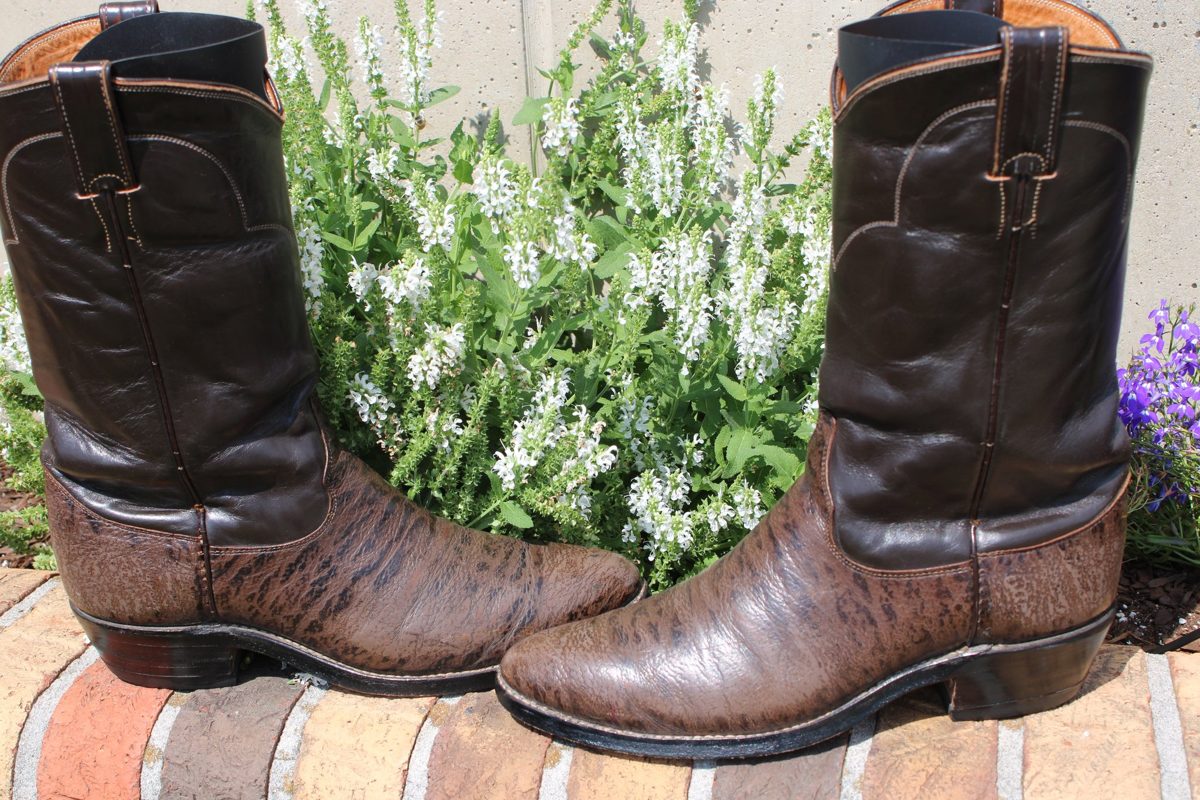
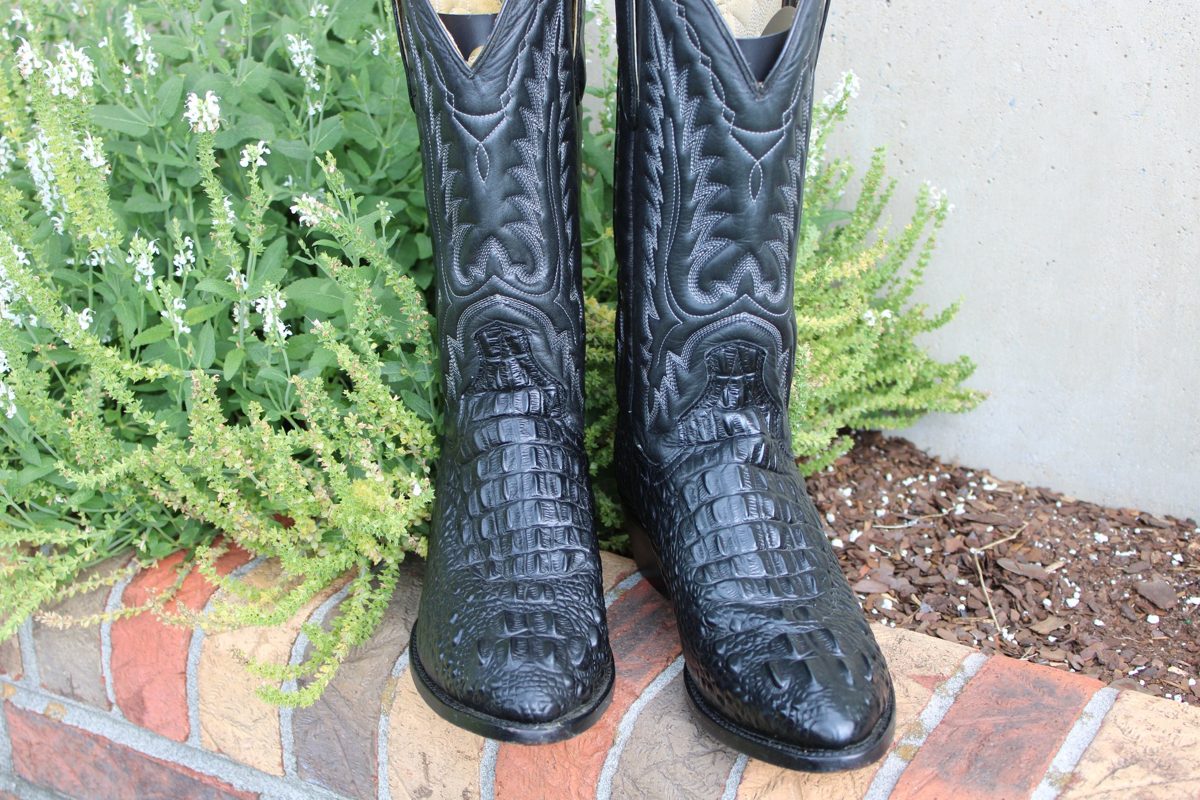
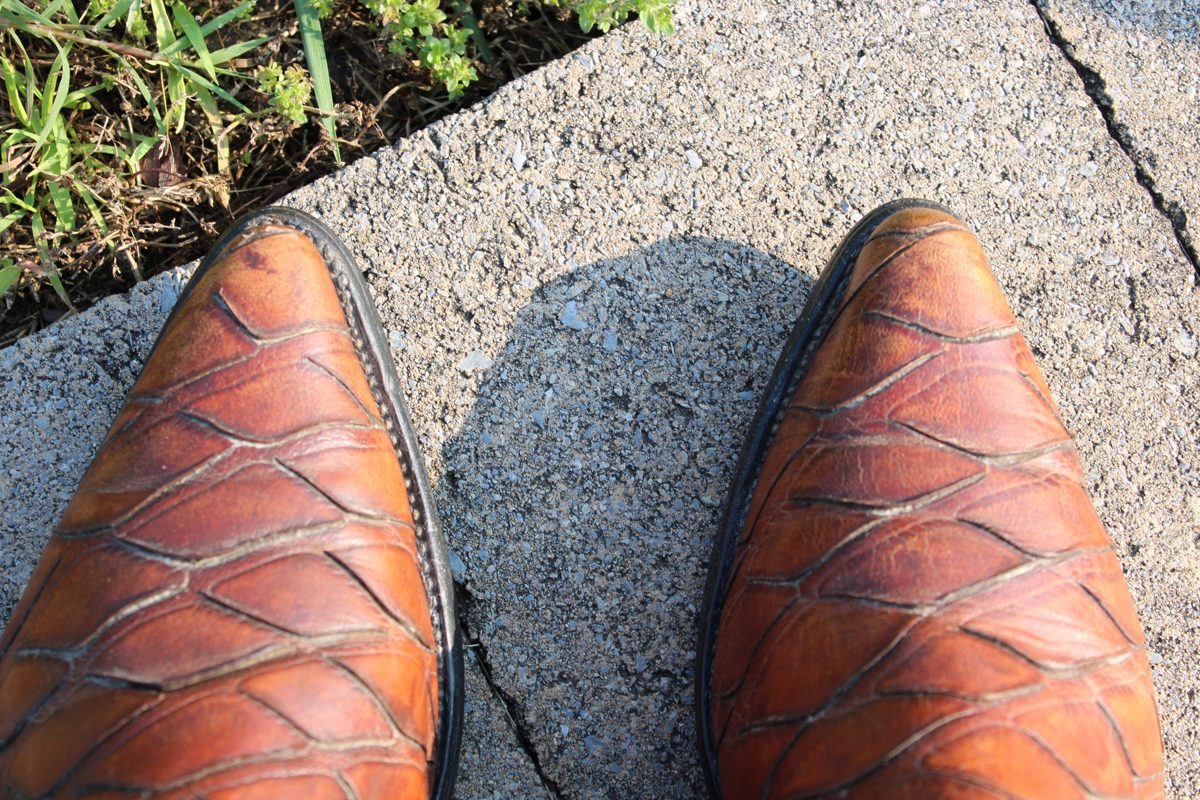
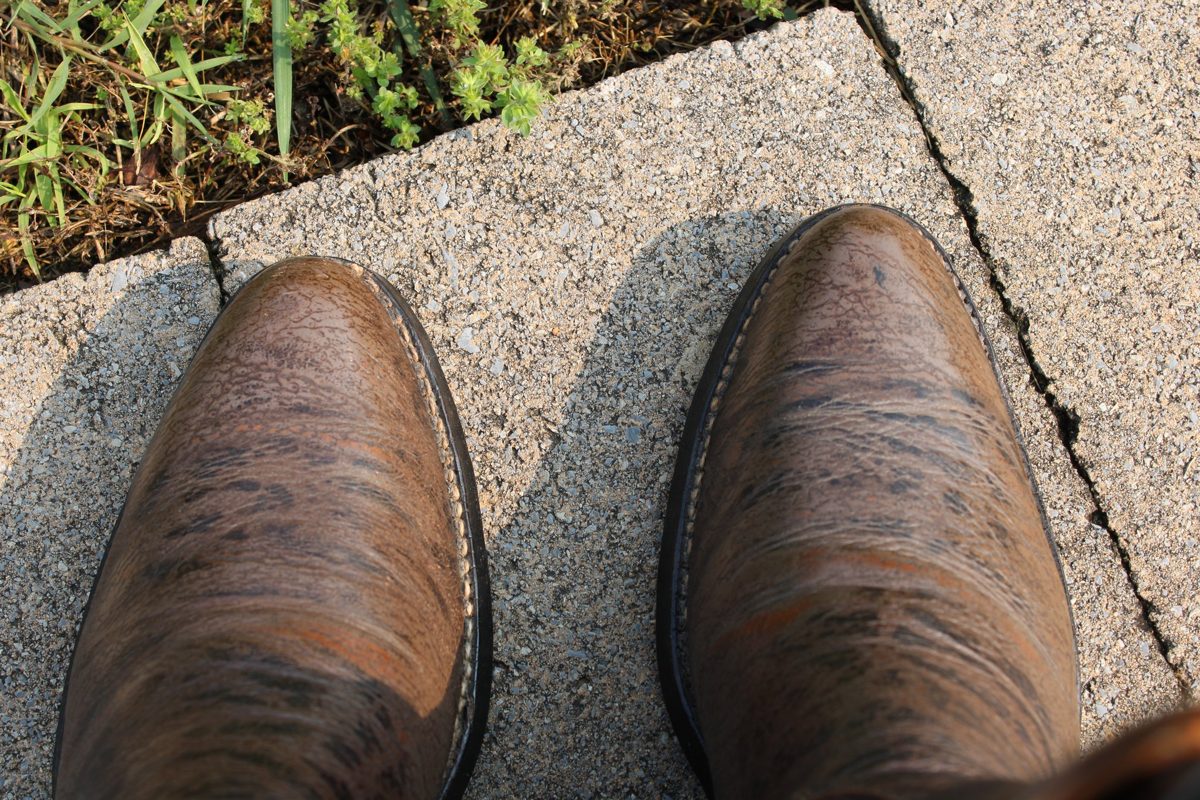
Pattern
Cowhide or other leather pressed or printed with an exotic pattern such as alligator, ostrich, lizard, anteater or walrus. Prints can be handsome and long-wearing, but they are not the animal the pattern copies.
Also known as
embossed · print · croc print · gator print · ostrich print · walrus grain
Collector notes
Prints are their own category. Some vintage print boots are good, honest boots, but they should be priced as cowhide with an embossed pattern, not as exotic. The most common print collectors meet are walrus grain, alligator and caiman print, ostrich print and anteater (pangolin) print.
Quick identification checks
- The pattern repeats exactly, often visible when you compare the left and right boots.
- Scales or quills are all about the same size, with no natural tapering toward the tail, legs or edges of the hide.
- The pattern runs straight across seams instead of following the shape of a real skin.
- Ostrich-print quill bumps are perfectly spaced and the same height.
Check in hand
- Real scales have separate edges and folds. Prints are one surface pressed into shape.
- Flex the vamp: real reptile scales open slightly along their edges; prints crease like smooth leather.
- Look at the back of the leather or inside the top line, where the base hide often shows.
Common mix-ups
- Alligator: Real alligator has irregular tiles with umbilical scar patterns and natural size changes. Prints repeat.
- Ostrich: Real full-quill ostrich has quills of uneven size and spacing, with a smooth area between them.
- Walrus: Walrus grain is a common embossed cowhide pattern, not real walrus hide.
- Anteater: Anteater or pangolin prints copy the overlapping scale pattern on cowhide.
Buyer notes
- Listings should say "print" or "embossed" when the pattern is not the real animal.
- Price prints by maker, condition and base leather, not by the exotic they copy.
- When unsure, compare with real-skin reference photos on that skin's page.
Maker history
Used as a curation bucket for print and embossed examples that are useful for comparison but not for species teaching.
Care notes
Care for prints as you would the base leather, usually smooth cowhide: clean, condition lightly, and polish. Avoid heavy pressure on the embossing when polishing so the pattern stays crisp.
Watch for
- Embossing flattened at the vamp crease and toe
- Finish wearing off the raised parts of the pattern
- Pattern seams that do not line up between panels
What counts as a print
A print is leather, usually cowhide, that has been pressed or printed with the pattern of another animal. Common examples on Western boots are alligator and caiman print, ostrich print, lizard print, anteater (pangolin) print and walrus grain. Prints are honest boots when they are sold as prints. The problem is when they are sold as the real skin.
How to tell a print from the real skin
Real skins vary. Alligator tiles change size from the center of the belly to the flanks, ostrich quills are uneven in size and spacing, and reptile scales have separate edges that open slightly when the leather flexes. A print repeats. Look at the left and right boots side by side: on a print, the same pattern often appears in the same place on both. Prints also tend to run straight across seams instead of following the shape of a hide.
In the hand, real scales feel like individual pieces with edges and folds. A print feels like one smooth surface pressed into a pattern, and it creases at the vamp the way smooth leather does.
Compare with the real-skin photos on the alligator, ostrich and anteater pages.