

Western Boot World reference
Roughout
Reference photos
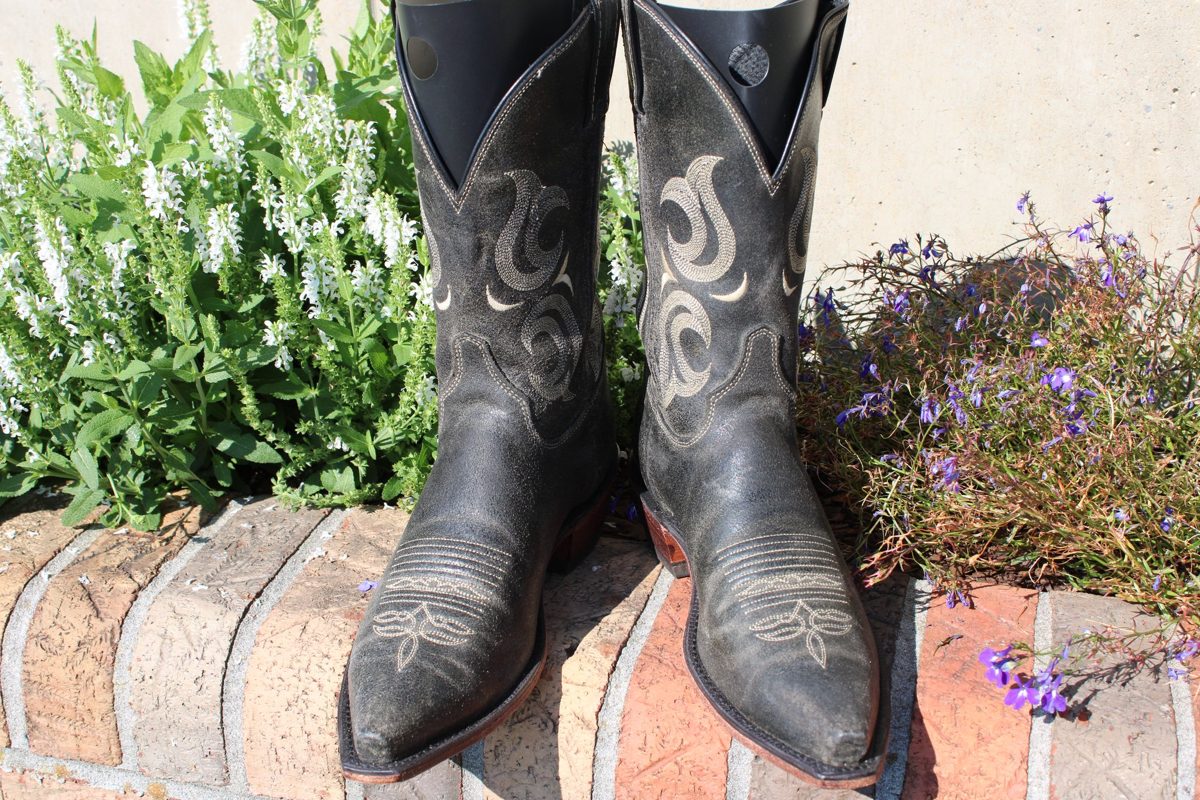
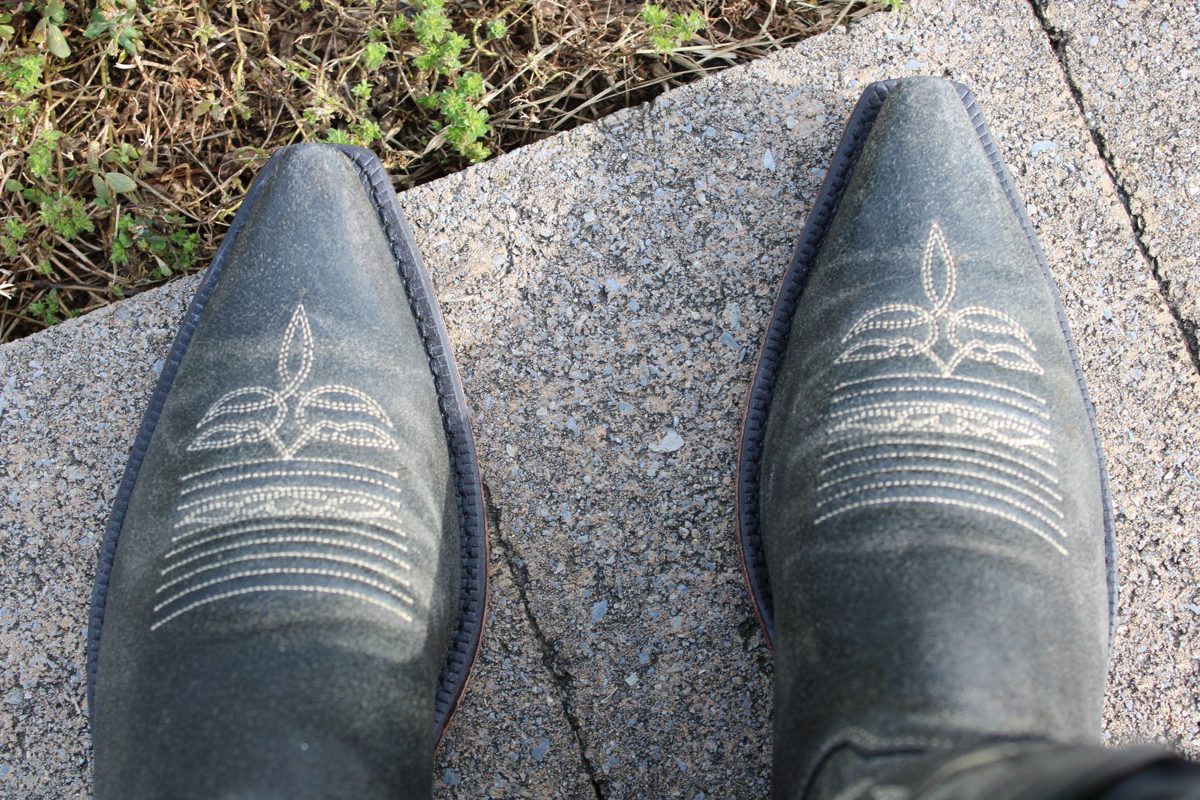
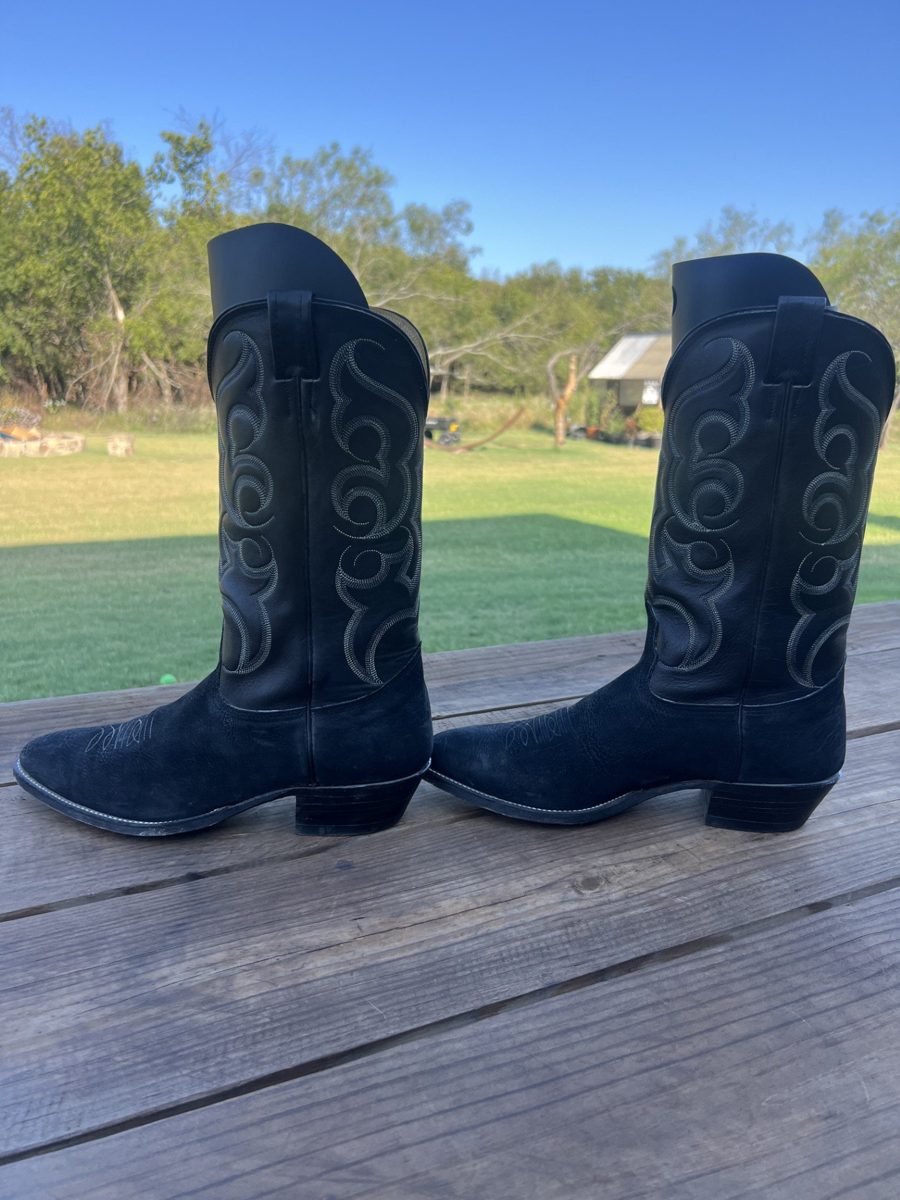
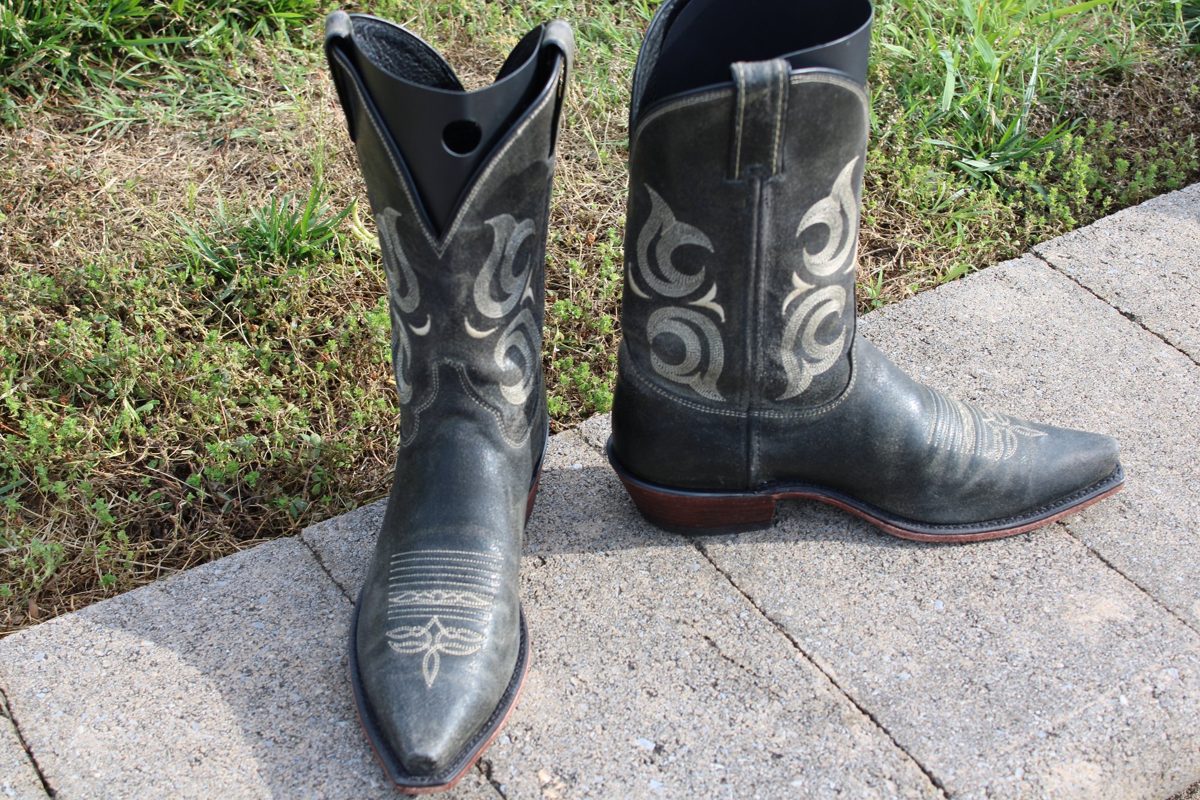
Pattern
Full-thickness cowhide turned flesh-side out, so the napped side faces out and the smooth grain side faces the foot. It keeps the full strength of the hide and hides scuffs, which is why it is a traditional working-boot leather.
Also known as
rough-out · reverse leather · reverse cowhide
Family / genus
Bovidae · Bos
Collector notes
Roughout is a working leather. Because it is full-thickness hide, it is much tougher than suede and more forgiving of scuffs. Collectors look for honest wear, original soles and clean maker stamps on vintage pairs. A Western Boot World glossary note explains the term in brief.
Quick identification checks
- Nap is coarser and more uneven than suede.
- The leather is thick and stiff, like smooth cowhide.
- Inside the top line or pull holes, the smooth grain side faces inward.
Check in hand
- Roughout feels heavy and sturdy. Suede feels thin and soft.
- Brushing the nap changes its color slightly, but less dramatically than suede.
- Rub a thumb across the vamp. Roughout keeps its texture; nubuck feels almost velvety.
Common mix-ups
- Suede: Suede is usually a split of the hide, thinner and softer, with a finer nap.
- Nubuck: Nubuck is grain-side leather sanded to a very short, fine nap. It feels like velvet, not rough.
Buyer notes
- Roughout should be described as roughout or reverse leather, not suede.
- Ask whether the boots were oiled or conditioned. A darkened nap is permanent.
- Roughout hides scuffs well, so look at the soles and heel stacks to judge real wear.
Care notes
Brush with a stiff nylon or brass suede brush to lift dirt and the nap. Use a water and stain repellent made for napped leather. Cream and oil conditioners darken and flatten the nap. Some ranch hands darken roughout on purpose, but it cannot be undone.
Watch for
- Nap worn flat and shiny where the stirrup or spur strap rubs
- Dark stains from oil, grease or conditioner
- Dried-out hide from repeated soaking and fast drying
Roughout as a working leather
Roughout is cowhide used inside out: the flesh side faces out and the smooth grain side faces the foot. Because it is the full thickness of the hide, it is much tougher than suede, and the nap hides scuffs from brush, rope and stirrup. That made it a favorite for ranch and working boots. See also the short glossary entry for roughout.
Roughout, suede and nubuck
All three have a nap, but they are made differently. Roughout is full-thickness hide turned flesh side out. Suede is usually the inner split of the hide, thinner and softer, with a finer nap. Nubuck is the grain side sanded to a very short, velvety nap. Thickness and stiffness are the quickest way to tell roughout apart: it feels like a heavy smooth boot, just with a rough face.
Care
Brush roughout instead of polishing it, and use a repellent made for napped leather. Oils and creams darken the nap for good. Some hands darken their roughout on purpose for water resistance, so a darkened pair is not always damaged, but it should be described that way.